
Last updated October 16, 2026
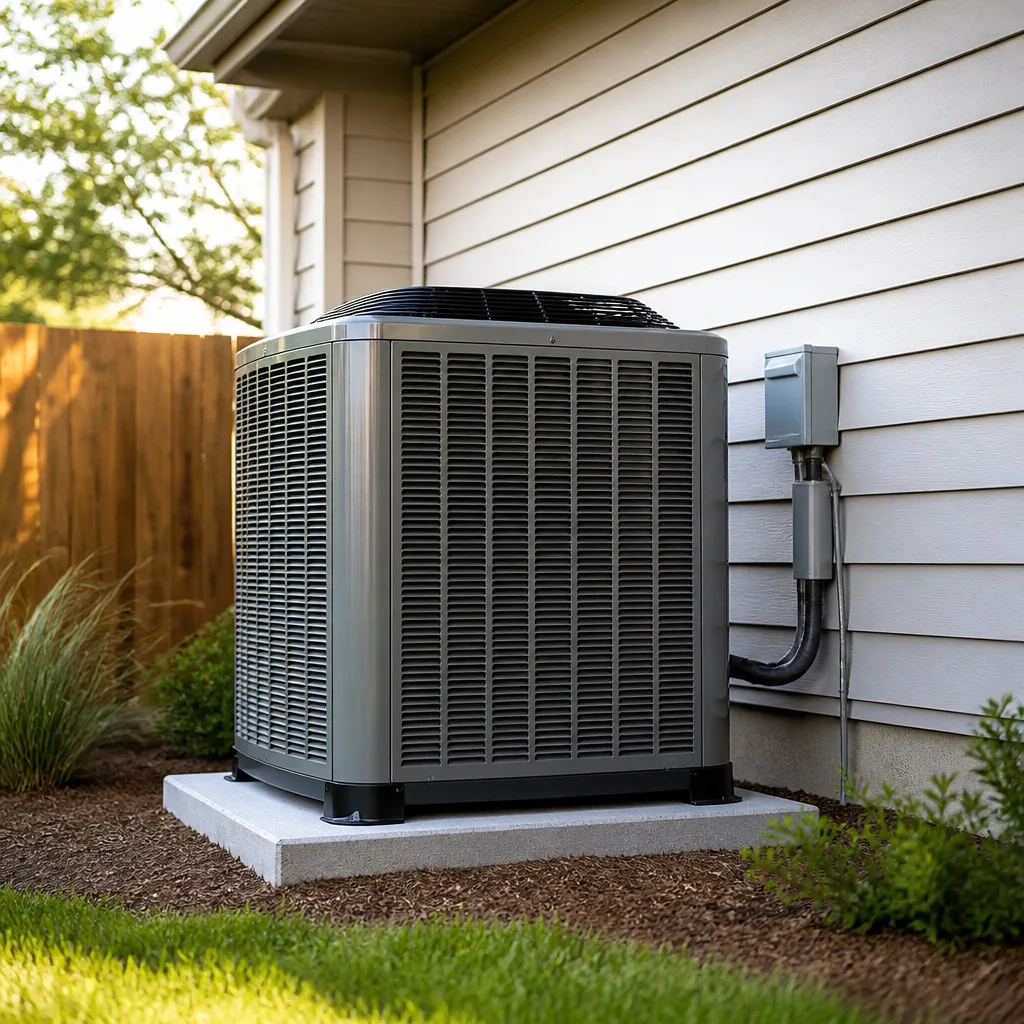 AC repair
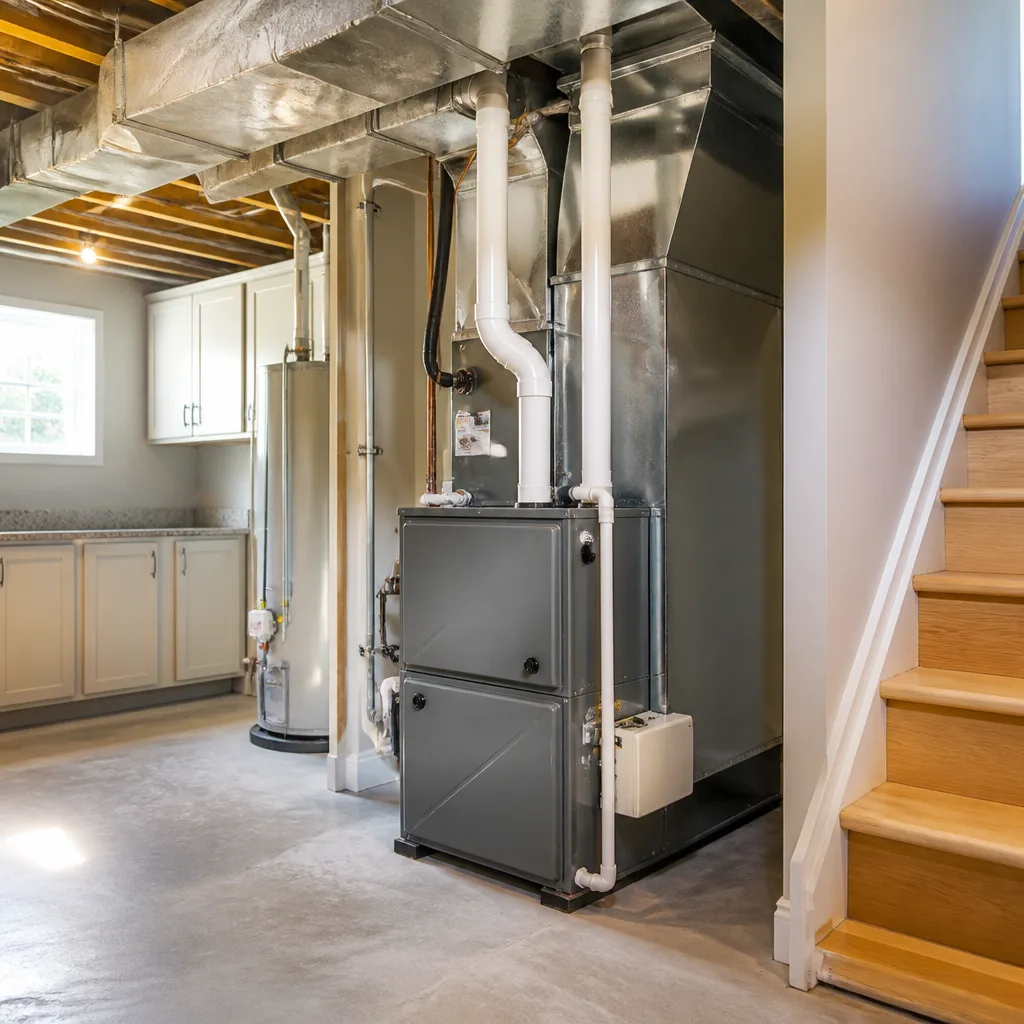 Furnace & heating
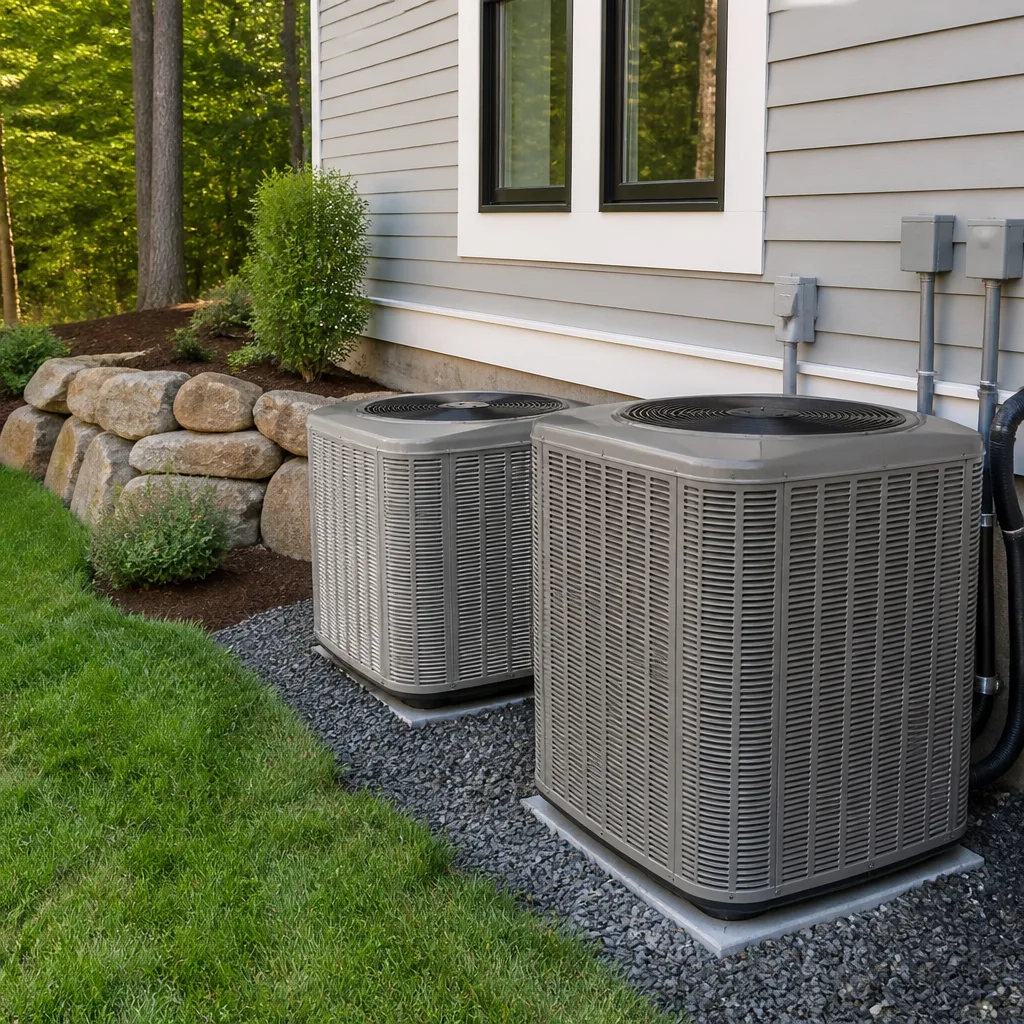 Heat pumps
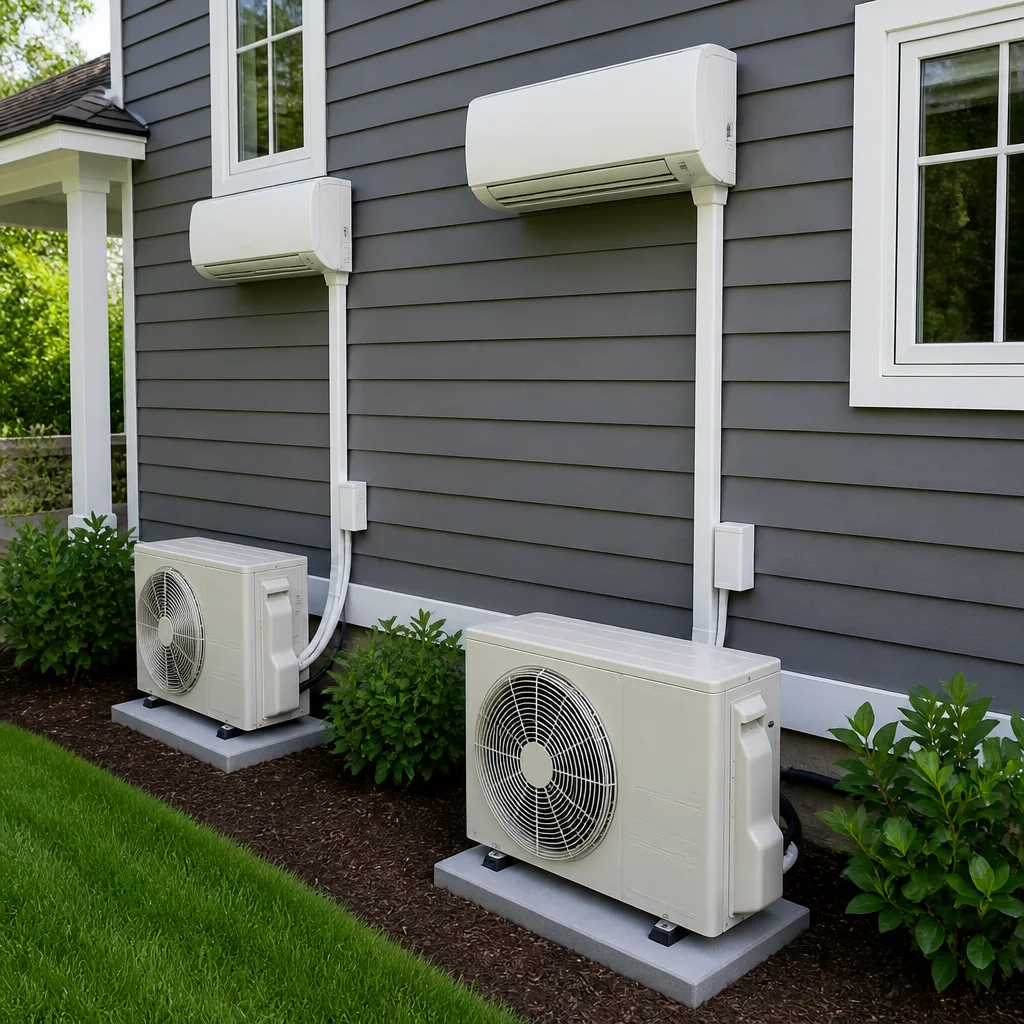 Ductless mini splits
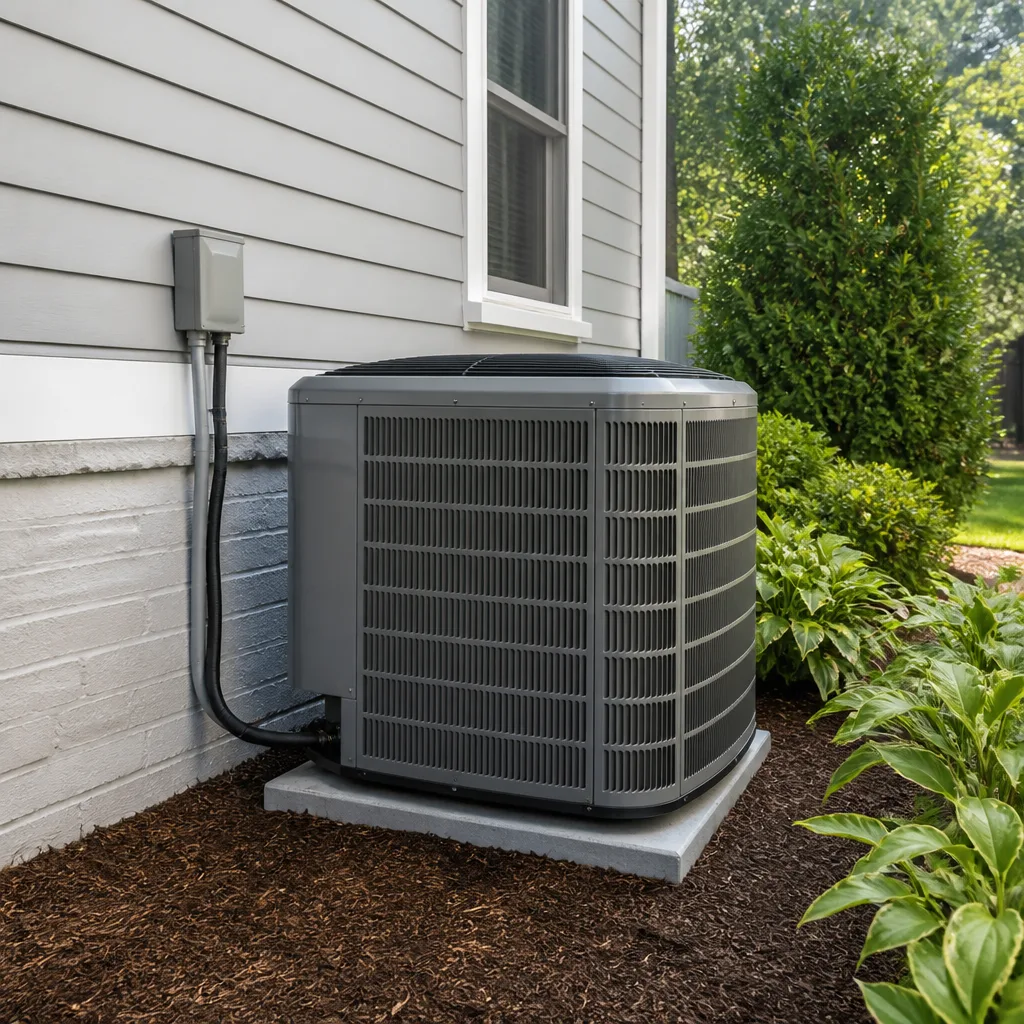 Carrier
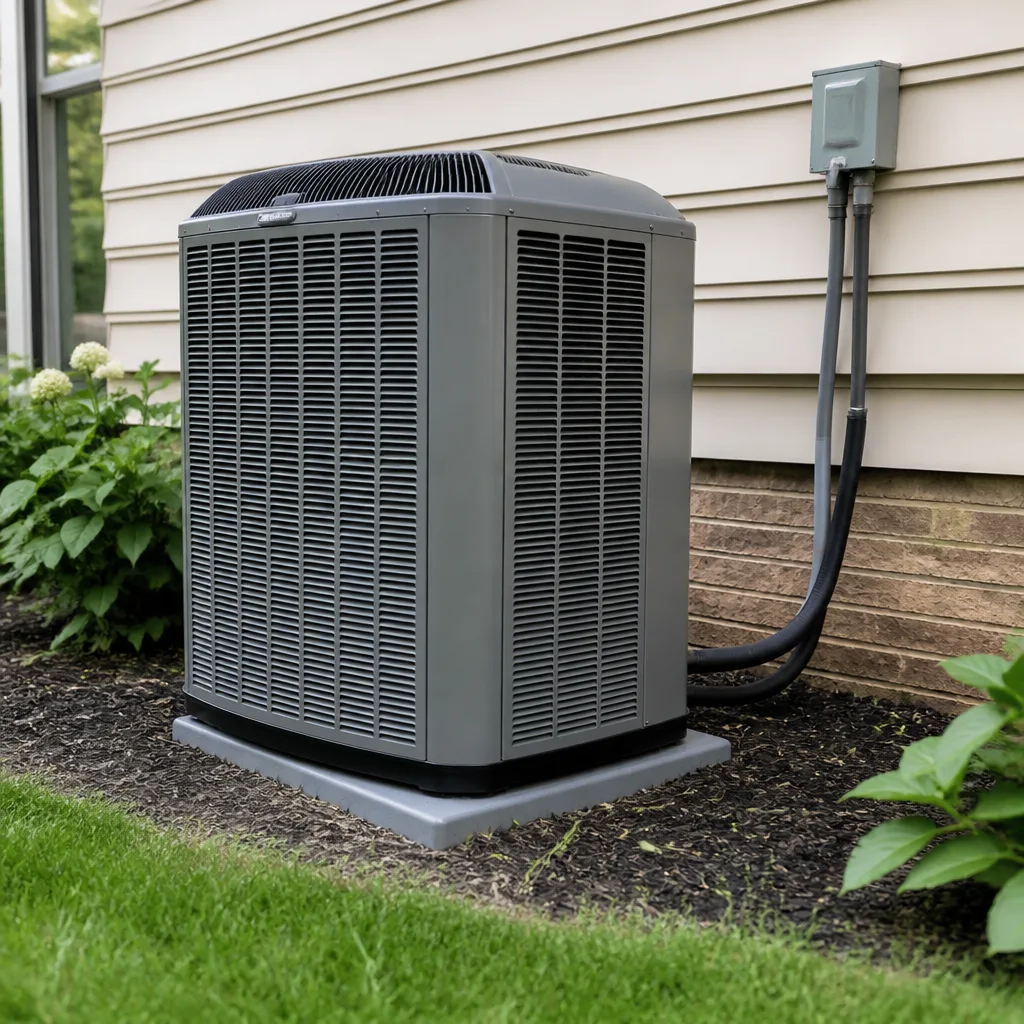 Trane
Trane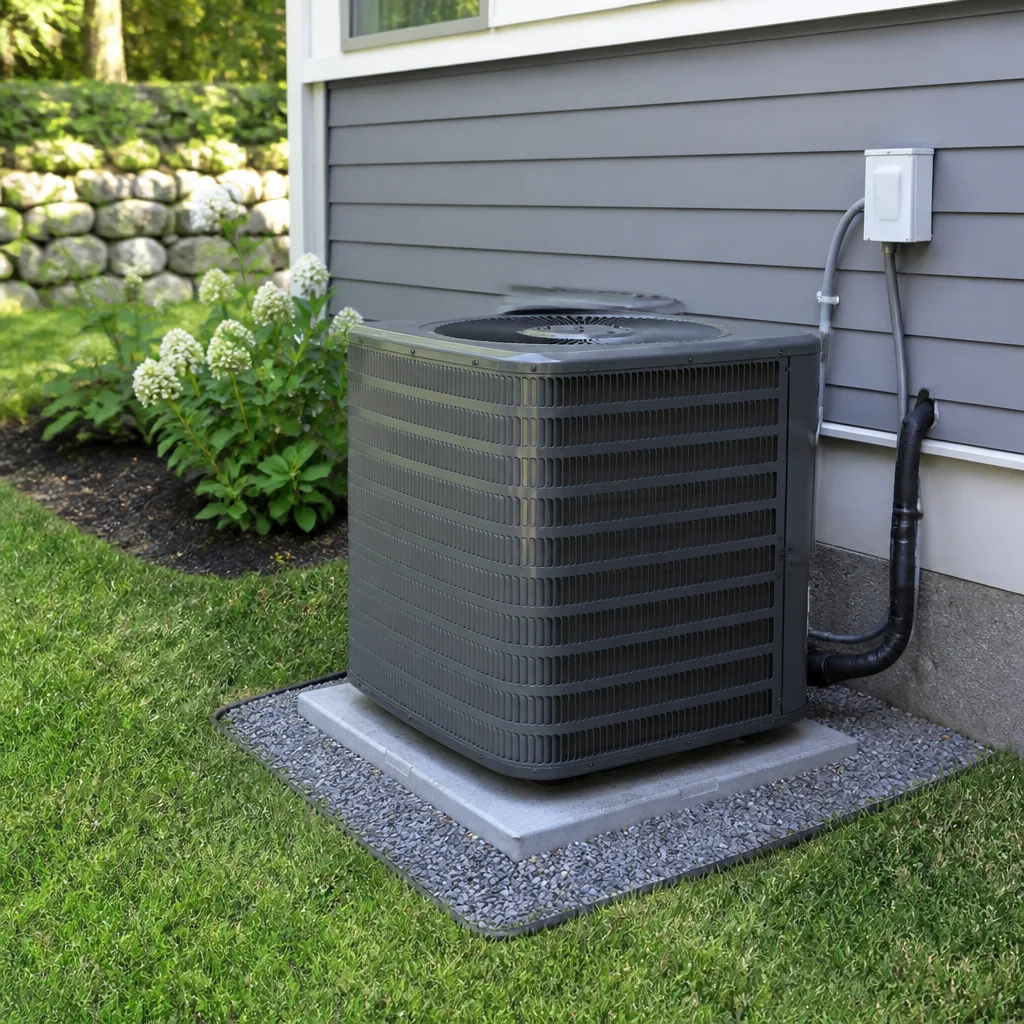 Goodman
Seasonal tune-up and full diagnostic on your Carrier, Trane, or Goodman system - readings shown to you before any repair is proposed
Diagnosis first, numbers second - you approve the repair price before a single part goes in.
Get your free estimateAC Repair Maintenance Checklist for Riverside Homeowners
Here’s what surprises most Riverside homeowners: the two AC tasks people skip most often, cleaning the condenser coil and checking refrigerant line insulation, are the exact two failures behind most compressor replacements during August heat waves. When your compressor dies during a 105-degree Riverside week, parts wait times stretch into days, not hours. This guide gives you the full checklist, built around Riverside’s actual weather patterns, with clear cost lines: what you’ll spend under $20, what calls for our AC Repair services, and how to keep a system running without throwing money at problems it doesn’t have.
Quick Answer
A proper AC maintenance checklist for Riverside homes includes monthly filter checks using a MERV 8 – 11 filter, a five-minute condenser coil cleaning twice a year, refrigerant line insulation inspection before each summer, and a professional tune-up every spring. Most DIY items cost under $20, while the professional visit typical runs $89 – $160 in Riverside and catches the problems that lead to $2,400 compressor replacements.
Styles & brands we work with
Table of Contents
- Riverside Seasons: Why Your AC Calendar Is Different
- The Month-by-Month AC Maintenance Checklist
- Filter Selection: What MERV Rating Actually Works in Riverside
- Condenser Coil Cleaning: The Most Skipped, Most Expensive Task
- Refrigerant Line Insulation: A Five-Minute UV Damage Check
- What You Can Do for Under $20 vs. What Needs a Licensed Pro
- What a Real Maintenance Visit Should Include in Writing
- The Real Cost Picture: Maintenance vs. Repair vs. Replacement
Riverside Seasons: Why Your AC Calendar Is Different
Riverside doesn’t follow the generic spring and fall maintenance calendar most national guides use; for more guides & resources tailored to this region, see our local content. We have three actual seasons that matter for HVAC: a long warm spell from May through October, the Santa Ana wind months of September through November, and a short cool stretch from December through February. The Inland Empire’s dry heat means low humidity, which actually reduces mold growth inside ducts, but it also means fine dust accumulates on coils faster than in coastal cities.
Wildfire smoke season, typically August through October, changes filter math entirely. During smoke events, you need higher filtration without choking airflow, a balance we’ll get into below. The other Riverside-specific reality is dry airborne dust from the Santa Ana winds, which coats condenser coils with a fine layer that insulates them and forces your compressor to run hotter than it should.
Riverside’s summer highs routinely hit 100 degrees or more between July and September. When outdoor temperatures climb past 100, your condenser struggles to shed heat, which means any extra layer of dirt on the coil makes the system work measurably harder. That’s the maintenance baseline we’re working with: monthly filter attention, twice-annual coil cleaning, and a spring professional inspection before the first punishing heat wave arrives. For a deeper dive, see The Complete Guide to HVAC in Riverside.
The Month-by-Month AC Maintenance Checklist
Here’s the full 12-month schedule, organized around Riverside’s actual weather patterns rather than the traditional four seasons. Each month includes only the tasks that genuinely matter for this climate.
January through February (Cool Season)
- Replace filter if your system runs for heat. Most Riverside homes use a heat pump or furnace for winter comfort, and the same filter serves both heating and cooling.
- Check thermostat batteries. The mild Riverside winter is an easy time to swap in fresh batteries rather than discovering a dead thermostat on the first 90-degree day of March.
- Walk the outdoor unit and clear any leaves, twigs, or trash that accumulated during December winds.
March through April (Pre-Season Preparation)
- Deep clean or replace the condensate line. Riverside’s hard water leaves mineral buildup in drain lines. Pour a cup of distilled white vinegar into the line access point and let it sit for 30 minutes before flushing with warm water.
- Schedule your professional tune-up. Booking in March or early April means you’ll beat the rush when the first heat wave hits and technicians get booked out.
- Clean the condenser coil. Use a garden hose with a spray nozzle from the inside out, never a pressure washer. We’ll cover this in detail below.
- Inspect refrigerant line insulation. The white foam tubes running from the outdoor unit to the house degrade under Riverside’s intense sun. Look for cracks, missing sections, or crumbly texture.
- Test the system. Turn the thermostat to cool and run the AC for 15 minutes, feeling for even airflow from every vent and listening for unusual sounds.
May through June (First Heat Waves)
- Check the filter every 30 days. Riverside’s dry dust gets pulled into the return air continuously. A clogged filter starves airflow and raises cooling costs by up to 15 percent.
- Keep the area around the outdoor unit clear. Two feet of clearance on all sides gives the condenser room to pull air. Overgrown grass, stacked boxes, or stored bicycles block airflow.
- Watch your energy bill. A sudden spike without hotter weather usually signals that the system is working harder than it should, often from a dirty coil or low refrigerant.
July through September (Peak Season)
- Replace the filter monthly without exception. During Riverside’s dust season and potential wildfire smoke events, monthly replacement is the single best thing you can do for both air quality and system health.
- Check the condenser coil every two weeks. During Santa Ana wind events, dust and debris accumulate fast. A five-minute visual inspection lets you catch buildup early.
- Listen for changes in sound. A new hum, rattle, or squeal is an early warning. Catching a failing capacitor or worn contactor now costs $150 – $300. Catching it after it seizes the compressor costs $2,000 or more.
October through December (Smoke Season and Wind Down)
- Upgrade to a higher MERV filter if smoke is present. See the filter section below for the balance between air quality and airflow.
- Clean the condenser coil again. After wildfire season, a second coil cleaning removes ash and smoke residue that holds moisture and degrades the aluminum fins.
- Cover the outdoor unit only if you have a breathable cover. Solid plastic tarps trap moisture and accelerate corrosion. If you don’t have a breathable cover, skip covering entirely, Riverside’s mild winter doesn’t require it.
Filter Selection: What MERV Rating Actually Works in Riverside
The standard advice to “change your filter” misses the real question: what filter should a Riverside home use when wildfire smoke drifts through the Inland Empire every late summer? The answer is a MERV 8 to 11, depending on the season and your system’s airflow capacity.
Here’s the breakdown Riverside homeowners need:
- MERV 8: Captures dust, pollen, and pet dander. This is the right everyday, year-round filter for most Riverside systems, especially if you have a standard single-stage AC system.
- MERV 11: Adds filtration for smoke particles and smaller pollutants. Swap to this during wildfire smoke season, roughly August through October, and run the system fan on “auto” rather than “on” to reduce filter loading.
- MERV 13: The strongest common residential filter. It captures the smallest smoke particles but significantly restricts airflow. Most standard residential systems are not designed for continuous MERV 13 use, and it can cause your coil to freeze or your blower motor to overheat. Only use MERV 13 in short bursts during heavy smoke, and only if your system can handle it, which a technician can verify.
The airflow tradeoff matters more in Riverside than in coastal California because our AC runs longer and harder. A filter that is too restrictive makes the blower work harder, raises evaporator coil temperature, and can lead to a frozen coil on a 100-degree day, which is the last thing you want. At Meadowsweet Heating and Air Riverside home, we recommend MERV 8 as the year-round default and MERV 11 for smoke season unless a system inspection shows your ductwork and blower can handle more.
For homes with pets or allergy-prone kids, MERV 11 year-round is often the right call, but we check static pressure during a tune-up to confirm the system can breathe. The filter question is never one-size-fits-all, but the quick answer for most Riverside homes is: know your MERV number, change monthly during peak season, and never jump to MERV 13 without professional verification.
Condenser Coil Cleaning: The Most Skipped, Most Expensive Task
The condenser coil is the aluminum finned surface inside your outdoor unit. Its entire job is to release heat from the refrigerant into the outdoor air. When Riverside dust, ash, and debris coat the coil, they form an insulating layer that traps the heat inside the refrigerant. The compressor, located inside the outdoor unit, now has to work against that trapped heat, running hotter and drawing more amperage until it eventually fails.
In our experience across Riverside, the coil cleaning is the single most skipped DIY task, and it’s the one that shows up most often on compressor replacement calls in August. Here’s how to do the five-minute version:
- Turn off the breaker. Find the breaker in your electrical panel labeled for the AC or condenser and switch it off. Never clean a coil with the system live.
- Clear surface debris. Use your hand or a soft brush to remove leaves, seeds, and visible debris from the outside of the unit. Do not use anything metal or sharp.
- Spray gently with a garden hose. Use a spray nozzle set to a gentle pattern and spray from the top of the unit down, pushing water through the fins. Spray from the inside if you can access it, which pushes the dirt back out the way it came in.
- Never use a pressure washer. High-pressure water bends the thin aluminum fins, which restricts airflow permanently and reduces the coil’s ability to release heat. A garden hose with normal pressure is all you need.
- Turn the breaker back on. Wait 30 minutes for the unit to drain before restoring power, which reduces electrical risk.
A coil that is too dirty for a garden hose, or one that has bent fins from years of neglect, needs professional attention. A technician uses commercial coil cleaner and a fin comb to restore airflow, and the cost for that service in Riverside typically runs $100 – $180 as part of a full tune-up. Given that the compressor it protects costs $1,500 – $2,400 to replace, the math works out strongly in your favor.
Refrigerant Line Insulation: A Five-Minute UV Damage Check
The refrigerant lines running from your outdoor condenser to the indoor evaporator coil are typically wrapped in white foam insulation along the section where they run outside. That foam has one job: keep the cold refrigerant cold before it re-enters your home. When the insulation degrades, the refrigerant absorbs heat from Riverside’s hot outdoor air, which reduces cooling capacity and forces the system to run longer to hit the same indoor temperature.
Riverside’s intense sun, often 280-plus sunny days per year, destroys foam insulation faster than almost any other climate factor. UV radiation breaks down the polymer structure of the foam until it crumbles, cracks, and falls off. Here’s the five-minute visual check you can do on a rooftop or side-yard unit:
- Find the larger copper line. Look for the copper tubing coming out of the outdoor condenser. The larger of the two lines is the suction line, and it should be insulated from the unit all the way into your home’s wall.
- Run your eye down the full length. Look for sections where the foam is missing, cracked, discolored to yellow or brown, or flaking apart when you touch it.
- Check the joints and connections. The most common failure points are where the insulation was cut to fit around valves or where it meets the wall penetration. These areas get direct sun and thermal movement.
- Feel for temperature. If the line feels noticeably cold to the touch through a gap in the insulation, that’s refrigeration you are paying for but not receiving.
Replacing degraded line insulation is a straightforward task that a technician completes in under an hour, typically during a routine AC Repair in Riverside visit. The cost, usually under $100, is minimal compared to the efficiency loss from an uninsulated line running across a sun-baked Riverside rooftop, which can reduce system efficiency by 5 to 10 percent over a season. If you see failing insulation during your pre-season check, it’s one of the highest-value fixes you can make.
What You Can Do for Under $20 vs. What Needs a Licensed Pro
California law draws a clear line between homeowner maintenance and systems work that requires a licensed contractor. Understanding that line saves you money without creating safety risks or voiding your equipment warranty. For help deciding where you fall, read DIY vs Professional HVAC: The Riverside Homeowner’s Decision Guide. Here’s the split as it applies to a Riverside home.
Under $20: Homeowner Tasks
- Filter replacement: $8 – $18 per filter, depending on size and MERV rating. Replace monthly during peak season year-round.
- Condensate line treatment: $5 for distilled white vinegar. Pour it into the line access point seasonally to prevent mineral and algae buildup.
- Coil cleaning with a garden hose: Free to $0 in water costs, assuming you already own a hose and spray nozzle. Do this in late spring and after fire season.
- Thermostat battery replacement: $3 – $5 per year.
- Visual inspections: Free. Walk the outdoor unit weekly during summer and look for debris, oil stains, or signs of animal activity.
Licensed Technician Tasks
- Refrigerant level check and recharge: California law requires a licensed technician with EPA Section 608 certification to handle refrigerant. A low charge indicates a leak that must be located and repaired before recharging.
- Electrical component testing: Capacitors, contactors, and wiring connections carry 240 volts. Testing and replacing these components requires the breaker off and familiarity with high-voltage systems.
- Compressor, coil, and motor replacement: All major mechanical work falls under contractor licensing requirements in California.
- Ductwork modification: Any change to your duct design or sizing affects system airflow and requires a licensed contractor.
We also see a lot of Riverside homeowners ask about refrigerant recharge as a DIY task. Don’t. Beyond the legal issue, refrigerant work requires specialized gauges and training. Overcharging a system is as harmful as undercharging it, and the cost of a professional recharge with leak detection, $150 – $300 in Riverside, is a fraction of what a botched DIY attempt costs to correct on the back end.
What a Real Maintenance Visit Should Include in Writing
Not all maintenance visits are created equal, and in Riverside, where many older homes have systems that are 15 to 20 years old, the quality of the inspection makes a decisive difference. Here’s what a competent professional AC tune-up should include, and what the written report should document.
A thorough maintenance visit takes 60 to 90 minutes and covers:
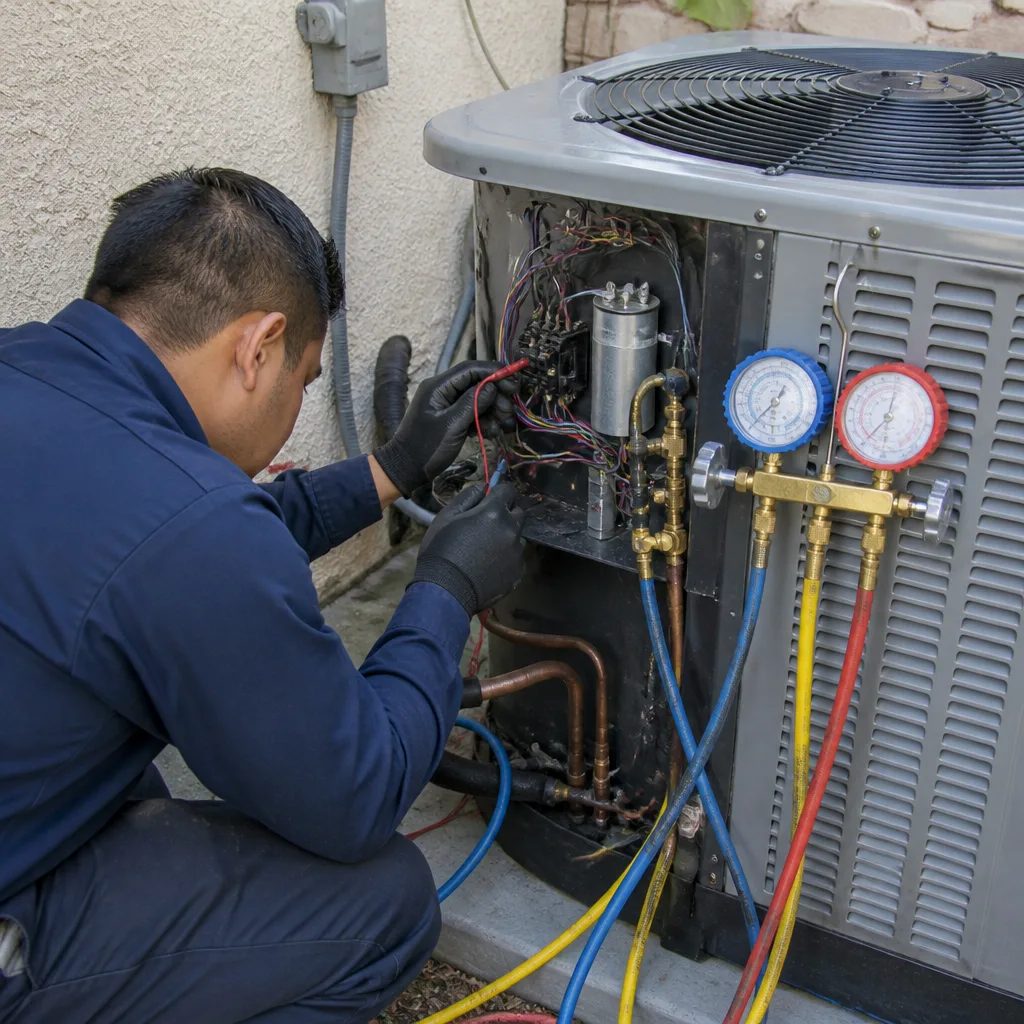
- Capacitor test: The technician measures the capacitor’s microfarad reading against its rating. A weak capacitor reads low and should be replaced before it fails and strands you without cooling.
- Contactor inspection: The electrical contacts that engage the compressor and fan get checked for pitting, charring, or uneven wear.
- Refrigerant pressure check: The technician verifies superheat and subcooling values against the manufacturer’s specifications for your specific equipment, whether it’s a Carrier package unit, a Trane split system, or another of the nine brands serviced at AC Installation in Riverside.
- Condensate drain clearing: The line is flushed or blown clear, and the technician checks for standing water in the drain pan.
- Coil inspection and cleaning: Both the evaporator and condenser coils are checked for cleanliness and airflow.
- Electrical connection tightening: Loose connections arc and generate heat. The technician should check and tighten all accessible electrical connections.
- Thermostat calibration: The thermostat is checked against an independent thermometer to make sure it’s reading accurately.
- Motor bearing check: The blower motor and condenser fan motor are checked for bearing noise, wear, and amp draw.
The written report you receive after the visit should list each checked component, its measured value, and the technician’s assessment of whether it needs attention now, in the next year, or not at all. At Meadowsweet Heating and Air Riverside, every maintenance visit includes a written report with photos, a written price before any work starts, and the same C.A.R.E. standards on every call: Clean up like it’s their own home, Ask before moving anything, Respect the family’s time and quiet hours, Explain the price before the work. Shoe covers and drop cloths come on every visit, and a photo of the clean-up is sent before the crew leaves. That’s the benchmark for what a real maintenance visit should look like.
A bare-minimum visit, by contrast, might be 20 minutes, include a filter change and a quick coil spray, and leave you with a one-line invoice. If you’re paying $89 – $160 for a tune-up, the detailed report is the deliverable that makes the visit worth the money. We’ve also given a full walkthrough in our guide to Furnace Repair in Riverside on how these same standards apply to heating systems in the shorter Riverside winter.
The Real Cost Picture: Maintenance vs. Repair vs. Replacement
Riverside homeowners ask us this in different forms: Is the yearly tune-up actually worth it, or is it just another service upsell? Here’s the honest cost structure, with real Riverside numbers.
| Item | Typical Riverside Cost | Notes |
|---|---|---|
| Annual professional tune-up | $89 – $160 | Includes the full written inspection described above |
| Filter (annual supply, monthly changes) | $96 – $216 | MERV 8, standard 16x20x1 size as an example |
| Capacitor replacement | $150 – $300 | Caught early during a tune-up, this is a minor job |
| Contactor replacement | $120 – $250 | Another minor component that fails predictably |
| Condenser coil cleaning (professional) | $100 – $180 | Needed if home cleaning has been skipped for years |
| Refrigerant leak repair and recharge | $400 – $900 | Depends on leak location and refrigerant type |
| Compressor replacement | $1,500 – $2,400 | The failure that maintenance is designed to prevent |
| Full system replacement | $8,000 – $16,000 | Ranges with equipment tier and home size, after rebates |
Do the math on a system that is 10 years old. A $125 tune-up that catches a weak capacitor and a dirty coil costs you $125 plus the $200 capacitor. Skip the tune-up for three years, and the first sign of trouble might be a compressor that has been running hot, starving the lifespan out of a $1,800 component that now needs replacing, likely in August when parts are hottest and wait times are longest.
For systems that are 15 years old or older and facing a major repair like a compressor, the honest answer is often replacement. A new system with a 10-year parts warranty, better efficiency, and available rebates through Riverside utilities can be the better financial move. That’s a conversation worth having with an honest contractor who will give you a written quote before any commitment, like the ones we provide on every visit.
Common Mistakes to Avoid
- Using a pressure washer on the condenser coil. High-pressure water bends the aluminum fins into a solid wall of metal that blocks airflow. Once the fins are bent, you’re paying a technician to comb them out, and a garden hose would have done the job.
- Jumping to MERV 13 without checking system compatibility. High-MERV filters restrict airflow, and on a Riverside AC that already runs long hours, the added restriction can freeze the evaporator coil and cause a no-cool call on the hottest day.
- Ignoring a dirty filter until the system struggles. By the time a clogged filter causes noticeable cooling loss, the system has been working against high static pressure for weeks, which shortens blower motor life.
- Blocking the outdoor unit with storage. Riverside garages are small, and we’ve seen many outdoor units used as shelving for bikes, bins, and boxes. The condenser needs two feet of clearance on every side to move enough air.
- Covering the outdoor unit with a solid tarp. Solid covers trap moisture against the metal and accelerate rust. If you want to cover the unit in winter, use a breathable cover or leave it uncovered entirely.
- Waiting until the first heat wave to schedule a tune-up. In Riverside, the first 95-degree stretch fills every HVAC company’s schedule within a day. Book a spring tune-up in March or April and skip the emergency wait.
- Putting off a small refrigerant leak. A system that is slightly low on refrigerant loses efficiency and cools unevenly. Left for a season, the leak grows, and now you’re also risking compressor damage from the low charge.
See the difference
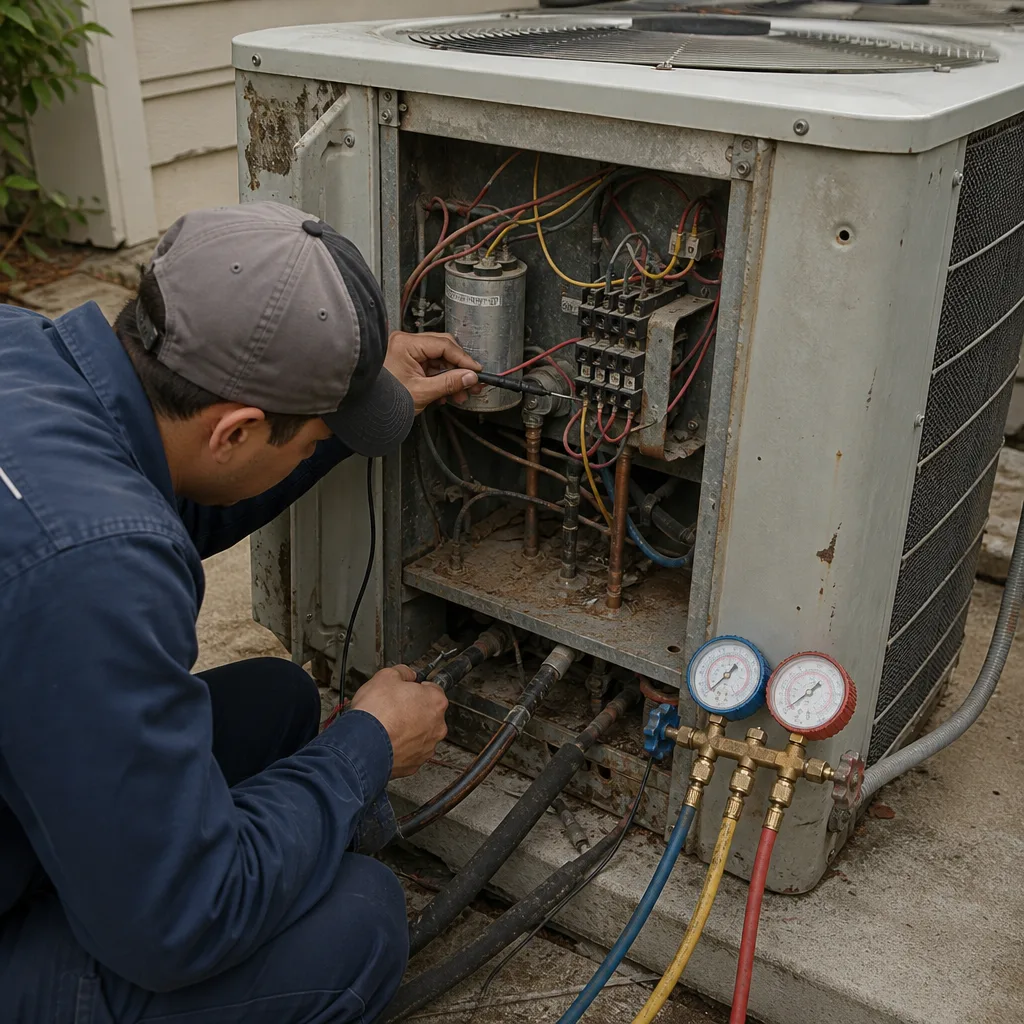 Before
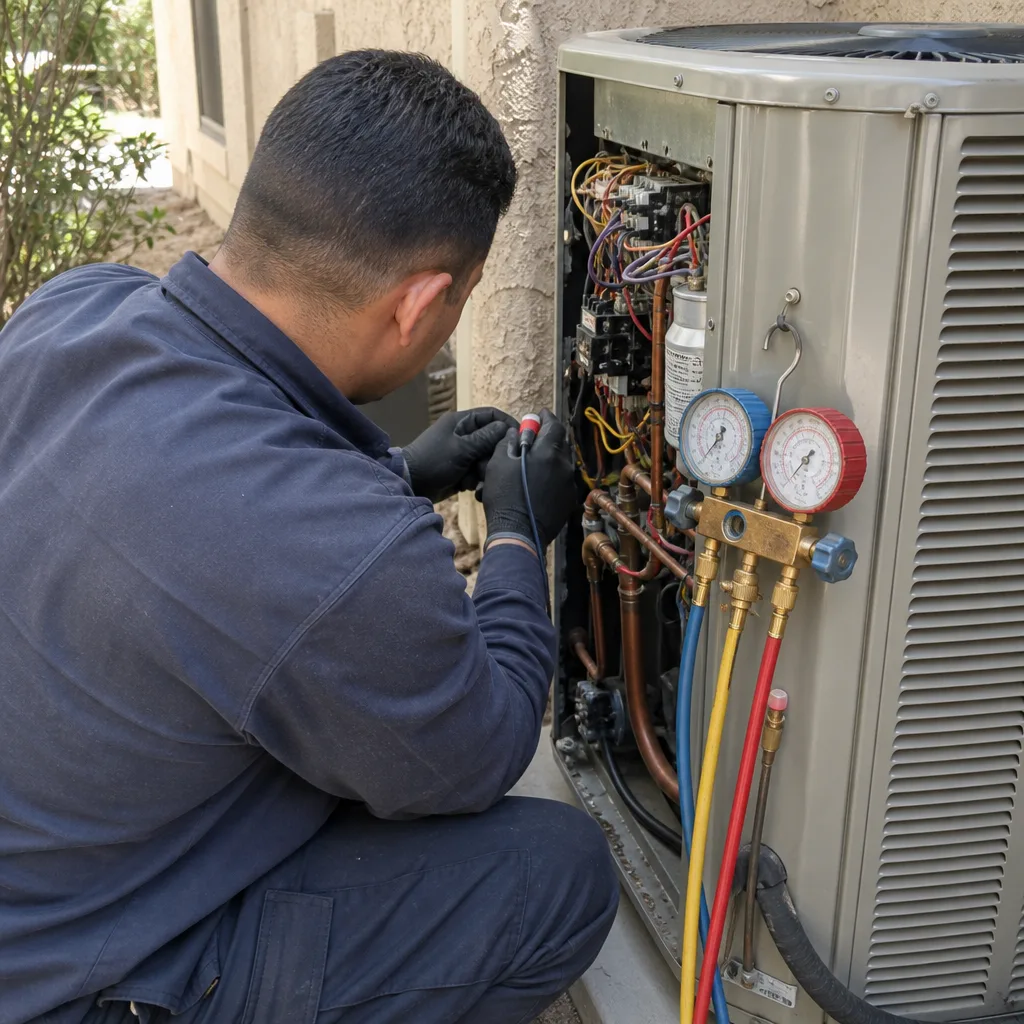 After
After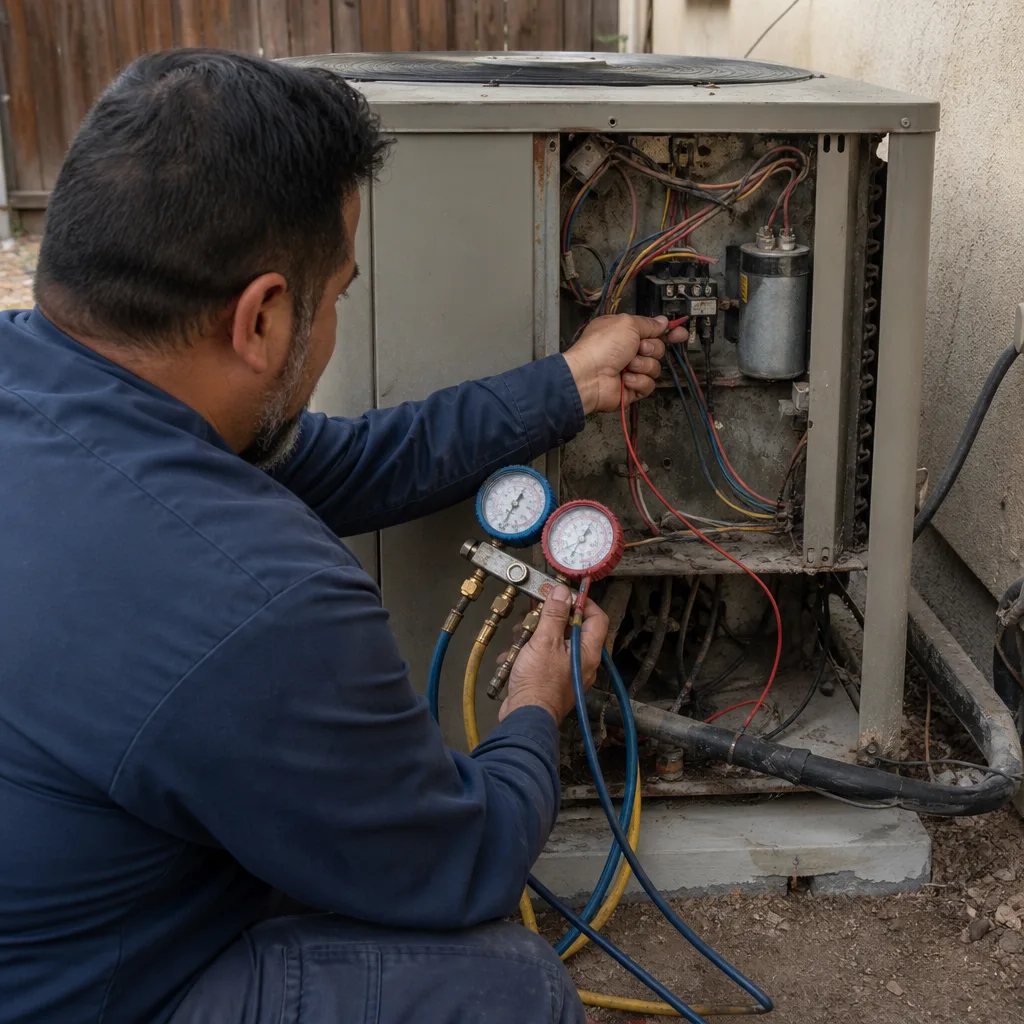 Before
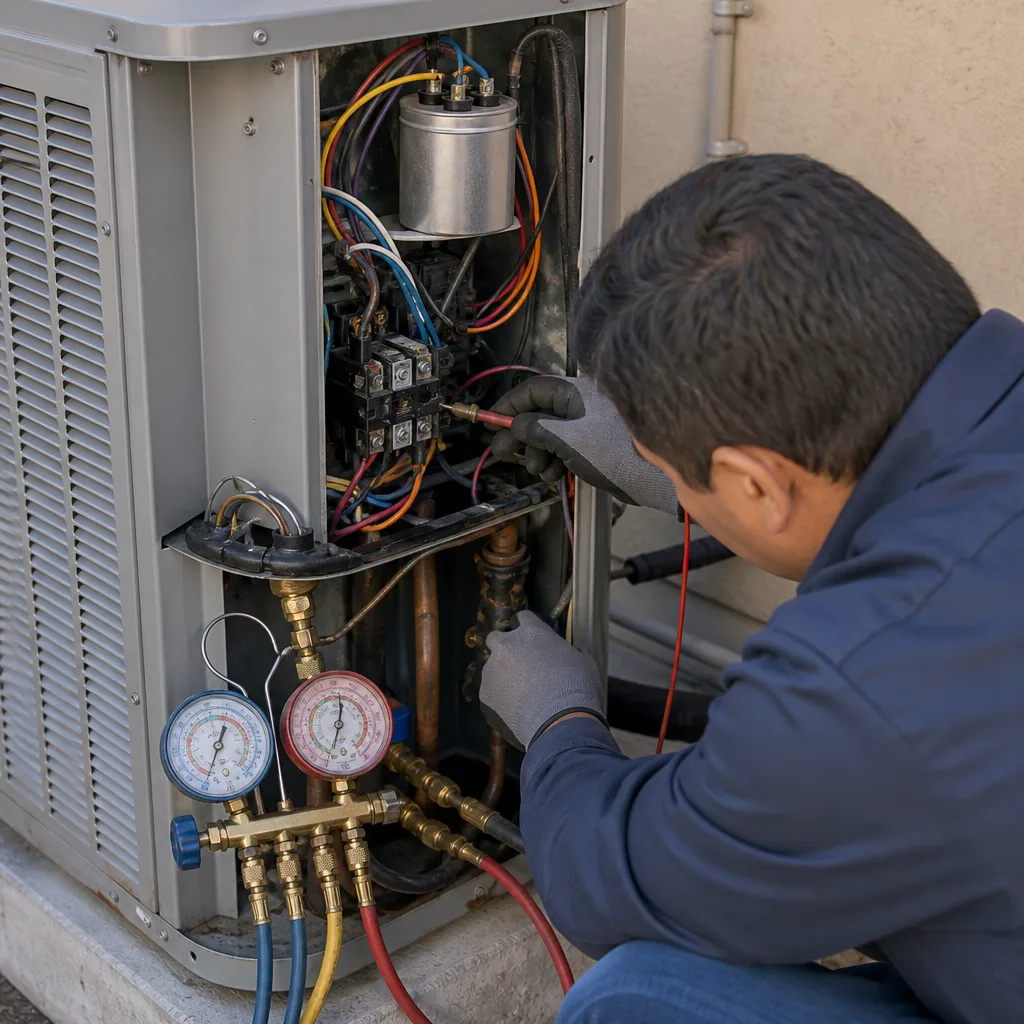 After
After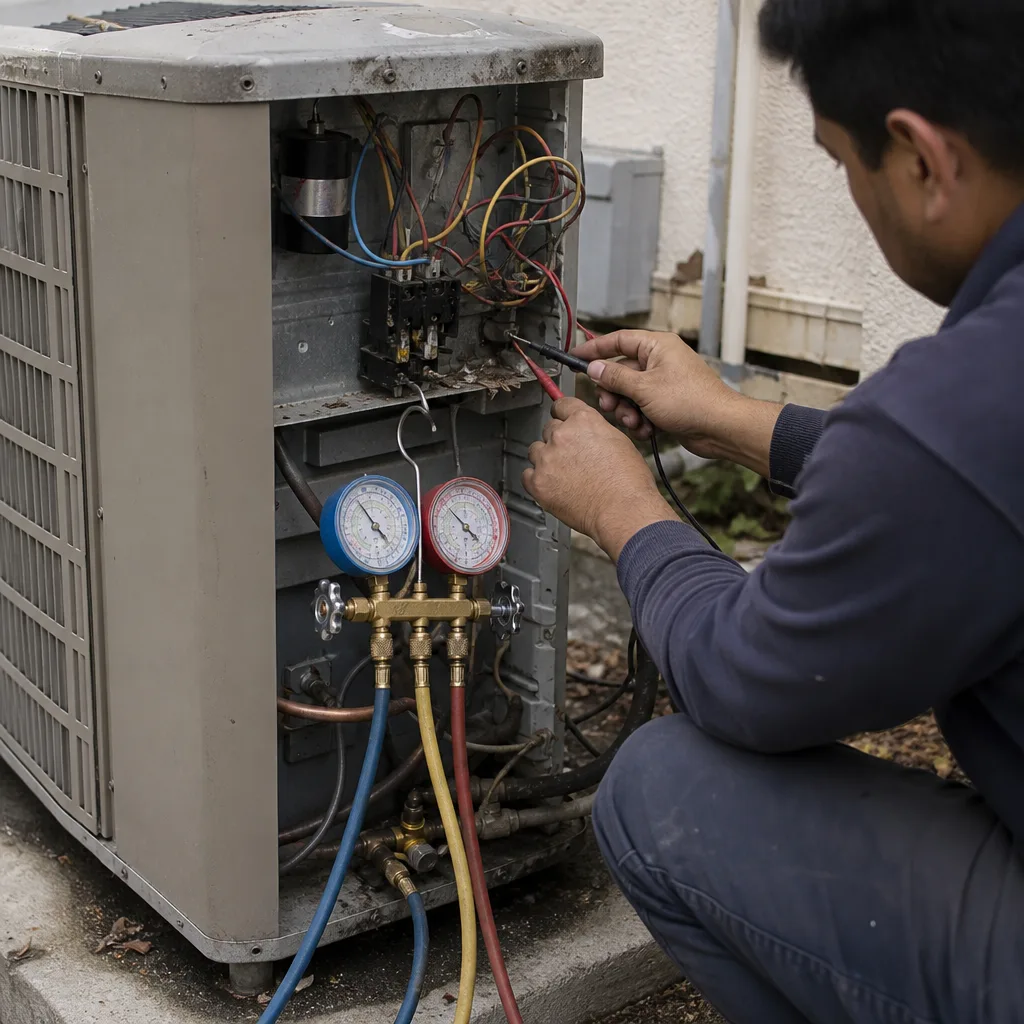 Before
 After
AfterWhen to Call a Professional
Call a licensed HVAC technician when you hear unusual sounds from the outdoor unit, when your system runs but doesn’t cool, when you see ice on the copper lines or the indoor coil, when your energy bill spikes without explanation, or when a breaker trips repeatedly. These are signs of electrical, refrigerant, or airflow problems that can cause serious damage if left running. For Riverside homeowners, the threshold is simple: if the problem involves refrigerant, electricity, or frozen coils, turn the system off and call. Meadowsweet Heating and Air Riverside offers free estimates in Riverside, call (707) 340-6380, and a live person answers every call, 24/7.
Frequently Asked Questions
Change your AC filter every 30 days during peak cooling months, May through October, and every 60 days during the cooler winter stretch. Riverside’s dry, dusty air and wildfire smoke events push filters to their limit faster than coastal California. Homes with pets or high-occupancy use may need to change filters every three weeks during dust season.
A professional AC maintenance visit in Riverside typically costs $89 to $160, depending on the company and the depth of the inspection. That price should include a written report with actual component measurements, not just a filter change and a quick look. Call (707) 340-6380 for an exact quote, estimates are free.
Yes. Riverside’s summer heat pushes AC systems to run hundreds of hours per season, and the two failures that cause most compressor replacements, dirty coils and degraded line insulation, are exactly what a tune-up catches. The $89 to $160 annual cost prevents the $1,500 to $2,400 repair that follows.
Yes, with a garden hose and a gentle spray pattern, and only after turning off the breaker. Riverside dust requires coil cleaning twice a year, in late spring and again after fire season. Never use a pressure washer, and if the coil has years of baked-on accumulation, hire a technician for a professional chemical cleaning.
MERV 11 is the right balance for most Riverside homes during smoke season. It captures significant smoke particles without the airflow penalty of MERV 13, which can freeze coils and overheat blower motors in standard residential systems. MERV 13 is only appropriate in short bursts and only if a technician has verified your system can handle the restriction.
The general rule we use in Riverside is this: if the repair costs more than one-third the price of a new system, and the system is over 12 years old, replacement usually makes more financial sense. A compressor replacement on a 15-year-old system is often the inflection point. New systems also qualify for rebates that older repairs don’t. Call (707) 340-6380 for a straight answer with written numbers, no pressure.
The Bottom Line
Riverside AC maintenance comes down to a few high-value actions: monthly filter changes with the right MERV rating, twice-a-year condenser coil cleaning with a garden hose, a five-minute line insulation check before each summer, and one professional tune-up every spring. The DIY items cost under $20. The tune-up costs $89 to $160 and gives you a written report that tells you what will fail next, before it happens in August. Skip these, and the first sign of trouble is often a $2,400 compressor replacement on a 105-degree day. That’s a preventable outcome, and this checklist gives you the tools to avoid it.
Written by Luis Serrano, Owner at Meadowsweet Heating and Air Riverside, serving Riverside since 2004.