
Last updated October 16, 2026
 AC repair
 Furnace & heating
 Heat pumps
 Ductless mini splits
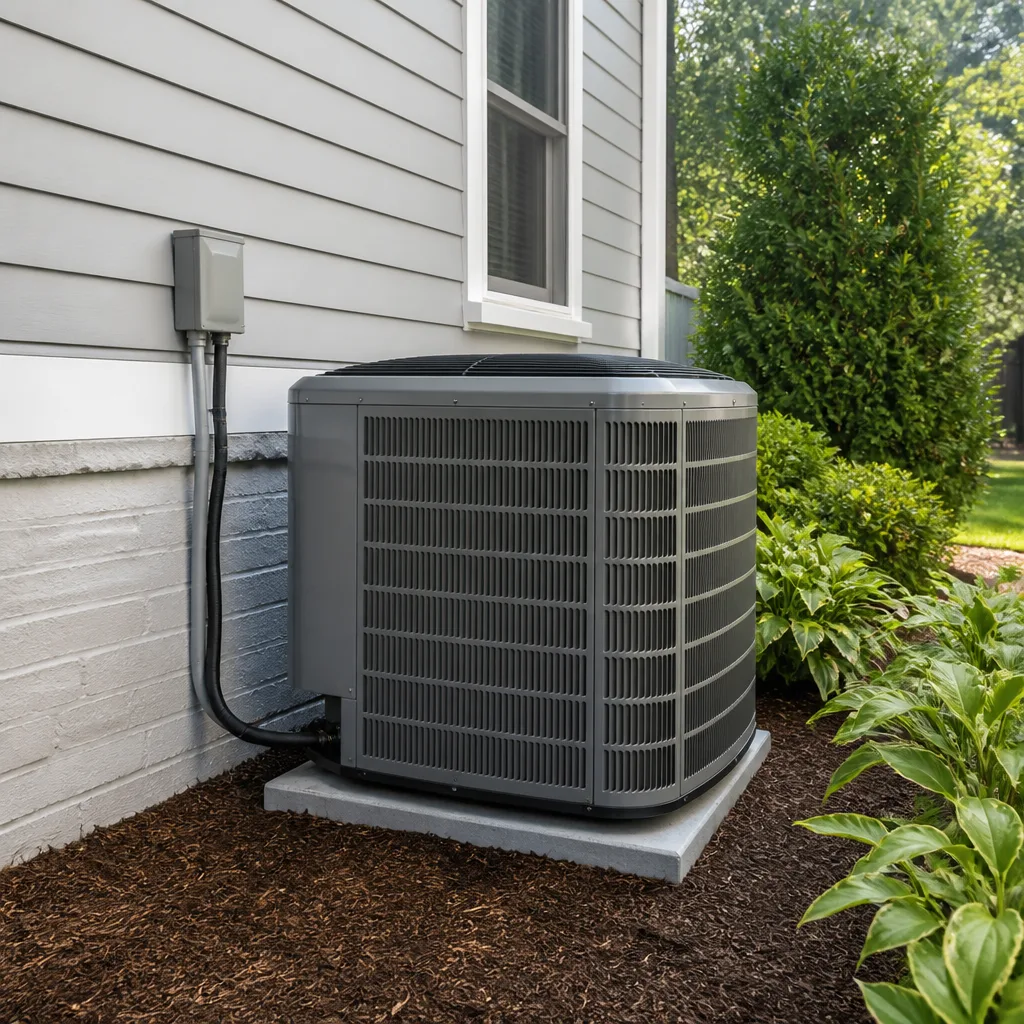 Carrier
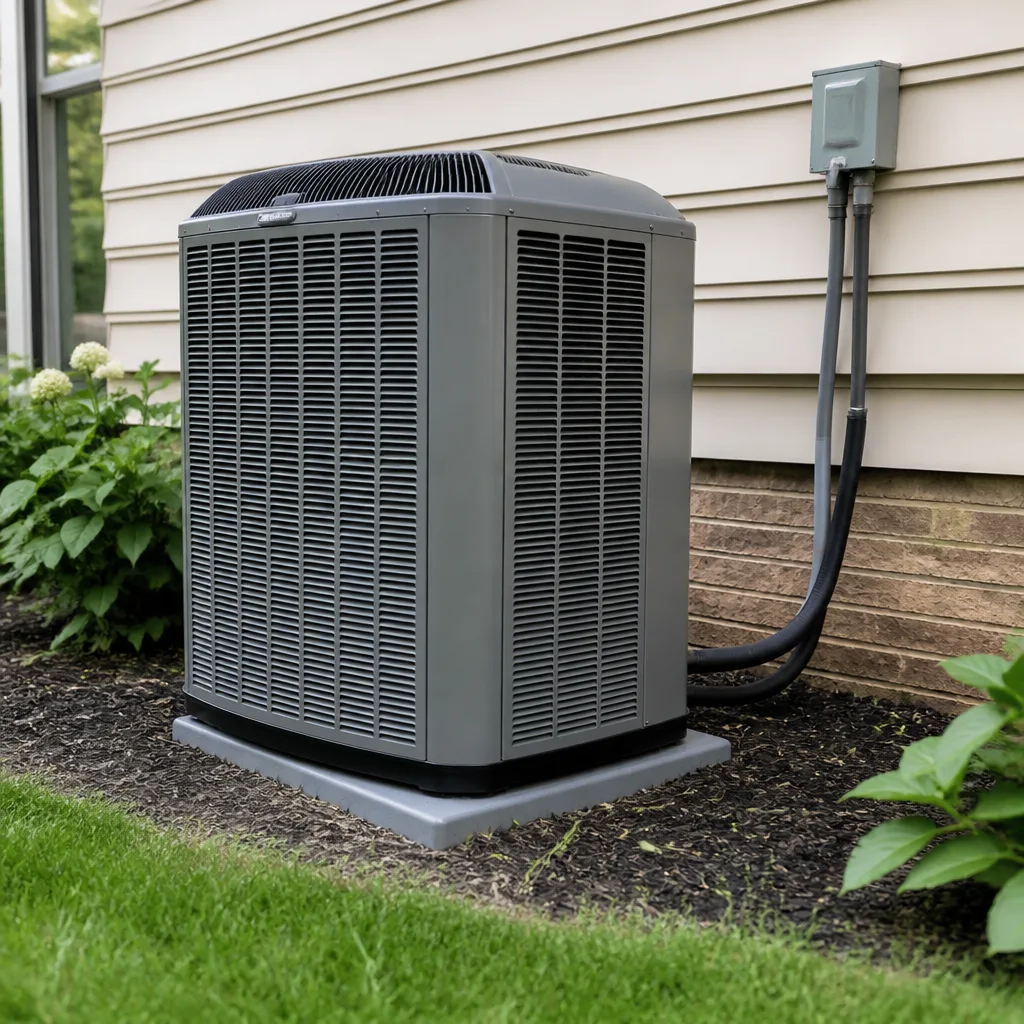 Trane
Trane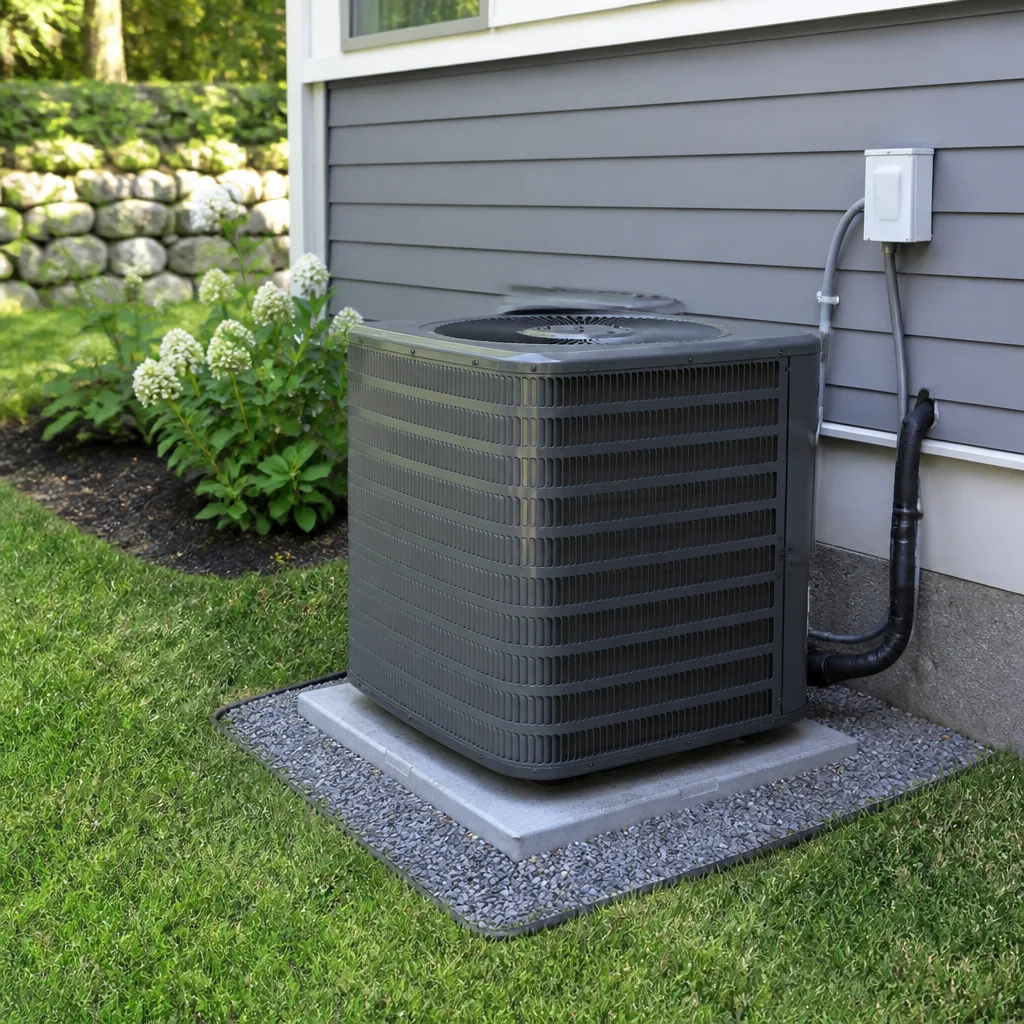 Goodman
Seasonal tune-up and full diagnostic on your Carrier, Trane, or Goodman system - readings shown to you before any repair is proposed
Diagnosis first, numbers second - you approve the repair price before a single part goes in.
Get your free estimateDIY vs Professional HVAC: The Riverside Homeowner’s Decision Guide
Changing your own air filter is DIY. Topping off refrigerant yourself is a federal Clean Air Act violation, and in between those two tasks sit a dozen jobs that Riverside homeowners routinely misclassify, sometimes voiding a manufacturer warranty in the process. This guide walks the legal line between what you can safely handle with a screwdriver and a garden hose and what California law reserves for licensed technicians. You’ll learn which five tasks are genuinely safe to do yourself, which three mistakes cost Riverside families the most money, and how to decide when a pro actually saves you cash instead of costing it.
Quick Answer
DIY HVAC work in Riverside makes sense for maintenance tasks like filter changes, condenser coil rinsing, thermostat battery swaps, and condensate drain clearing. But refrigerant handling, gas furnace repairs, and permitted equipment installations are reserved by federal and California law for licensed technicians, and attempting them yourself can void your warranty and create safety hazards that cost more than the service call would have. For help finding qualified help, see our guide on How to Hire a HVAC Contractor in Riverside: A Step-by-Step Guide.
Styles & brands we work with
Table of Contents
- The Legal Line: What California and Federal Law Actually Reserve
- Five DIY Tasks That Are Genuinely Safe in Riverside
- The Warranty Clause Most Homeowners Miss
- Duct Sealing: Mastic, Duct Tape, and Title 24 Reality
- An Honest Cost Comparison for Riverside Homes
- How Riverside’s Climate Changes the DIY Calculus
- Common Mistakes to Avoid
The Legal Line: What California and Federal Law Actually Reserve
The single most misunderstood fact in the DIY HVAC conversation is that refrigerant is not a gray area. Under Section 608 of the federal Clean Air Act, anyone who handles, adds, removes, or recycles refrigerant must hold an EPA Section 608 certification. That is not a suggestion and it is not a state-by-state rule. It is federal law, and it applies in Riverside exactly as it applies in Phoenix or Fresno. Homeowners who buy a cheap manifold gauge set online and “top off” their AC are committing a federal violation, full stop.
California adds its own layer. The California Contractor State License Board requires any HVAC work that involves refrigerant, gas line modification, electrical panel wiring, or permitted equipment installation to be performed by a licensed contractor. In Riverside, pulling a permit for a new AC or furnace installation means the work gets inspected by the city’s building department. See HVAC Permits, Codes & Inspections in CA: What You Need to Know for details on what to expect. An unlicensed DIY installation will fail inspection, and if it is discovered later, it can trigger fines, forced removal of the equipment, and – most painfully for the wallet – a voided manufacturer warranty.
Here’s the clean breakdown:
- Federal law reserves: refrigerant handling (recovery, charging, leak detection with electronic tools), any work that opens the sealed refrigerant system.
- California law reserves: gas line work on furnaces, electrical connections at the panel, permitted installations, any work on systems in rental properties that requires a licensed contractor.
- Homeowners in Riverside can legally do: filter replacement, thermostat battery changes, condenser coil rinsing with water, clearing condensate drain lines with a wet/dry vac, visual inspections, and basic thermostat programming changes.
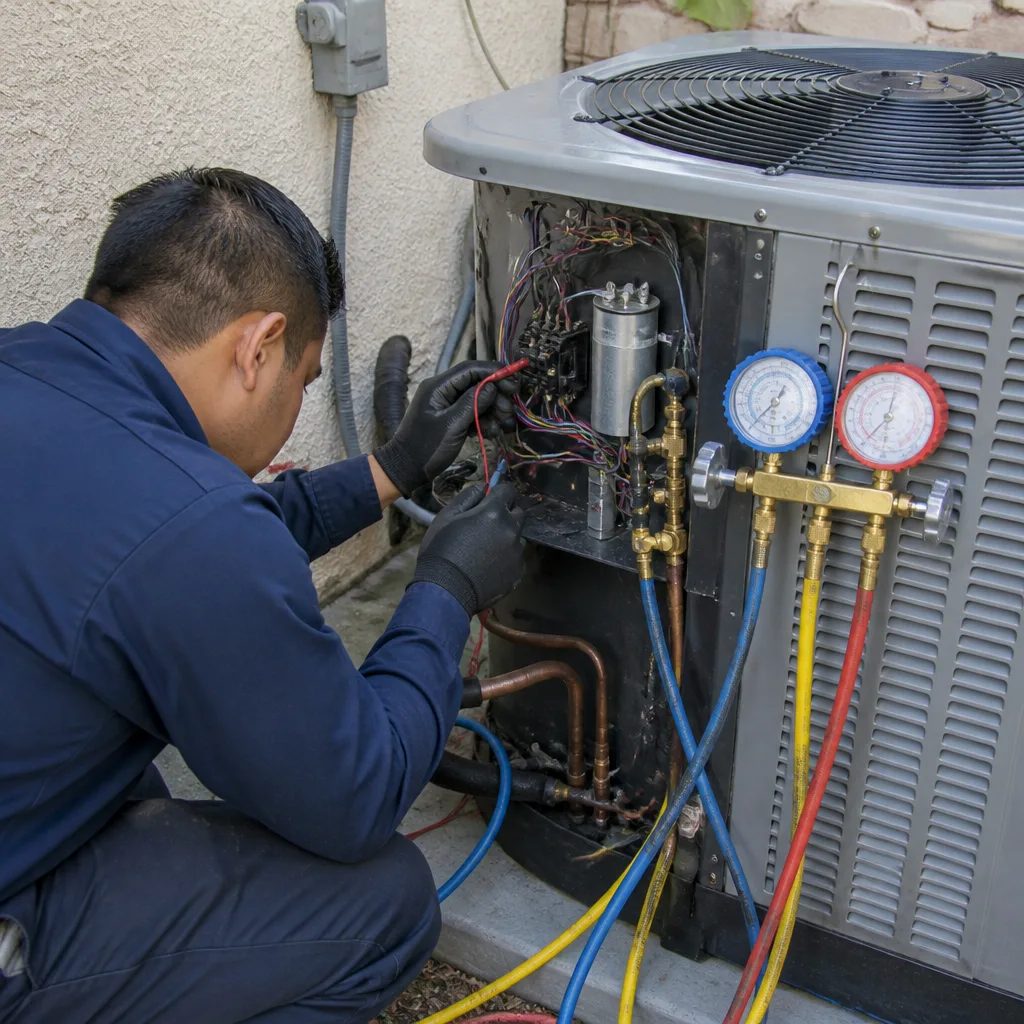
Where this gets expensive is when a homeowner crosses the line without knowing it. We have seen Riverside compressors fail within six months of a DIY “recharge” because the homeowner added refrigerant with air in the line, creating acid inside the system. The manufacturer denied the warranty claim because the work was performed by an uncertified individual. The repair cost $2,400 out of pocket. That same homeowner could have had the leak found and repaired by a professional for less.
Five DIY Tasks That Are Genuinely Safe in Riverside
Not everything requires a truck roll. In fact, there are five maintenance tasks that every Riverside homeowner should know how to do. They take minutes, cost almost nothing, and they protect your equipment between professional tune-ups. Here’s the list, with Riverside-specific instructions.
1. Air Filter Replacement
This is the highest-value DIY task in HVAC, period. A clogged filter drives up energy cost, reduces airflow, and forces the blower motor to work harder. In Riverside, where summer dust from the Santa Ana winds and spring pollen from the surrounding hills both move through return air, we recommend checking filters every 30 days during peak season and replacing them every 60 to 90 days. A basic 1-inch pleated filter costs $4 to $12 at any Riverside hardware store. The whole job takes 90 seconds. If you have pets, check monthly – Riverside homes with two or more dogs or cats routinely show filters that look solid gray after 45 days.
2. Condenser Coil Rinsing
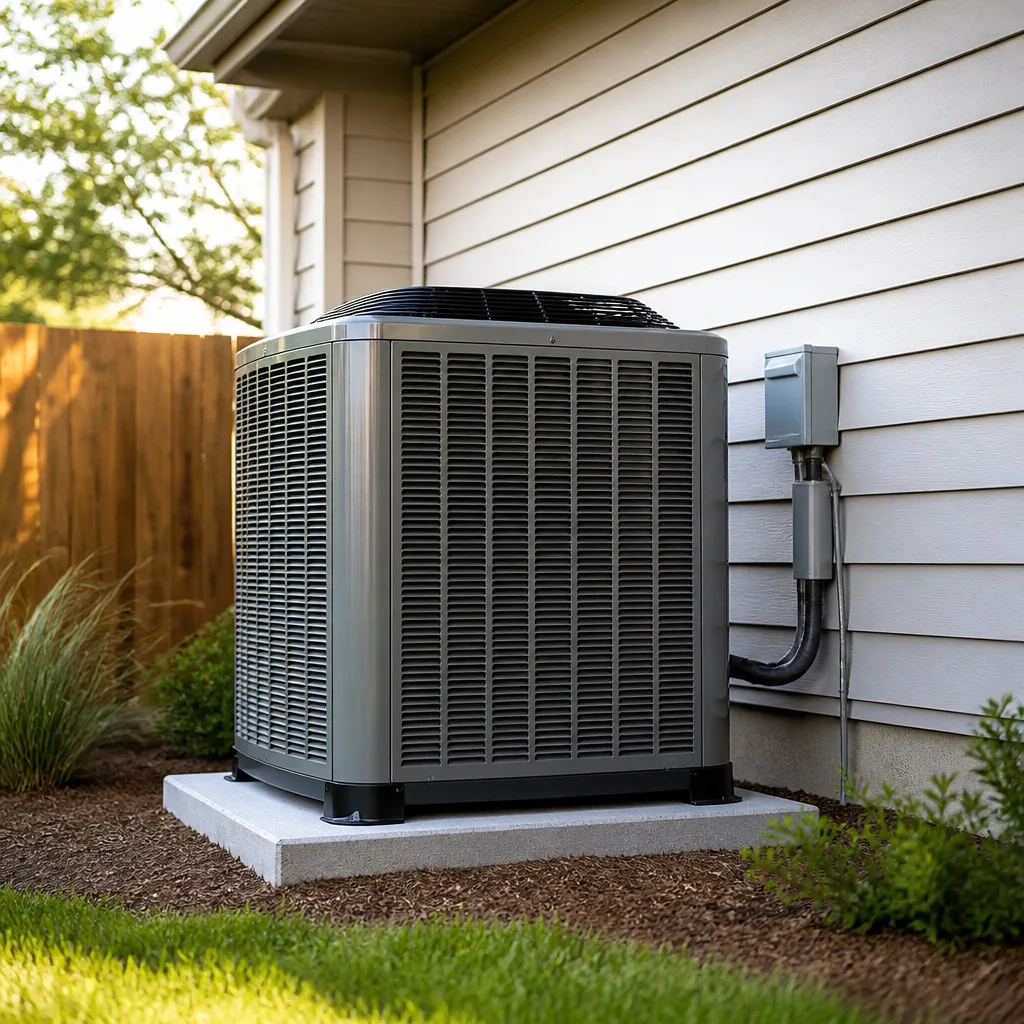
Your outdoor condenser sits in Riverside sun and wind. Cottonwood fluff from the Santa Ana River bottom, road dust, and grass clippings all collect on the coil fins and block heat transfer. You can rinse the coil safely with a standard garden hose on a gentle spray setting. First, turn the system off at the breaker. Then spray from the inside out if you can reach the interior, or top-down if you can’t. Never use a pressure washer – the high PSI will fold the aluminum fins flat and reduce the coil’s ability to shed heat. Doing this quarterly through the summer can realistically extend compressor life by two to three years, because the compressor doesn’t have to run as hot or as long.
3. Thermostat Battery Replacement
Most digital thermostats use AA or AAA batteries that last 12 to 18 months. When the batteries die, the thermostat loses its programming and the system stops cycling. If your Riverside AC won’t turn on and the thermostat screen is blank or dim, replace the batteries before calling anyone. This is the single most common “no cooling” call we get that resolves in under two minutes at zero cost. Look for a small slot or slide-off face on the front of the thermostat.
4. Condensate Drain Line Clearing
Riverside’s dry summers mean condensate lines can clog with a thick paste of dust and algae. When the line clogs, the float switch trips and your AC shuts down – or worse, water backs up and spills onto the floor or ceiling. You can clear the line yourself with a wet/dry vacuum attached to the drain outlet outside the house. Add a cup of white vinegar to the line every 60 days during cooling season to slow algae growth. If the line clogs repeatedly, that is a sign of a deeper issue and worth a professional look.
5. Visual Inspection After Santa Ana Wind Events
After a strong Santa Ana event, walk around your outdoor unit. Look for debris jammed against the coil, bent fins, disconnected electrical conduit, or a unit that has shifted on its pad. If the unit is tilted more than a few degrees, it can strain the refrigerant lines. You can straighten minor debris and fins with a fin comb from a hardware store. If you see oil spots near refrigerant line connections, that is a refrigerant leak and it needs a licensed technician.
The Warranty Clause Most Homeowners Miss
Buried in the fine print of most major equipment warranties – Carrier, Bryant, Trane, Lennox, Goodman, Rheem, York, Daikin, and American Standard included – is a sentence that reads something like this: “This warranty is void if the equipment is not maintained by a qualified service professional at least annually.” Homeowners who handle all maintenance themselves, skip professional tune-ups entirely, and then file a warranty claim after a compressor failure are often shocked when the manufacturer denies it.
This is the hidden cost of a DIY-only approach. A homeowner who changes filters and rinses coils is doing genuine good for the equipment. But the manufacturer has no record of that work, no documented measurements of refrigerant pressure or electrical draw, and no inspection history. When the compressor fails at year six of a ten-year warranty, the first question the manufacturer asks is “who serviced this system and when?”
Our practical advice is simple: do the DIY maintenance tasks listed above, and book one professional inspection per year. That annual visit documents system health, catches small issues before they become compressor failures, and keeps your warranty enforceable. For most Riverside homes, that visit costs between $89 and $149 depending on the season and the equipment. Compared to a denied $2,000 compressor warranty claim, it is inexpensive insurance.
If you’ve installed a system in the last five years and aren’t sure whether you’re meeting the maintenance requirement, pull out your warranty packet and read the exclusions page. Then call a Riverside HVAC company and ask specifically about documented annual maintenance. Not all tune-ups include the documentation that manufacturers want to see.
Duct Sealing: Mastic, Duct Tape, and Title 24 Reality
Duct sealing is the one area where the DIY conversation gets genuinely confusing, because there are two very different jobs hiding behind the same words. Let’s separate them clearly.
Sealing accessible duct joints with mastic: This is a legitimate DIY task. If you can see your ductwork – in an attic, a crawlspace, or a garage – and you can reach a leaking joint, you can brush on water-based mastic and let it dry. Mastic is a thick paste that hardens into a flexible seal. A gallon costs $15 to $25 at any Riverside home center. It lasts 20-plus years when applied properly. This is the material professionals use, and there’s no reason a careful homeowner can’t use it too.
Duct tape: Forget it. The classic gray fabric tape breaks down in attic heat within two to three years. We’ve pulled miles of crumbling duct tape out of Riverside attics, where summer temperatures above 140 degrees bake the adhesive to dust. If you’re going to do the job, use the right material. Duct tape on ducts is a temporary fix that creates a false sense of security.
Here’s where the legal line appears: California Title 24 energy code requires that any duct system that’s been significantly modified – generally meaning more than 25 percent of the ductwork replaced or sealed – be tested for leakage by a certified technician using a duct blaster. New duct systems and major alterations require a permit and a passing leakage test before the job is signed off. What a homeowner can do is spot-seal small, accessible leaks. What a homeowner cannot legally do is replace or redesign duct runs and call it done. If your Riverside home has ducts that run through a hot attic and you’re losing conditioned air, you can seal what you can reach. But if the system needs real work – sizing corrections, new runs, or leakage testing for a remodel or equipment replacement – that is licensed contractor territory under Title 24.
An Honest Cost Comparison for Riverside Homes
Most cost comparisons for DIY versus professional HVAC are dishonest because they compare a legal professional repair against an illegal DIY version of the same repair. A homeowner can buy a 30-pound cylinder of R-410A refrigerant for $250 to $400 online. A professional recharge costs $200 to $400 in Riverside, including labor and refrigerant. On paper, DIY looks cheaper. In reality, the DIY version is a federal violation, and the homeowner who does it has no leak detection tools, no ability to pull a proper vacuum, and no warranty backing. The honest comparison is between legal DIY maintenance and professional service. Here’s what that actually looks like:
| Task | DIY Cost | Professional Cost in Riverside | Verdict |
|---|---|---|---|
| Filter replacement (per quarter) | $4 – $12 | $25 – $45 per visit | DIY is clearly worth it |
| Condenser coil rinse | Free with garden hose | $75 – $125 per visit | DIY is clearly worth it |
| Thermostat battery | $3 – $6 | $95 – $150 service call | DIY is clearly worth it |
| Annual professional tune-up | N/A (documentation required) | $89 – $149 | Professional is the only real option |
| Refrigerant leak repair | Illegal without EPA cert | $250 – $1,500 depending on location | Professional is the only legal option |
| Furnace gas valve replacement | Illegal and dangerous | $350 – $700 | Professional is the only smart option |
| Full system replacement | Illegal without license and permit | $8,000 – $16,000 installed | Professional only, permitted and inspected |
The takeaway from this table: the DIY tasks that save real money are the maintenance tasks, and they save about $200 to $400 per year total. The big-ticket items – refrigerant work, gas work, replacements – are not DIY options in any legal or practical sense. A homeowner who learns to do the maintenance tasks and leaves the rest to professionals gets the financial benefit of DIY without any of the legal or warranty risk.
One more honest note on cost: a homeowner who rinses the condenser coil quarterly, changes filters on schedule, and keeps the outdoor unit clear of debris can realistically extend compressor life by two to three years. That’s $1,500 to $2,500 of postponed replacement cost, in addition to the year-over-year energy savings from a clean system. That’s the real financial argument for DIY maintenance, and it doesn’t require touching anything dangerous or illegal.
How Riverside’s Climate Changes the DIY Calculus
Riverside is not San Diego. It doesn’t have the marine layer rolling through at 5 p.m. to knock the temperature down. Riverside summers are long, dry, and hot, with regular stretches above 100 degrees from July through September. The cooling season runs from roughly May through October – six months, not the three or four that coastal homeowners deal with. That longer season changes the DIY math in three specific ways.
First, dust. The Santa Ana winds kick up particulate matter from the dry hills and riverbeds that surrounds the city. Filters in Riverside clog faster than filters in coastal cities. If you’re following a national guideline that says “change your filter every 90 days,” you’re likely running with a constricted system for weeks. Check every 30 days during cooling season. Homes in the La Sierra and Orangecrest areas, where newer construction and surrounding open land mean more airborne dust, may need filters changed every 45 days.
Second, condenser coil load. The outdoor unit sits in full Riverside sun and pulls air across coils that collect dust, cottonwood, and grass clippings. A clean coil sheds heat efficiently. A dirty coil forces the compressor to run hotter and longer, which shortens its life. The quarterly rinse described above is more important in Riverside than in a temperate climate because the system simply works harder here.
Third, attic heat. Ductwork that runs through a Riverside attic sits in temperatures that can exceed 140 degrees in August. This is why sealing accessible duct leaks – not just for air loss, but for pulling hot attic air into the return side – has a fast payback in Riverside. It’s also why the duct tape you bought last year is already failing. Riverside attics are hostile to adhesives. Use mastic or call a professional who will.
Common Mistakes to Avoid
- “Topping off” refrigerant with an online-purchased gauge set. This is a federal violation, and it usually introduces air and moisture into a sealed system that then turns acidic and destroys the compressor. We’ve replaced several Riverside compressors that died this exact way.
- Using duct tape on ductwork. Riverside attic heat degrades the adhesive within two years. The tape peels, the leak returns, and you’ve spent your weekend accomplishing nothing. Use mastic or don’t do it.
- Power-washing the condenser coil. High pressure folds the aluminum fins flat. A flattened fin can’t shed heat. Use a garden hose on a gentle setting, or call a professional who uses the right coil cleaner and fin comb equipment.
- Ignoring the annual professional maintenance requirement. Most manufacturer warranties require documented annual service. Skip it and your compressor failure may not be covered. This is the most expensive mistake on this list, and it’s invisible until the claim is denied.
- Attempting a gas furnace repair without training. Gas valves, burner assemblies, and heat exchangers are not DIY territory. A gas leak inside a Riverside home is a life safety issue, not a weekend project.
- Replacing a thermostat without checking system compatibility. Some Riverside homes with older systems use line-voltage or proprietary communicating thermostats. Wiring a standard 24V thermostat into those systems can destroy the control board.
- Waiting until the first 105-degree day to address a weak system. Riverside HVAC companies book out fast in July and August. If your AC struggled last September, schedule service in the spring, when you can get same-week appointments and avoid overtime pricing.
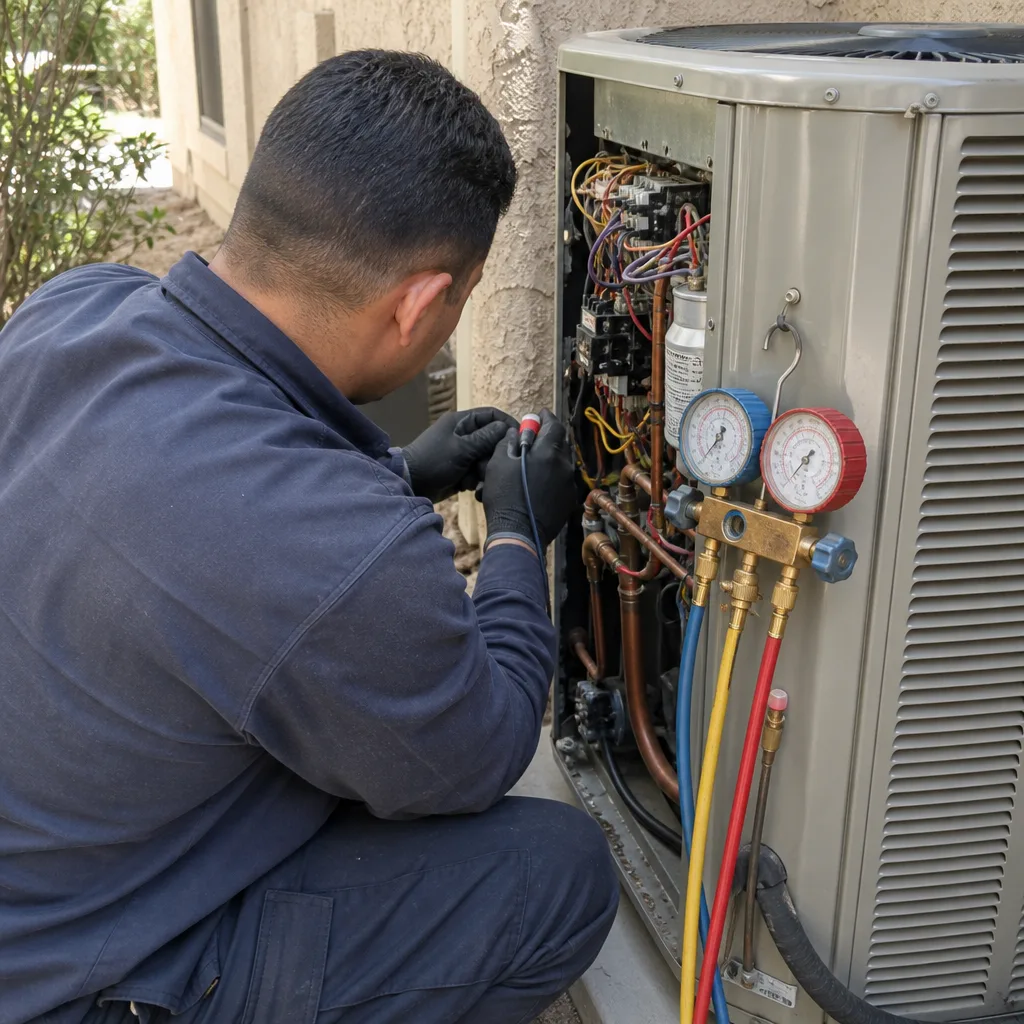
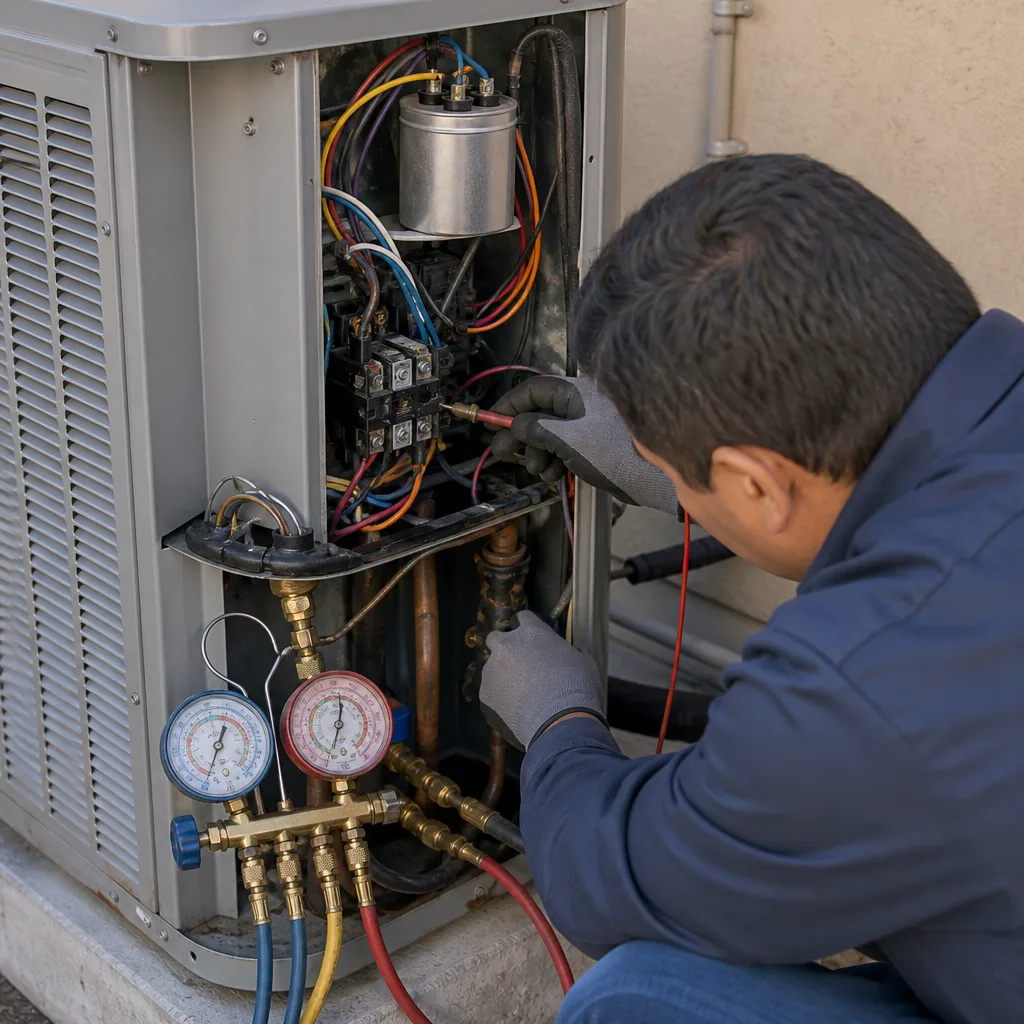
See the difference
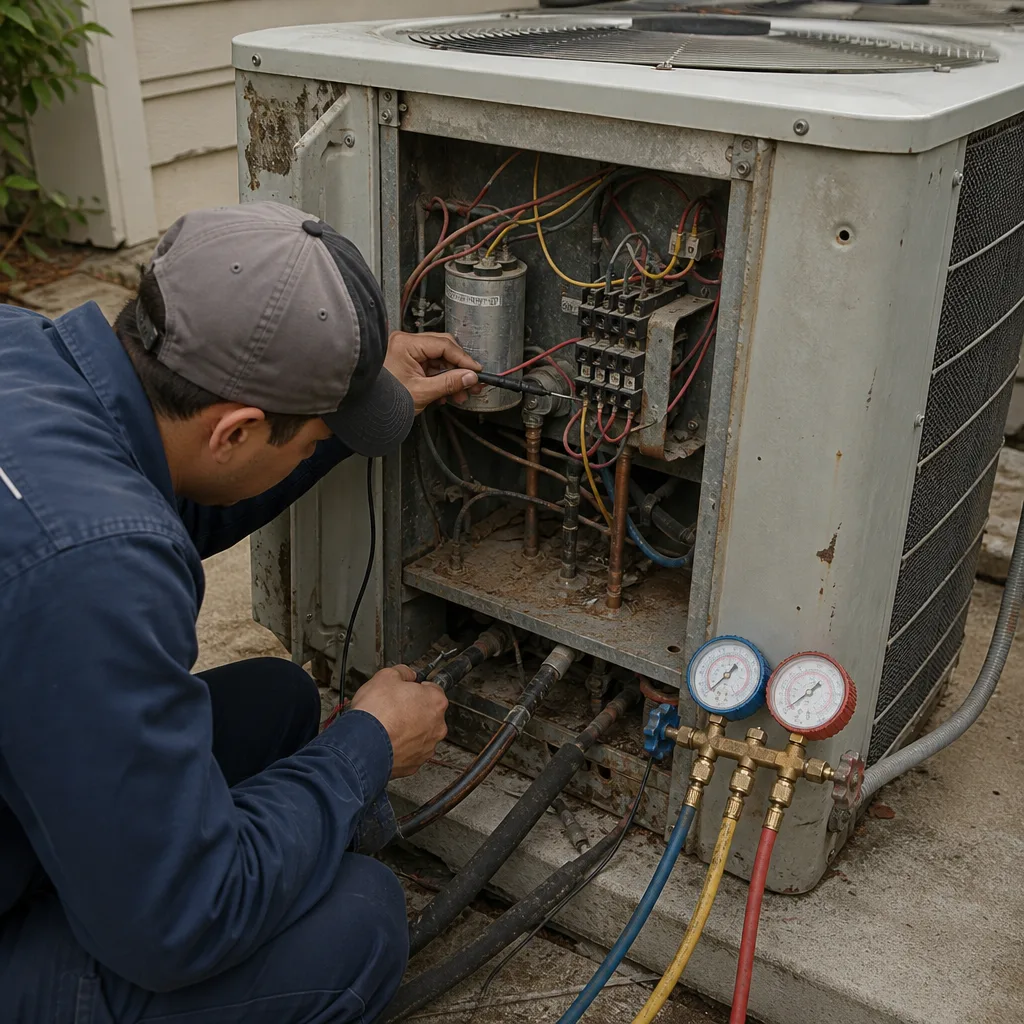 Before
 After
After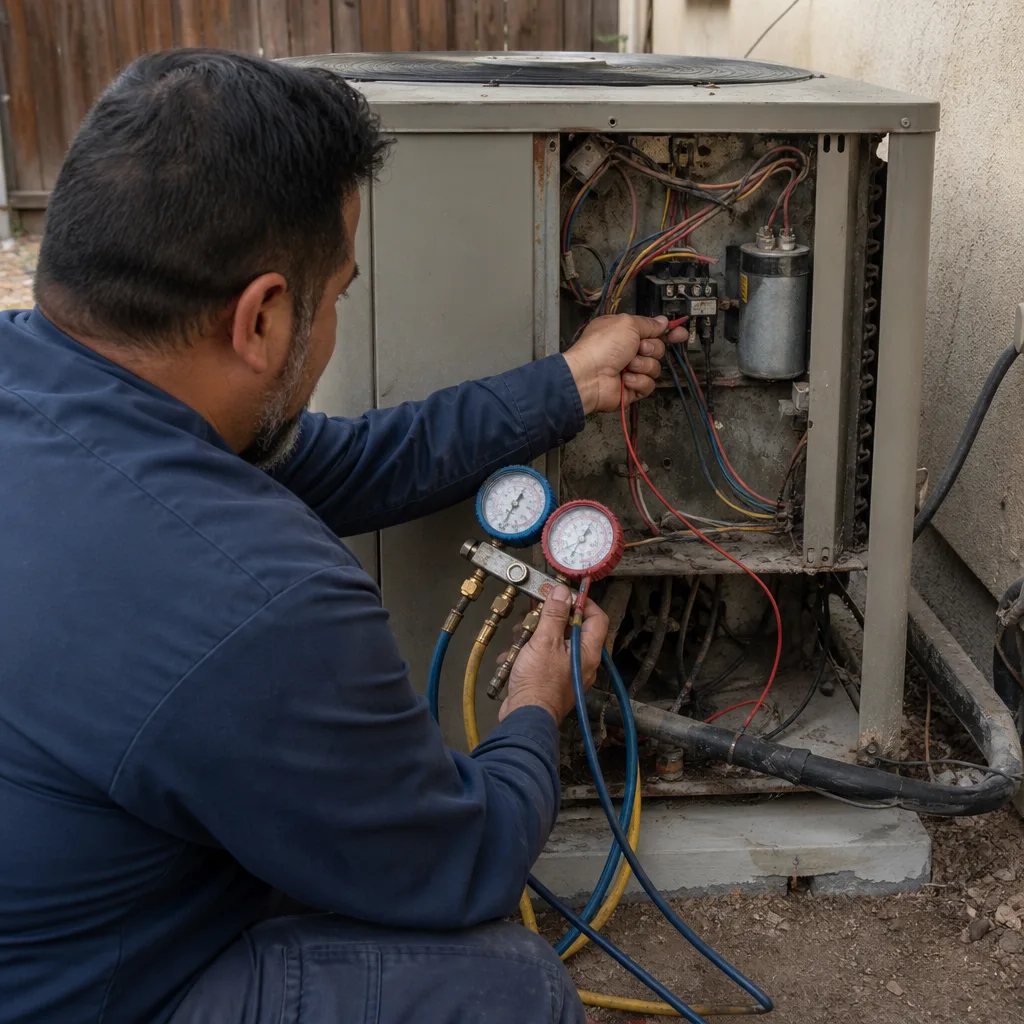 Before
 After
After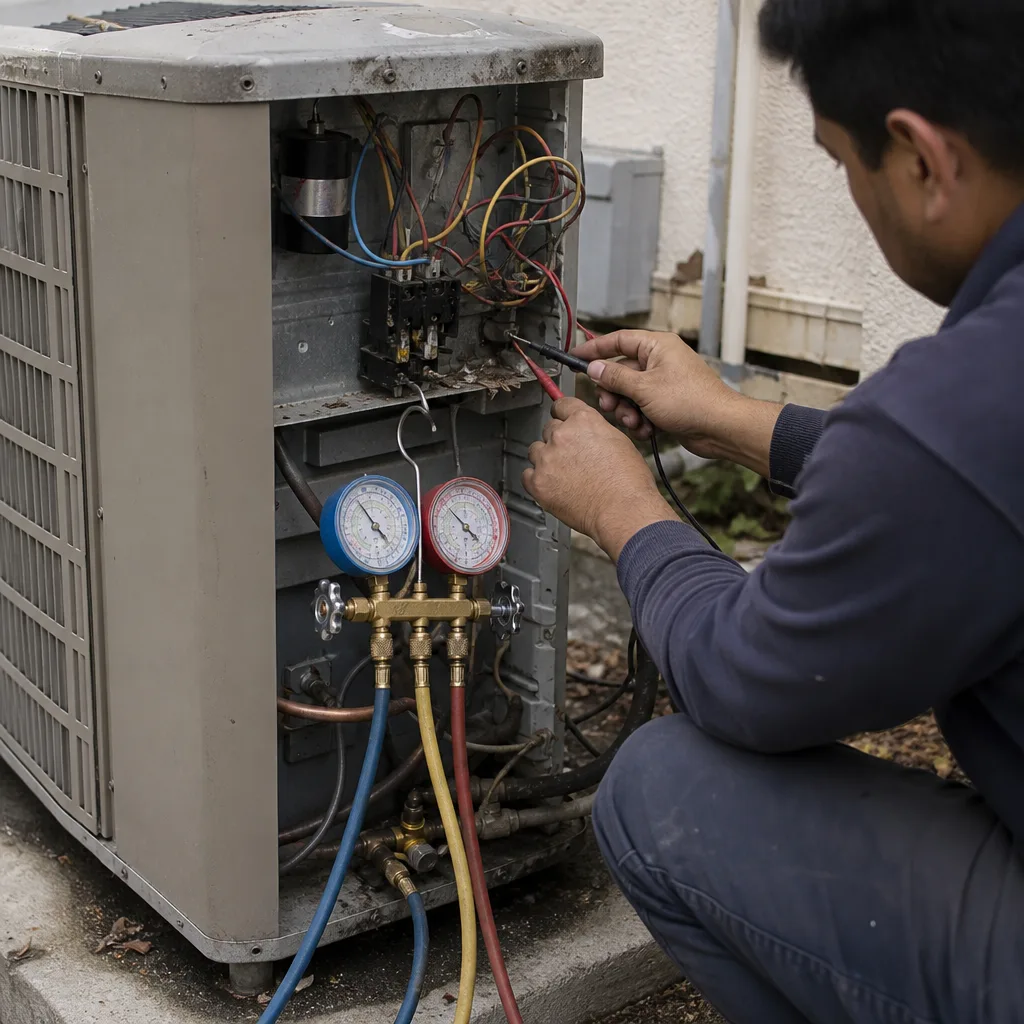 Before
 After
AfterWhen to Call a Professional
Call a licensed HVAC contractor when you smell gas near your furnace, when your AC is blowing warm air and the thermostat and filter are both fine, when you see ice on the indoor coil or refrigerant lines, when the outdoor unit makes grinding, screeching, or buzzing sounds, or when you need any work that involves refrigerant, gas, electrical panels, duct modification, or equipment replacement. If you’re in Riverside and not sure which category your problem falls into, Meadowsweet Heating and Air Riverside offers free estimates – call (707) 340-6380 and a live person will answer, day or night.
Frequently Asked Questions
No. Federal law under Section 608 of the Clean Air Act requires an EPA Section 608 certification to handle refrigerant. California law reinforces this by requiring licensed contractors for refrigerant work on residential systems. Buying refrigerant without certification is also illegal in most cases.
You can replace air filters, rinse the condenser coil with a garden hose, replace thermostat batteries, clear the condensate drain line with a wet/dry vac, and seal small accessible duct leaks with mastic. These tasks are legal, safe, and genuinely valuable for system health.
Basic homeowner maintenance does not void a warranty. However, most manufacturer warranties require documented annual professional maintenance to remain valid for compressor and heat exchanger coverage. DIY-only maintenance means the manufacturer may deny a major component claim.
A professional AC or furnace tune-up in Riverside typically costs between $89 and $149 depending on the season, the equipment, and the company. It’s the documentation from that visit that keeps your warranty enforceable. AC Repair in Riverside pricing starts with a written quote before any work begins.
As a general rule, if your system is under 10 years old and the repair is under $1,500, repair is usually the better financial call. If the compressor has failed, the system uses R-22 refrigerant, or the repair approaches 50 percent of replacement cost, replacement is worth evaluating. AC Installation in Riverside can include a written fixed price and a set install date.
For small, accessible leaks, yes – brush-on mastic is inexpensive, permanent, and DIY-friendly. For anything beyond spot sealing, such as major duct modification or leakage testing required under Title 24, you need a licensed contractor with proper testing equipment.
Meadowsweet Heating and Air is qualified to service equipment from nine major brands, including Carrier, Bryant, Daikin, and American Standard. Furnace Repair in Riverside covers diagnosis, repair, and maintenance for gas and electric furnaces.
The Bottom Line
The DIY versus professional HVAC decision in Riverside is not a money-versus-quality tradeoff. It’s a legal-and-warranty line, and the tasks on each side of that line are clearly defined. Homeowners should absolutely change their own filters, rinse their own condenser coils, swap thermostat batteries, clear condensate drains, and seal small duct leaks with mastic. Those tasks save real money and extend equipment life. But refrigerant work, gas line work, electrical connections, permitted installations, and major duct modification belong to licensed professionals, and attempting them yourself is a federal violation, a warranty risk, and sometimes a genuine safety hazard. Do the safe maintenance yourself, book one professional tune-up per year to keep your warranty enforceable, and call a Riverside HVAC contractor for everything on the other side of the line. For more guides & resources on keeping your system running efficiently, explore our blog.
Written by Luis Serrano, Owner at Meadowsweet Heating and Air Riverside, serving Riverside since 2004.