
Last updated October 16, 2026
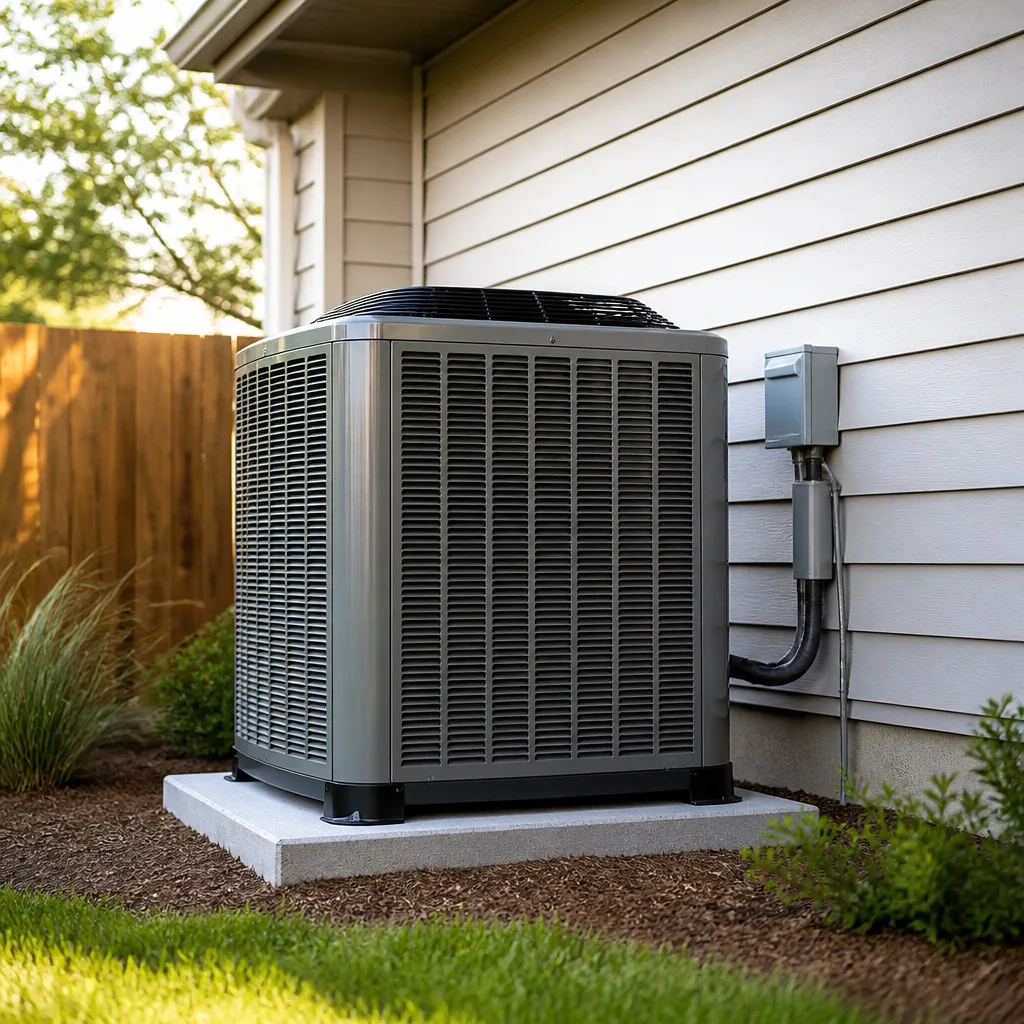 AC repair
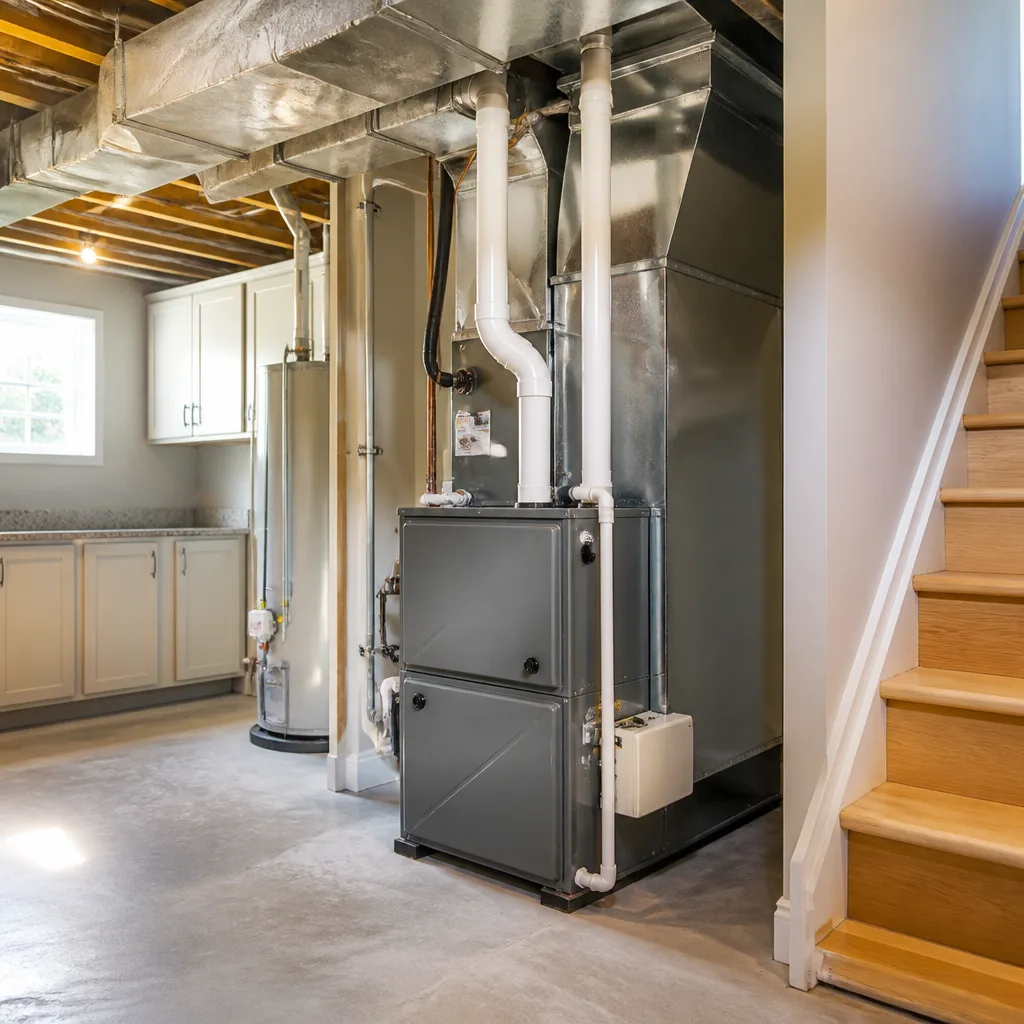 Furnace & heating
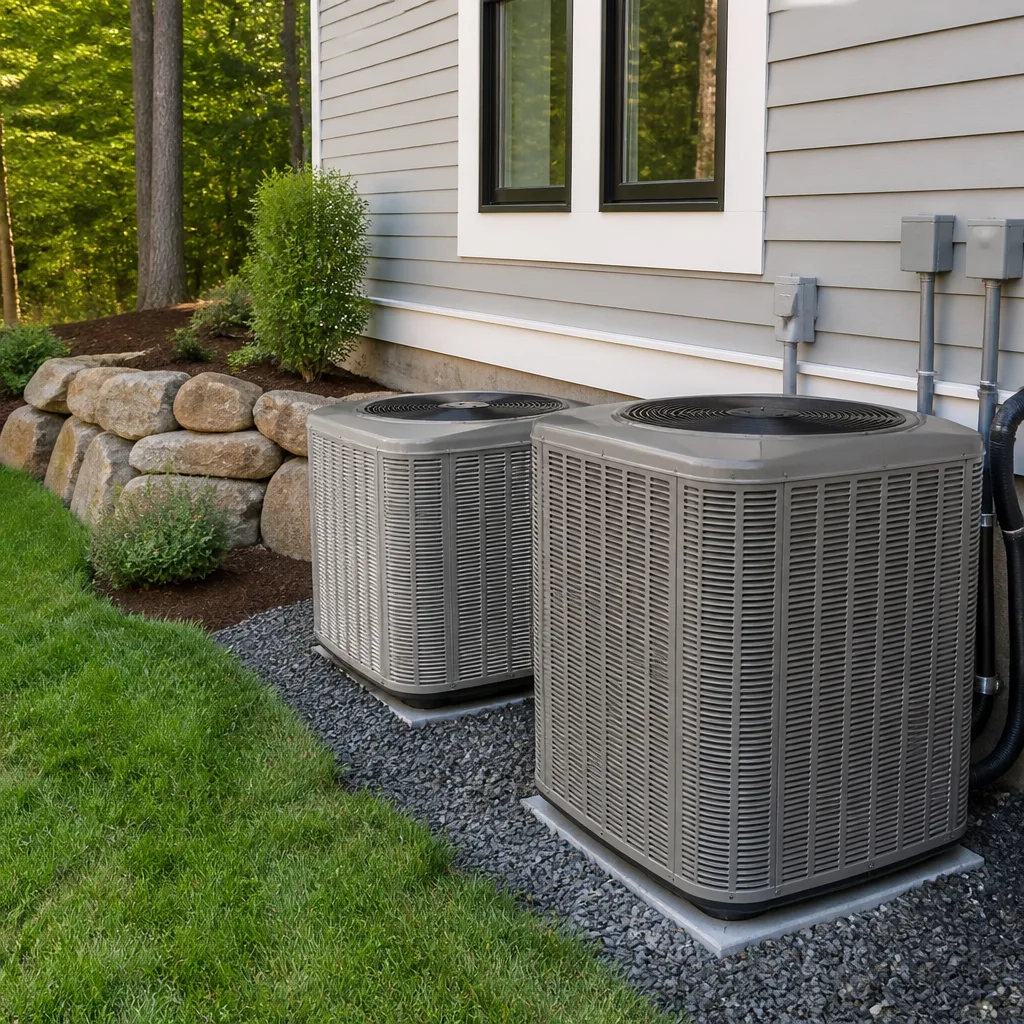 Heat pumps
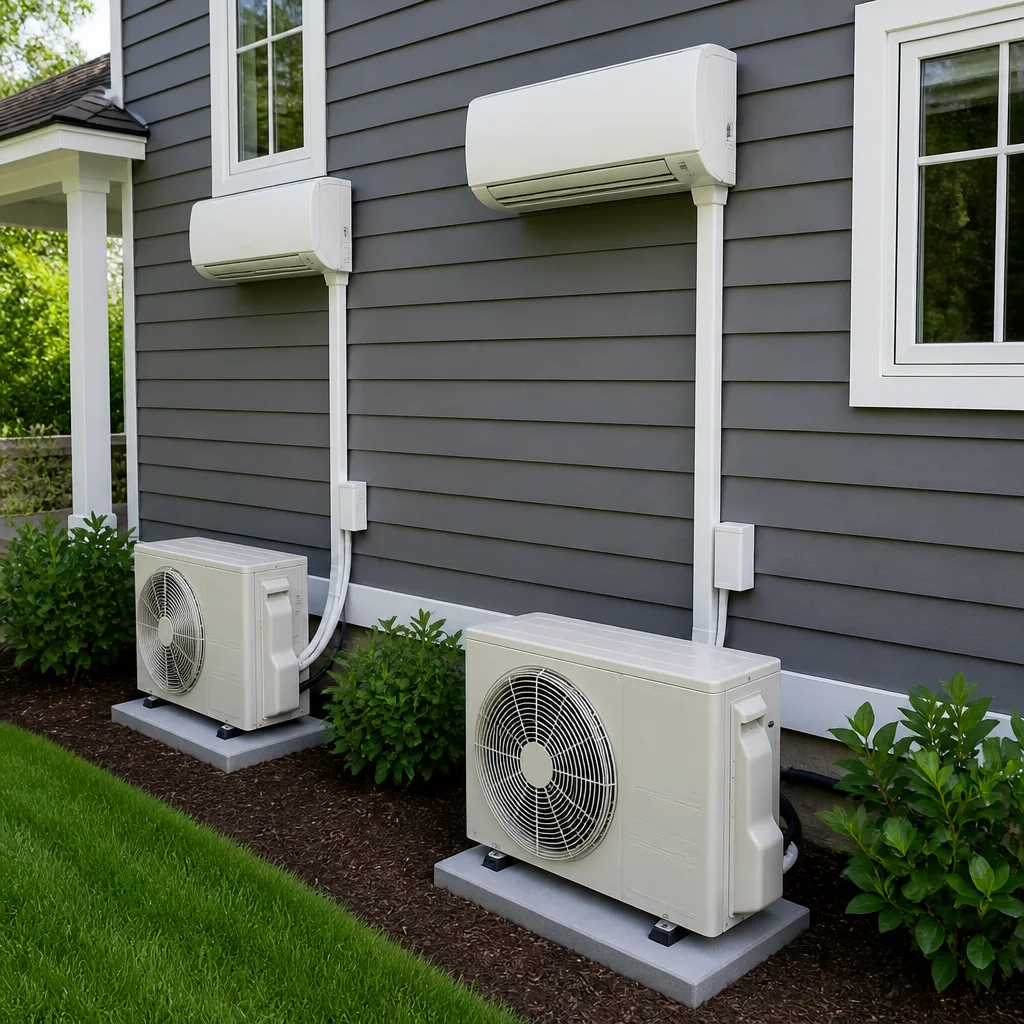 Ductless mini splits
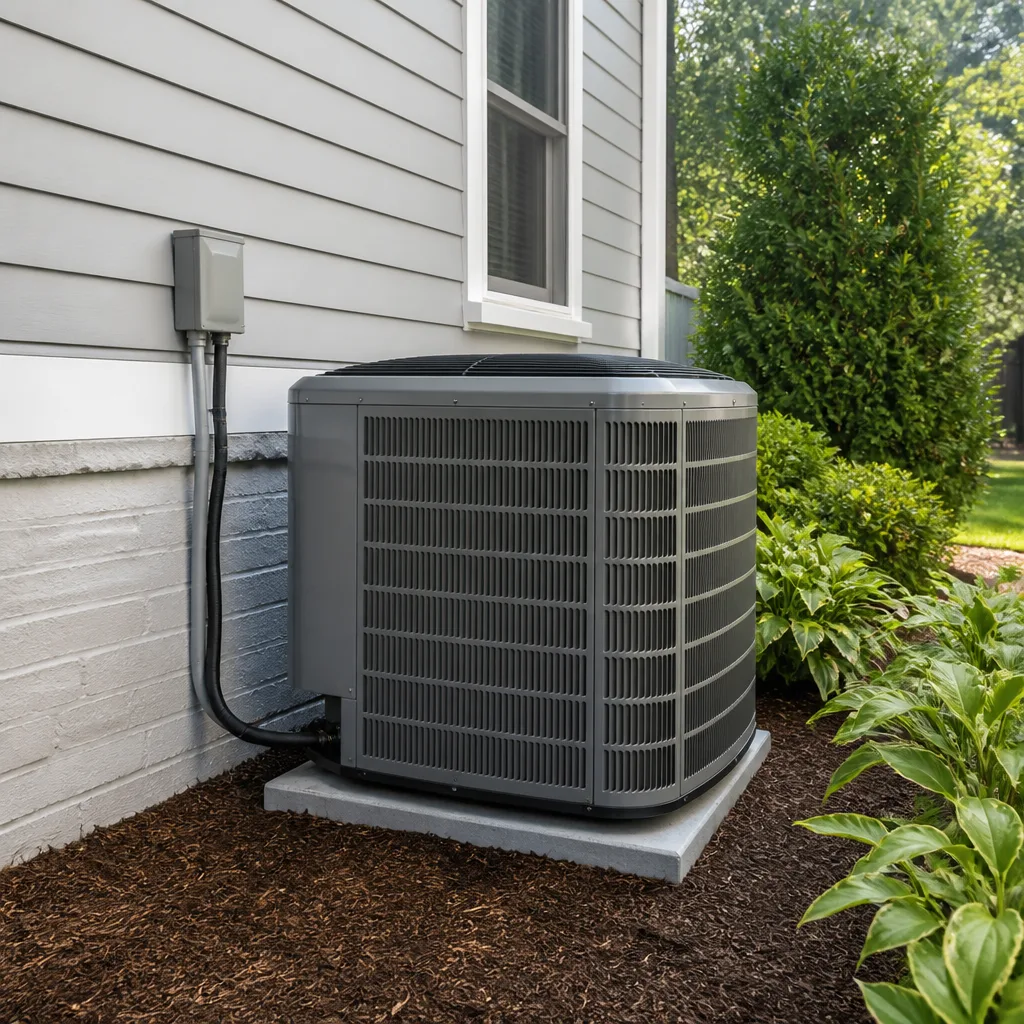 Carrier
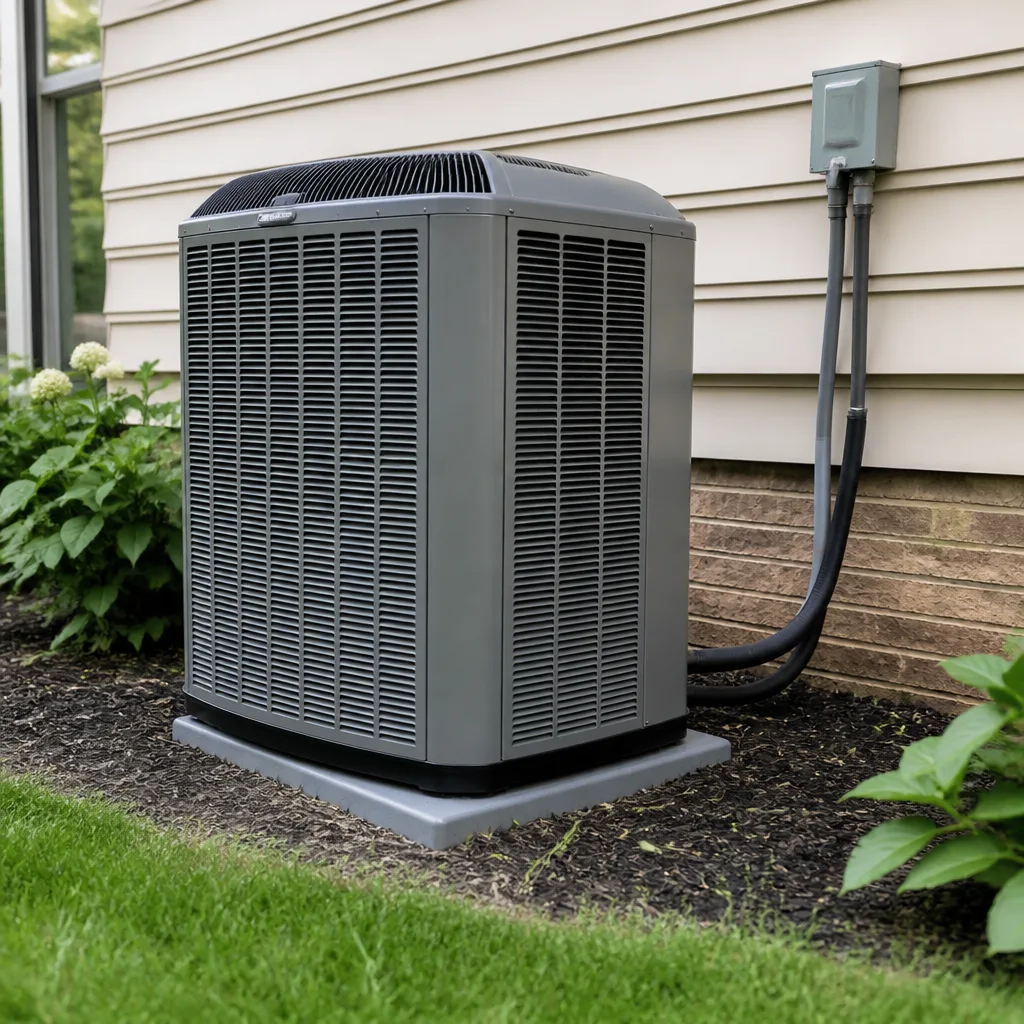 Trane
Trane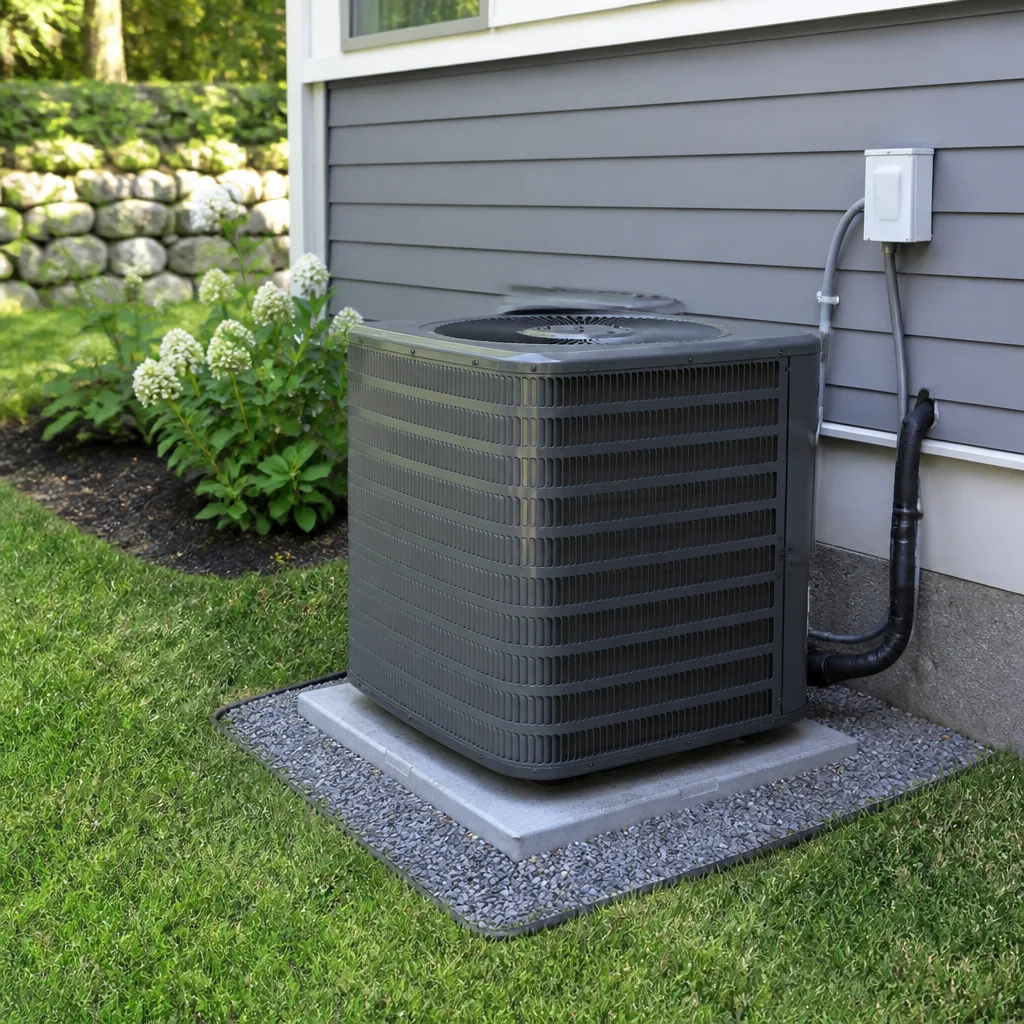 Goodman
Seasonal tune-up and full diagnostic on your Carrier, Trane, or Goodman system - readings shown to you before any repair is proposed
Diagnosis first, numbers second - you approve the repair price before a single part goes in.
Get your free estimateSeasonal HVAC Care for Riverside: Year-Round Homeowner’s Guide
Most seasonal HVAC guides assume a tidy four-season calendar: crisp fall, snowy winter, mild spring, hot summer. Riverside doesn’t work that way. We get a long, punishing cooling season that can stretch from May through mid-October, a compressed heating season that arrives fast in November, and two shoulder periods dominated by dust, Santa Ana winds, and rapid temperature swings. Each of those phases asks something different from your heating and cooling equipment. This guide walks through what to do, when to do it, and what it costs in Riverside specifically, drawing on our Complete Guide to HVAC in Riverside, including the six-week window in spring when tune-ups are easiest to book and the Santa Ana cleanup most homeowners skip entirely.
Styles & brands we work with
Quick Answer
Seasonal HVAC care in Riverside means four distinct phases each year: pre-cooling preparation in March through mid-April, peak-load management from May through September, a post-heat-season inspection in October, and heating readiness from November through February. The two most important tasks most Riverside homeowners miss are booking AC maintenance before mid-April (the backlog window closes fast) and cleaning Santa Ana dust from ductwork before the first furnace start in fall. A seasonal maintenance visit in Riverside typically costs $89 to $175, and skipping it is the most common reason for mid-July breakdowns we see.
Table of Contents
- Phase One: Pre-Cooling Prep (March to Mid-April)
- Phase Two: Peak-Load Management (May to September)
- Phase Three: Post-Heat-Season Inspection (October)
- Phase Four: Heating Readiness (November to February)
- The Santa Ana Dust Problem Riverside Homeowners Underestimate
- Heat Exchanger Integrity: The Safety Check Mild-Weather Markets Skip
- How Riverside’s Utility Rate Tiers Affect HVAC Scheduling
- Shoulder Season Scheduling: Why October and March Save You Time and Money
- Common Mistakes to Avoid
- When to Call a Professional
- Frequently Asked Questions
- The Bottom Line
Phase One: Pre-Cooling Prep (March to Mid-April)
In Riverside, the window to tune up an AC system before it’s needed is roughly six weeks long. It opens in early March, when daytime highs are still comfortable, and closes by mid-April, when the first real heat waves send call volume up. Homeowners who book a maintenance visit in that window get their system inspected, cleaned, and verified before the demand spike. Homeowners who wait until May are scheduling into a backlog of emergency calls, and the system they’re worried about is already running hard.
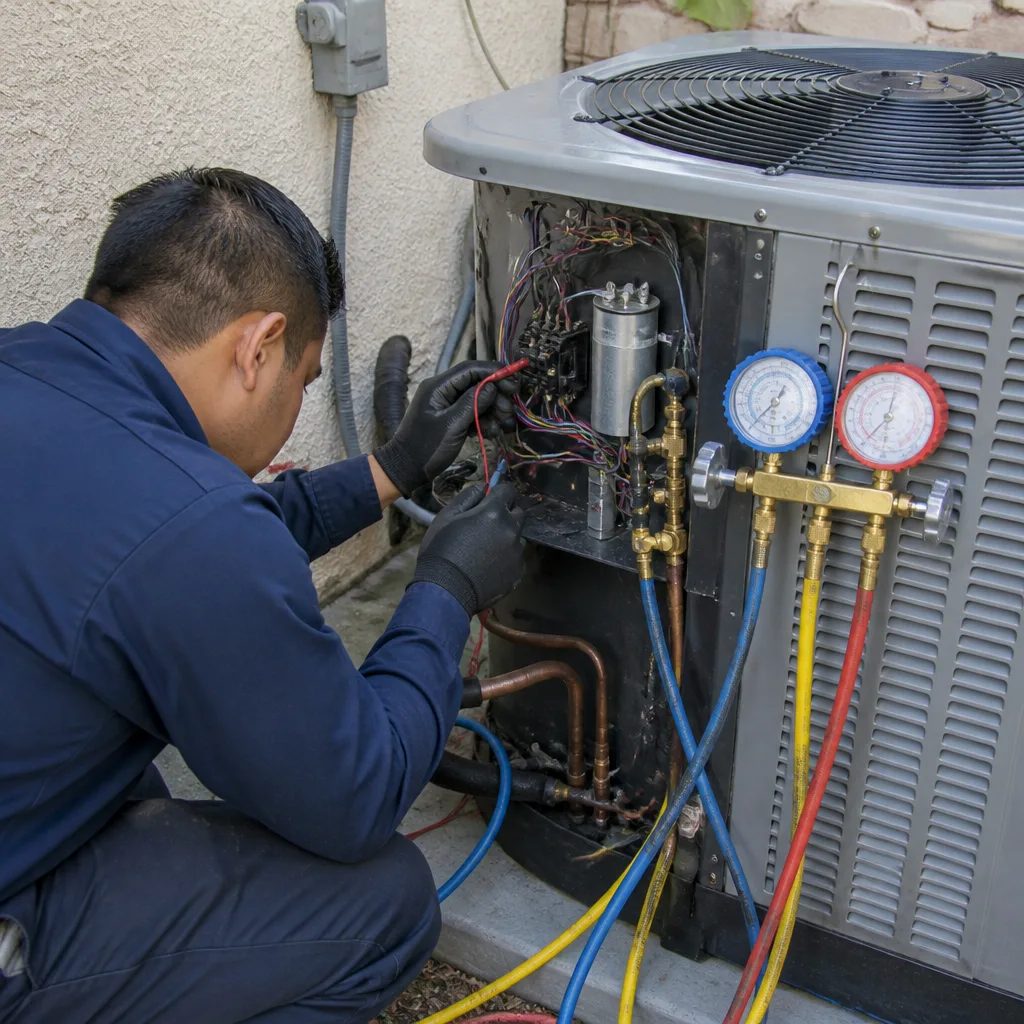
What a pre-cooling maintenance visit actually covers in Riverside:
- Coil cleaning: Riverside’s dry, dusty air coats evaporator and condenser coils faster than coastal climates. A dirty coil can reduce cooling capacity by 20 to 30 percent and push energy bills up noticeably by June.
- Refrigerant level check: Low refrigerant doesn’t just reduce cooling; it shortens compressor life. On systems from brands like Carrier, Trane, and Lennox, a refrigerant top-off done in March prevents a frozen coil in August.
- Electrical connection tightening: Loose connections are a leading cause of compressor and fan motor failures. Tightening them in spring is a ten-minute task that can prevent a four-figure repair.
- Capacitor testing: Capacitors fail slowly, often before the system quits entirely. A capacitor that tests weak in March can be replaced for under $100 instead of becoming a no-cooling call on a 104-degree afternoon.
- Drain line clearing: Riverside’s low humidity means condensate lines clog less often than in humid markets, but when they do clog, water backs up into the unit or onto the floor.
- Air filter replacement: In Riverside, filters need changing more often during fire season and Santa Ana months. Starting the cooling season with a fresh filter protects indoor air and reduces strain on the blower motor.
In our experience across Riverside neighborhoods, the households that book this visit in March pay less over the course of the summer. The system runs more efficiently, small problems get caught before they’re emergencies, and the household never spends a night without cooling during a heat advisory. For more detail on what a repair visit looks like mid-summer versus a maintenance visit in spring, our AC Repair in Riverside page explains the differences in cost and scope.
Phase Two: Peak-Load Management (May to September)
Riverside’s cooling season is the longest and most expensive stretch of the year. From May through September, daytime highs regularly exceed 90 degrees, and the system runs daily. The goal during peak season isn’t just staying cool; it’s managing the load so the equipment doesn’t fail under continuous strain and the utility bill doesn’t balloon out of control.
Here’s a numbered routine we recommend for peak-season months:
- Check the filter monthly. During fire season or after Santa Ana events, a Riverside filter can clog in three weeks. A clogged filter forces the blower to work harder and raises indoor particulate levels. Check it the first weekend of every month, May through September.
- Keep the outdoor unit clear. Riverside’s wind patterns deposit leaves, dust, and debris around condenser units. Clear a two-foot radius around the unit monthly. Restricted airflow is a top cause of compressor overheating.
- Set the thermostat to schedule, not constant. Riverside’s utility rates reward off-peak cooling. A programmable or smart thermostat that pre-cools the house during off-peak hours and lets the temperature drift up slightly during peak-rate windows can cut cooling costs by 10 to 15 percent.
- Listen for changes. A new rattle, a longer run time than usual, or a musty smell from the vents all indicate something is developing. Catching it in June is cheaper than losing cooling in August.
- Shade and seal. Closing blinds on south- and west-facing windows during afternoon hours reduces heat gain. Sealing gaps around doors and windows keeps cooled air in. These steps reduce how hard the system has to work.
One Riverside-specific factor with peak-load management: the inland heat is drier than coastal Southern California, but it still stresses AC compressors for months on end. A system that was verified in March is built to handle this. A system that skipped maintenance and runs nonstop from May onward is on borrowed time. If you’re already hearing a system struggle, call before the heat wave peaks. Emergency repair during a Riverside heat advisory is the most expensive and slowest HVAC service there is.
Phase Three: Post-Heat-Season Inspection (October)
By October, Riverside’s cooling load drops sharply. Daytime highs settle into the 70s and 80s, and the AC gets its first real break in five months. That break is exactly when the system should be inspected, not ignored. October is when accumulated summer wear shows up clearly: a compressor that worked fine in September but refuses to start on an 85-degree October afternoon, a worn capacitor that finally gave out, a blower motor with bearings worn down by months of continuous operation.
A post-heat-season inspection in October covers:
- Full system test: Run the AC through a complete cooling cycle, measure temperature differentials, and confirm the system can still hold a setpoint.
- Compressor evaluation: Check amperage draw and listen for abnormal sounds. Catching compressor wear in October allows for a planned repair or replacement quote before heating season, when the AC isn’t needed daily.
- Duct inspection: Summer heat and Riverside dust take a toll on duct joints and seals. Loose ducts waste conditioned air and pull in attic dust. Identifying loose ducts in October prevents that dust from circulating all winter.
- Electrical review: Check contactors, relays, and wiring for signs of heat damage accumulated during summer.
- Thermostat calibration: Verify the thermostat reads accurately and switches reliably. A miscalibrated thermostat causes comfort problems in both cooling and heating modes.
October in Riverside is also the calm before heating season. Booking non-emergency work in October means short wait times and scheduling flexibility that simply doesn’t exist in July or in mid-December when the first cold snap hits.
Phase Four: Heating Readiness (November to February)
Riverside’s heating season is short compared to the cooling season, but it’s when the most serious safety issue emerges: carbon monoxide. Furnaces that have sat unused since March get turned on in November and run for the first time in eight months. Whatever accumulated during the off-season, dust, debris, small obstructions, or a developing crack in the heat exchanger, becomes a problem the moment the burners light.
Heating readiness tasks for Riverside homes:
- Schedule furnace maintenance before the first cold snap. The first time temperatures dip into the 40s at night, every furnace in Riverside gets turned on. Systems that haven’t run in months fail at a higher rate during that first cold week. Booking maintenance in early November means a technician verifies the system before it’s needed.
- Change the filter before heat season. The same filter that caught summer dust is now catching winter dust. Start the heating season with a clean filter so the blower doesn’t work against a clog.
- Test the thermostat in heat mode. A thermostat that functioned perfectly in cooling mode can malfunction in heating mode. Test it before the weather truly requires heat.
- Check vents and returns. Make sure supply vents are open and returns are unobstructed. Furniture pushed against a return during summer rearranging restricts airflow and can cause the furnace to overheat.
- Listen at startup. A furnace that makes a delayed ignition sound, a small thump or bang when the burners light, needs attention. That sound often indicates a burner or ignition issue that can worsen.
For homeowners with older furnaces or systems from brands like Goodman or Rheem that have seen many Riverside cooling seasons, the heating portion of the year is when a professional inspection matters most. Our Furnace Repair in Riverside page covers what a heating-season repair visit includes and what common furnace failures look like in Riverside homes.
The Santa Ana Dust Problem Riverside Homeowners Underestimate
Santa Ana wind events are a fact of life in Riverside. From October through early winter, strong, dry winds blow from the northeast, carrying fine dust and particulate across the Inland Empire. That dust settles everywhere, including inside ductwork. Here’s the problem: when the furnace fires up for the first time in November, the blower pushes all that accumulated dust through the supply vents and into the living space.
What we see in Riverside homes after a Santa Ana event:
- Visible dust plumes from supply vents the first time the heater runs.
- A burnt-dust smell that lingers for the first few heating cycles as the heat exchanger burns off settled dust and the blower circulates the rest.
- Increased respiratory irritation for kids, pets, and anyone with allergies or asthma, especially in the first two weeks of heating season.
- Reduced airflow if the dust load is heavy enough to coat the blower wheel and the evaporator coil’s underside.
The practical fix is to schedule a duct inspection and, where needed, a duct cleaning before the first furnace start. The best time to do this in Riverside is October, after the first Santa Ana event but before the furnace gets used. A technician can inspect the registers, returns, and visible duct runs, and clean the blower compartment where dust collects. This is one of the highest-value heating-season tasks in Riverside, and it’s often the one homeowners don’t think about until they smell the dust burning.
The same Santa Ana winds also coat the outdoor condenser. A unit that sits outside all fall accumulates wind-blown debris on the coil fins. Brushing off the condenser and clearing the area around it before winter keeps the system ready for the next cooling season and prevents airflow restriction.
Heat Exchanger Integrity: The Safety Check Mild-Weather Markets Skip
Riverside’s mild heating season creates a specific risk pattern. Because furnaces run fewer hours per year than they would in, say, Minneapolis or Denver, homeowners in mild climates often skip annual furnace inspections. The assumption goes: the furnace barely ran last winter, so it’s probably fine. That assumption is the problem. A furnace that runs only a few hundred hours per year can still develop a cracked heat exchanger, and the crack often doesn’t reveal itself with an obvious symptom until carbon monoxide is already circulating.
A heat exchanger is the metal chamber inside a gas furnace where combustion happens. It separates the burning gas, which produces carbon monoxide, from the air that gets blown through the house. When a heat exchanger develops a crack or separation, combustion byproducts can leak into the airflow. Carbon monoxide is odorless and colorless. It doesn’t cause a smell. It doesn’t set off a smoke alarm. The first sign is often a carbon monoxide detector going off, or symptoms like headaches, dizziness, or nausea that get attributed to a winter cold.
This is a safety check, not a performance upgrade. A trained technician inspects the heat exchanger visually, looking for cracks, rust, or separation at the seams. They also check the burner flame pattern and combustion airflow. If the heat exchanger is compromised, the correct response is replacement, either of the exchanger itself when the unit is young enough and parts are available, or of the entire furnace when the unit is older. The brands we service, Carrier, Trane, Lennox, Goodman, Rheem, York, Daikin, Bryant, and American Standard, all have heat exchanger designs that vary, and a technician who knows the specific model can spot failure patterns faster.
We do not give step-by-step DIY instructions for heat exchanger inspection. This is a genuinely dangerous component, and the inspection requires tools and training. What homeowners can do is simple: install a carbon monoxide detector near sleeping areas, test it monthly, and schedule a professional furnace inspection before the first sustained cold stretch each year in Riverside. If you smell gas or a CO detector sounds, leave the house and call 911 and your gas utility from outside. Then call a professional.
How Riverside’s Utility Rate Tiers Affect HVAC Scheduling
Riverside Public Utilities uses a tiered rate structure for residential electricity. The more energy a household uses in a billing period, the higher the per-kilowatt-hour rate climbs for the excess usage. For Riverside homeowners, air conditioning is typically the single largest electricity draw, which means AC usage interacts directly with tier thresholds. Small changes in when and how the system runs can shift the household into lower tiers or keep it out of the highest ones.
Practical ways to use rate tiers to reduce cooling costs in Riverside:
- Pre-cool during off-peak hours. Run the AC a few degrees cooler in the morning and late evening, then let the thermostat drift up slightly during peak afternoon hours. The house holds the cooler temperature through the hottest part of the day, and the system does its heaviest lifting off-peak.
- Schedule system testing for off-peak windows. If you’re running a full-system test, like a post-maintenance cycle check or a thermostat upgrade test, do it in the morning or late evening. A 20-minute test run at 10 AM costs less than the same run at 3 PM.
- Use smart thermostat scheduling. A thermostat that automatically shifts setpoints based on time-of-day rates means you don’t have to remember to adjust it manually. Most smart thermostats integrate with Riverside’s rate schedules after basic setup.
- Stagger high-energy appliances. Running the dryer, oven, and AC simultaneously pushes the household into a higher tier quickly. Stagger the timing and let the AC run while other appliances are off.
- Change filters before peak season. A clean filter reduces how hard the system works, which directly lowers runtime and total kilowatt-hours. In Riverside’s dusty conditions, a fresh filter can reduce runtime enough to matter on the bill.
The tier structure also rewards energy efficiency upgrades. A newer, higher-SEER system from brands like Carrier or Lennox uses meaningfully less electricity per hour of cooling. For Riverside households where summer bills routinely push into the upper tiers, a high-efficiency replacement often pays for itself more quickly than in milder climates. For more on replacement options and what a new system costs in Riverside, our AC Installation in Riverside page breaks down equipment options and pricing.
Shoulder Season Scheduling: Why October and March Save You Time and Money
In the HVAC business, “shoulder season” means the weeks between peak demand periods, when temperatures are moderate and systems aren’t running constantly. In Riverside, there are two shoulder seasons: March to mid-April, between heating and cooling, and October to early November, between cooling and heating. These are the best months of the year to book non-emergency service.
Why shoulder season scheduling works in Riverside:
- Wait times collapse. In July, a non-emergency repair might mean waiting days. In October, same-week or next-day scheduling is realistic. A maintenance visit in March can often be booked within two or three days.
- Technician attention is higher. During peak season, technicians are moving between emergency calls. During shoulder season, the same technician can spend more time on diagnostics and thorough work without a queue of urgent calls waiting.
- Pricing is more predictable. Emergency and same-day peak-season service often carries a premium or overtime rate. Shoulder season service is standard rate, scheduled during normal hours.
- Parts availability is better. Some replacement parts for major brands are in high demand during summer heat waves. Ordering parts in October or March means shorter lead times and fewer delays.
- You can plan instead of react. A furnace replacement quoted in October can be scheduled and installed before the first cold snap. An AC replacement quoted in March can be complete before the first 95-degree day.
For Riverside families, shoulder season is also when kids are in school and household routines are less disrupted. A maintenance visit in March or October doesn’t interfere with summer vacation or holiday schedules. And at Meadowsweet Heating and Air Riverside home, every visit includes shoe covers and drop cloths regardless of season, so the house is left as clean as it was found, whether the crew is working on a March tune-up or an October furnace inspection.
Common Mistakes to Avoid
- Skipping the March maintenance window and waiting until the first heat wave. By the time Riverside hits its first 100-degree day, the maintenance backlog is weeks deep and the system is already under strain. March service catches problems before they become July emergencies.
- Not changing the filter after a Santa Ana event. A single Santa Ana wind event can clog a filter in days. Homeowners who don’t check filters after wind events spend the next month running a system that’s working harder than it should.
- Using the furnace for the first time in November without an inspection or filter change. The burnt-dust smell and dust plume from vents are avoidable with an October duct check and a fresh filter. More importantly, the heat exchanger check should happen before the first burn, not after weeks of use.
- Running the AC all day at the same setpoint during peak-rate hours. Riverside’s tiered rates punish constant afternoon cooling. Pre-cooling and letting the temperature drift up slightly during peak hours saves noticeable money over a full summer.
- Ignoring a system that “sounds different” during summer. A new rattle or longer run cycle is a warning sign. Ignoring it means a small repair becomes a compressor replacement or a no-cooling call during the hottest week of the year.
- Replacing a furnace or AC without getting a written, fixed quote first. Verbal estimates leave room for surprise charges. A written price before any work starts protects the homeowner and makes comparison straightforward.
When to Call a Professional
Some seasonal care tasks are straightforward for a homeowner: changing a filter, clearing debris around the outdoor unit, checking thermostat settings. Others require training and tools, a question we explore in our DIY vs Professional HVAC: The Riverside Homeowner’s Decision Guide. Call a professional if you hear a new or unusual sound from the system, if the AC is running but not cooling the house, if the furnace makes a banging or thumping sound at startup, if you smell gas or anything burning from the vents, if a carbon monoxide detector sounds, or if energy bills spike without a change in usage. Any heat exchanger inspection or repair is professional-only work, and refrigerant handling requires EPA certification. Riverside homeowners who notice any of these signs should schedule an inspection before the problem worsens. Meadowsweet Heating and Air Riverside offers free estimates in Riverside – call (707) 340-6380.
Frequently Asked Questions
Seasonal HVAC maintenance in Riverside typically costs $89 to $175 for a standard tune-up visit, depending on the system type and the scope of work included. A combined heating and cooling maintenance plan often runs $150 to $250 annually. Prices vary by system age and brand. Call (707) 340-6380 for an exact quote – estimates are free.
The best time to schedule AC maintenance in Riverside is March through mid-April, before the cooling season begins. Booking during this window means short wait times, standard pricing, and a system that’s verified before the first heat wave. Homeowners who wait until May face longer schedules and higher emergency demand.
Change your HVAC filter every 30 days during peak cooling season and after any Santa Ana wind event. Riverside’s dry, dusty conditions load filters faster than coastal climates, and a clogged filter strains the blower and reduces airflow. During milder months, every 60 days is usually sufficient.
Yes. Even in Riverside’s mild winters, furnaces should be inspected annually before the first sustained cold stretch. The most important check is the heat exchanger, which can develop cracks that leak carbon monoxide regardless of how few hours the furnace runs per year. Heating season is the only time this safety check matters, and skipping it is a risk not worth taking.
After a Santa Ana wind event in Riverside, change the air filter, clear debris from around the outdoor condenser, and check visible supply vents for dust accumulation. If the furnace will be used soon, schedule a duct inspection and a blower compartment cleaning before the first burn. These steps keep wind-blown particulate from circulating through the house.
Repair is usually the right call when the system is under 10 years old, the repair cost is under 30 percent of replacement cost, and the system has no major component failures. Replacement makes more sense when the system is over 12 to 15 years old, requires a compressor or heat exchanger replacement, or has become unreliable. A professional evaluation with a written price for both options is the clearest path to a decision. Call (707) 340-6380 for a free estimate in Riverside.
The Bottom Line
Riverside’s HVAC needs don’t follow a generic four-season calendar. The cooling season is long and demanding, the heating season is short but safety-critical, and the shoulder seasons are when smart scheduling happens. March through mid-April is the window for cooling prep. October is the window for post-summer inspection and Santa Ana dust cleanup. November through February is when furnace safety checks and filter discipline matter most for indoor air and carbon monoxide protection. A homeowner who follows this Riverside-specific rhythm pays less for energy, avoids most emergency repair calls, and keeps the house comfortable year-round. The habits are simple: change filters monthly during peak months, book maintenance during shoulder seasons, and always get a written price before work starts. For more guides & resources, visit our blog.
Written by Luis Serrano, Owner at Meadowsweet Heating and Air Riverside, serving Riverside since 2004.
See the difference
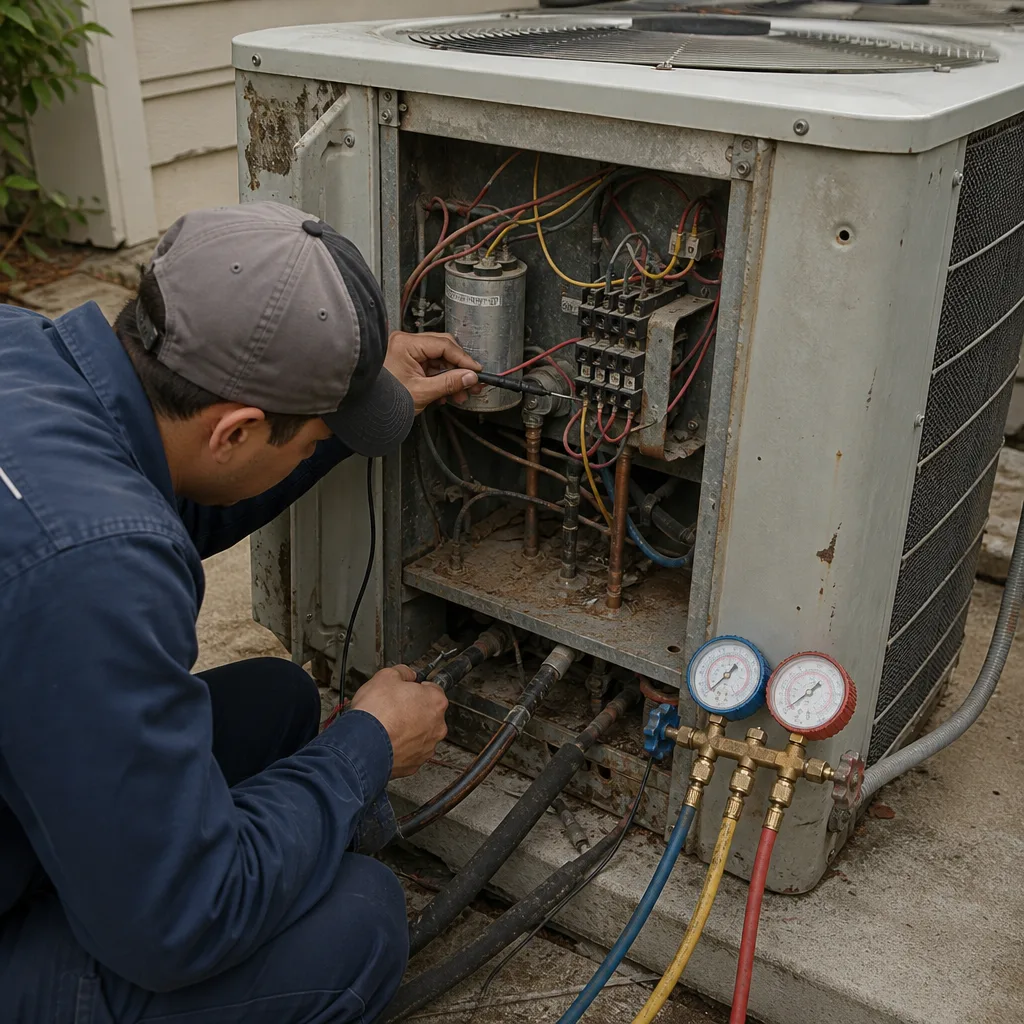 Before
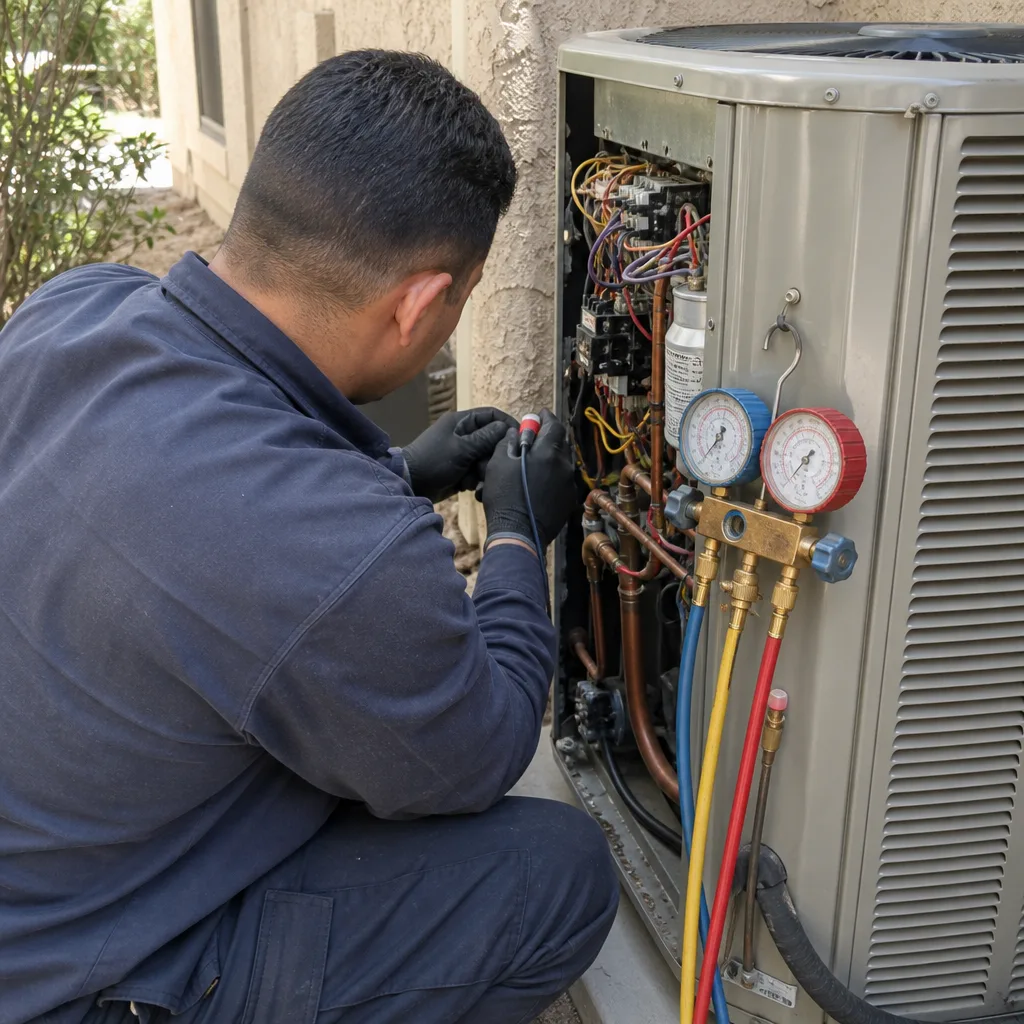 After
After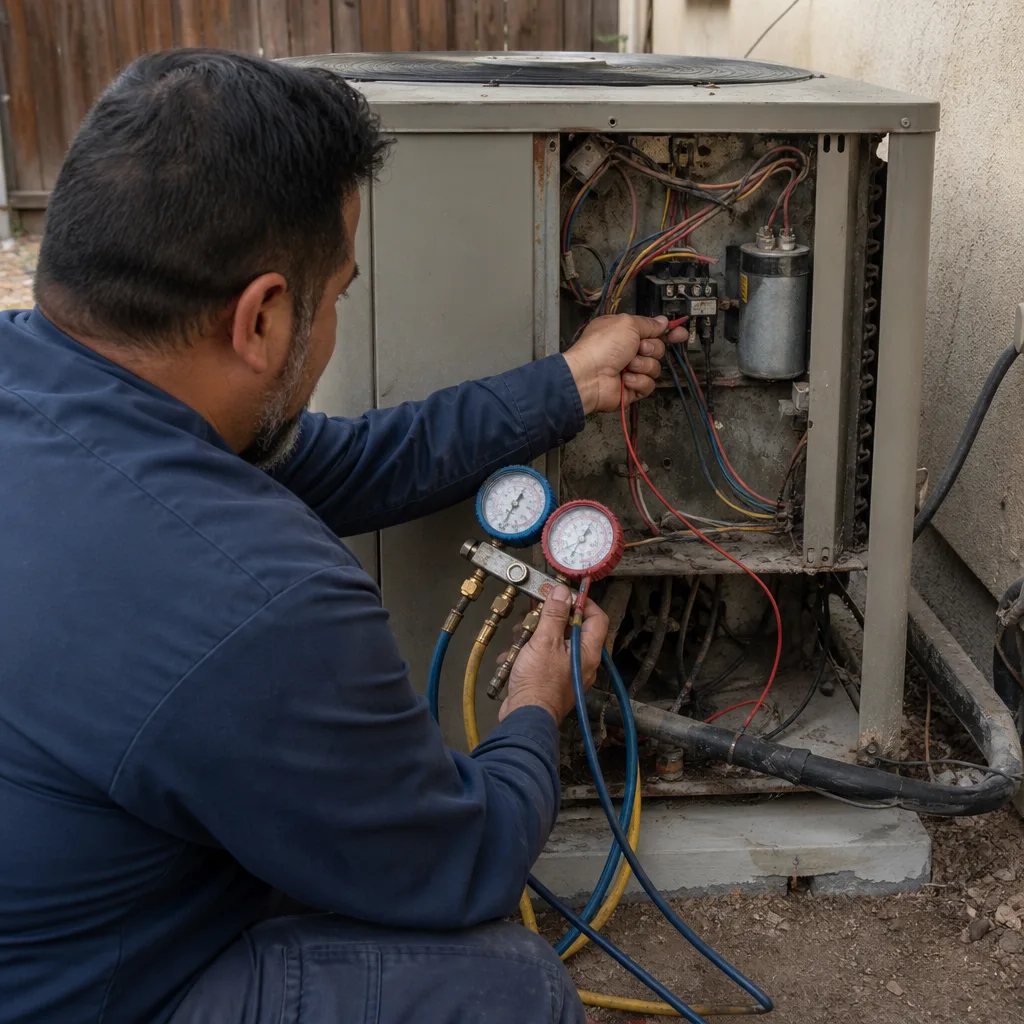 Before
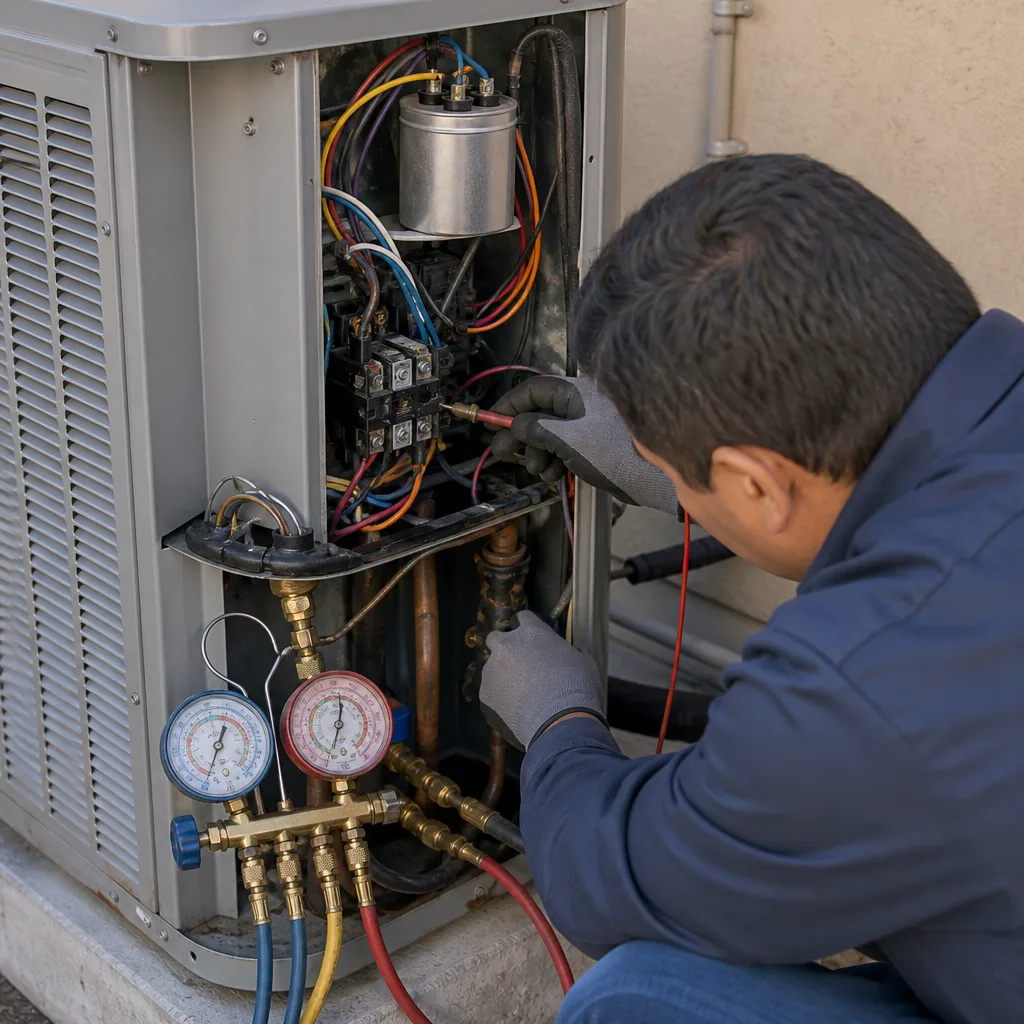 After
After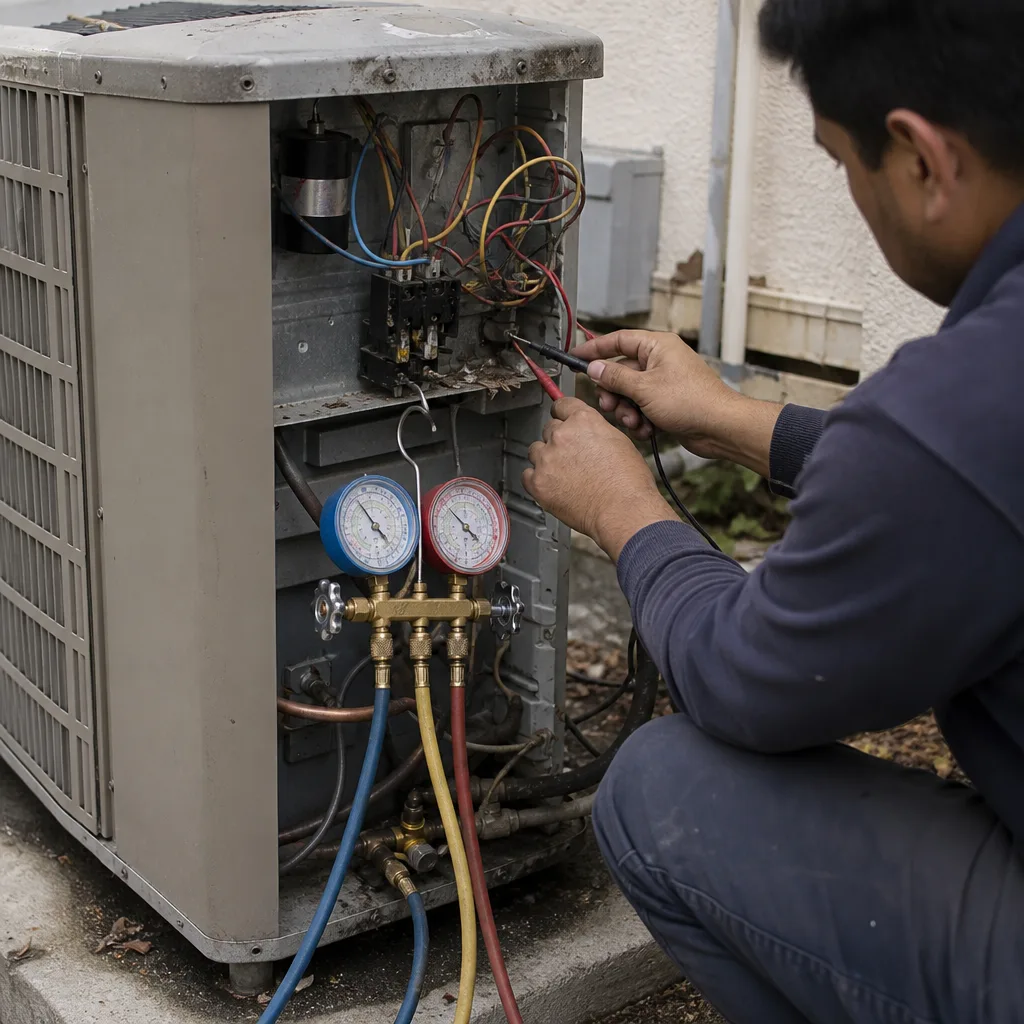 Before
 After
After