
Last updated October 16, 2026
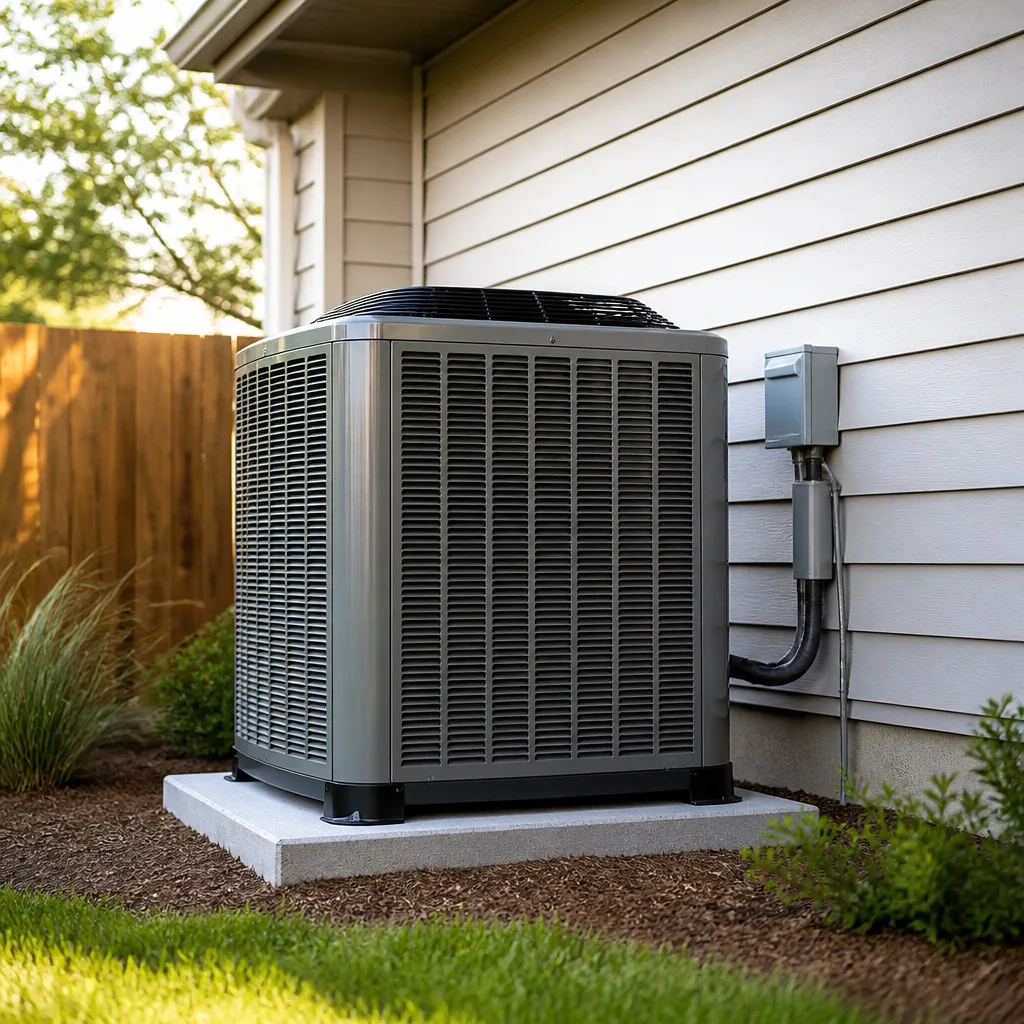 AC repair
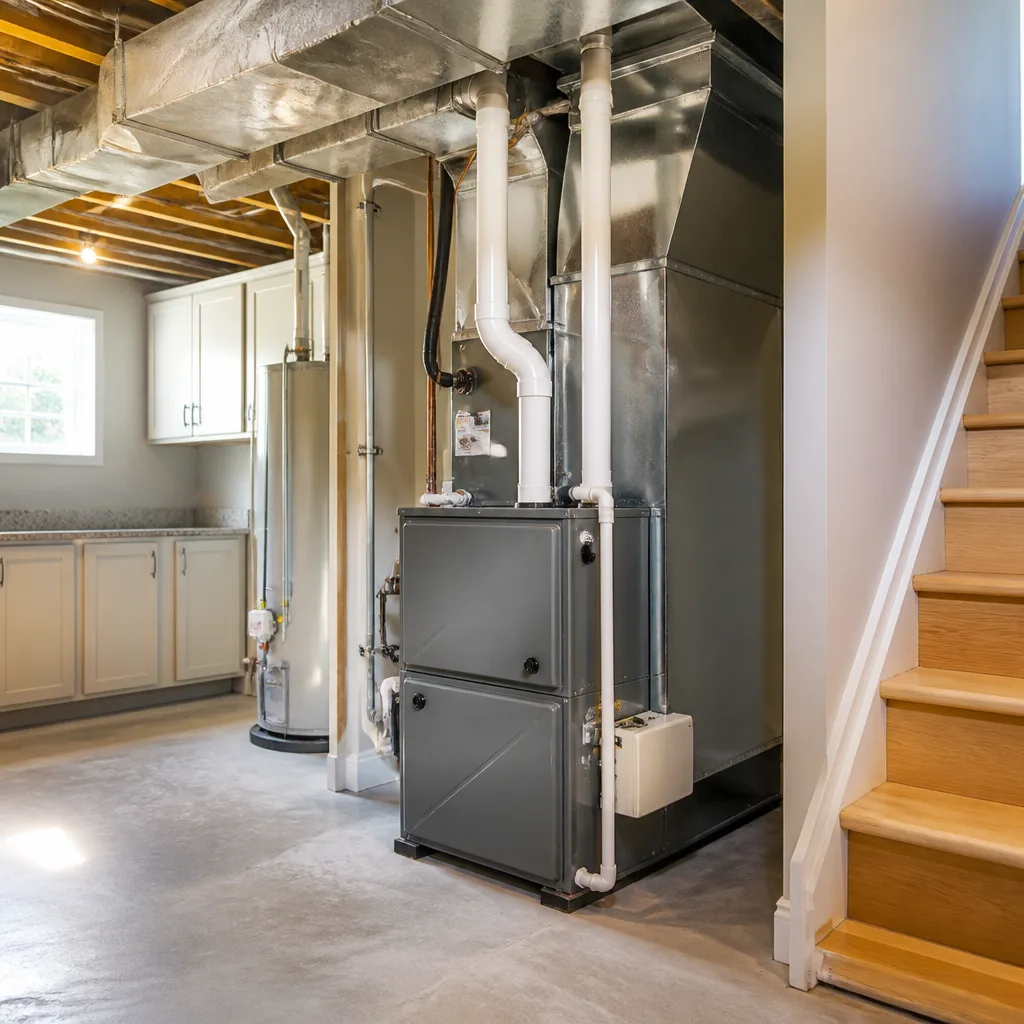 Furnace & heating
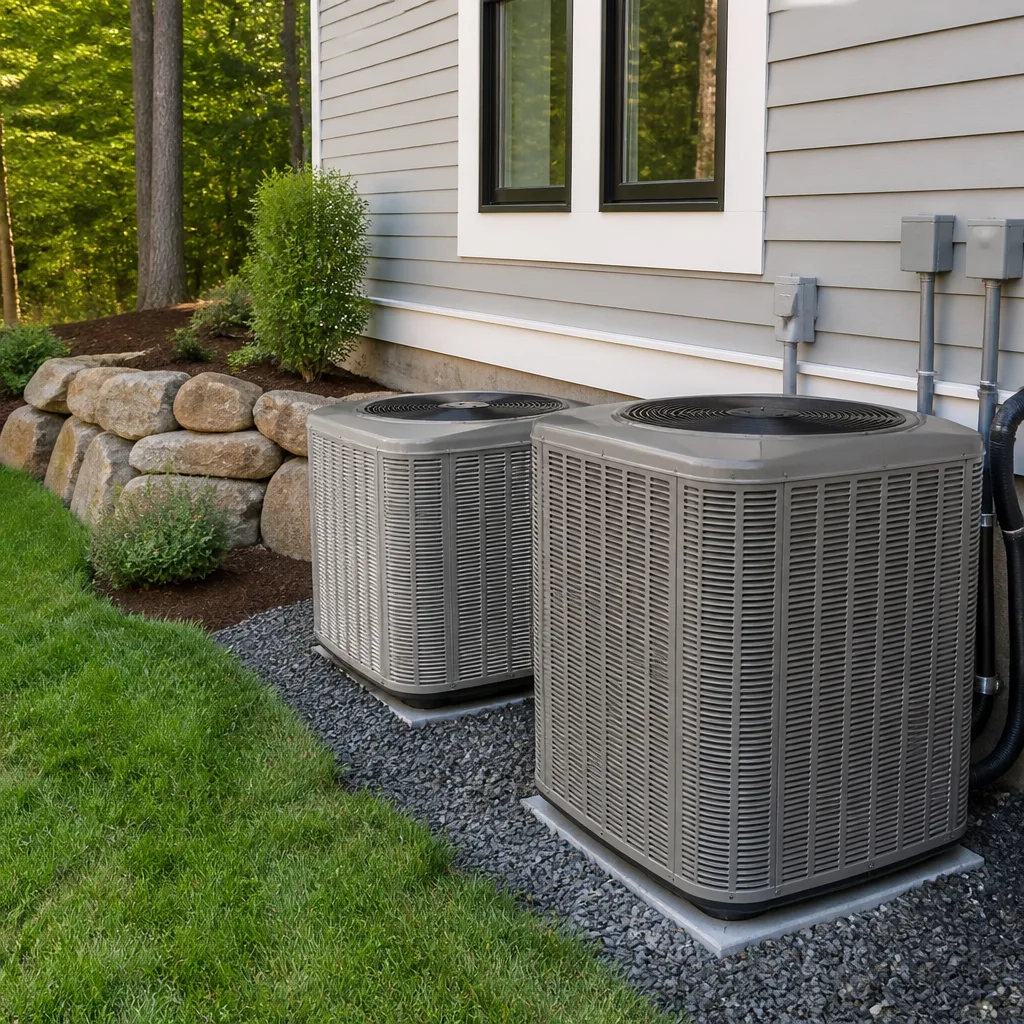 Heat pumps
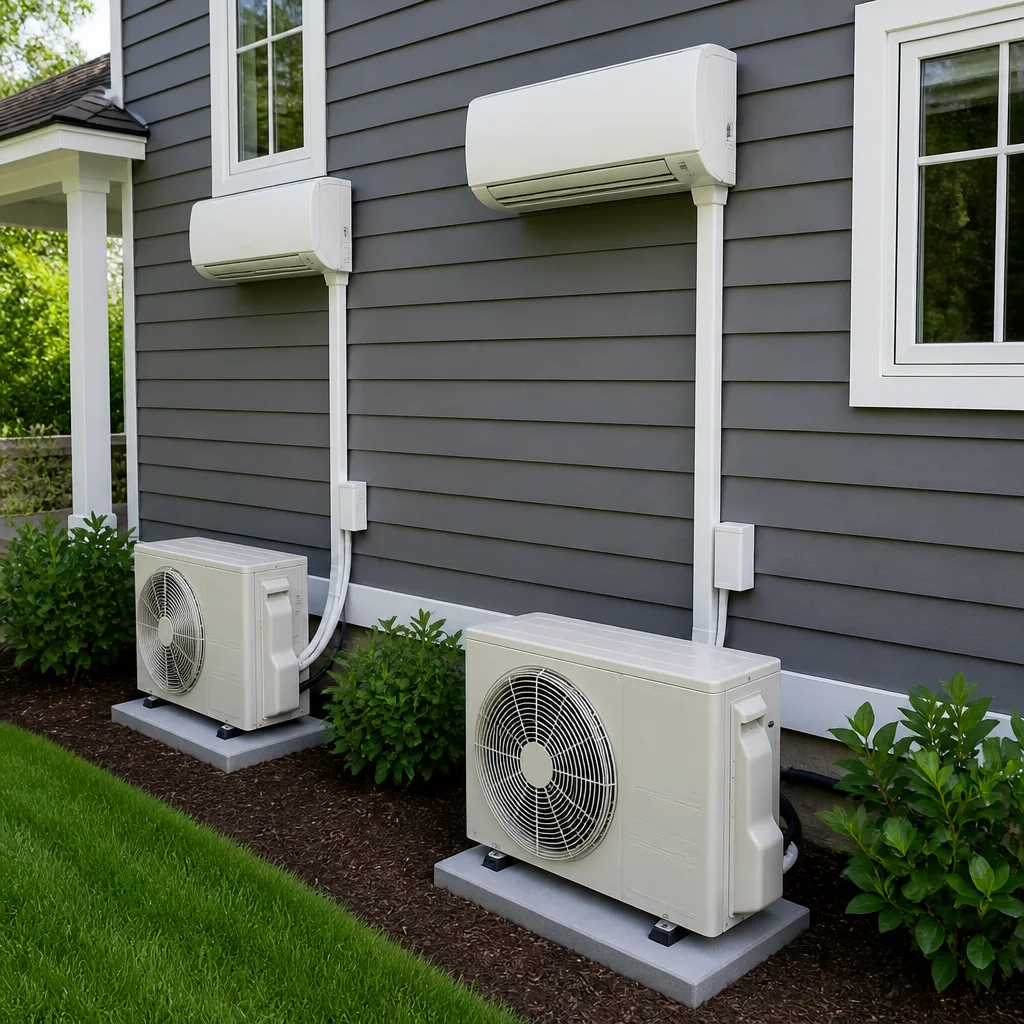 Ductless mini splits
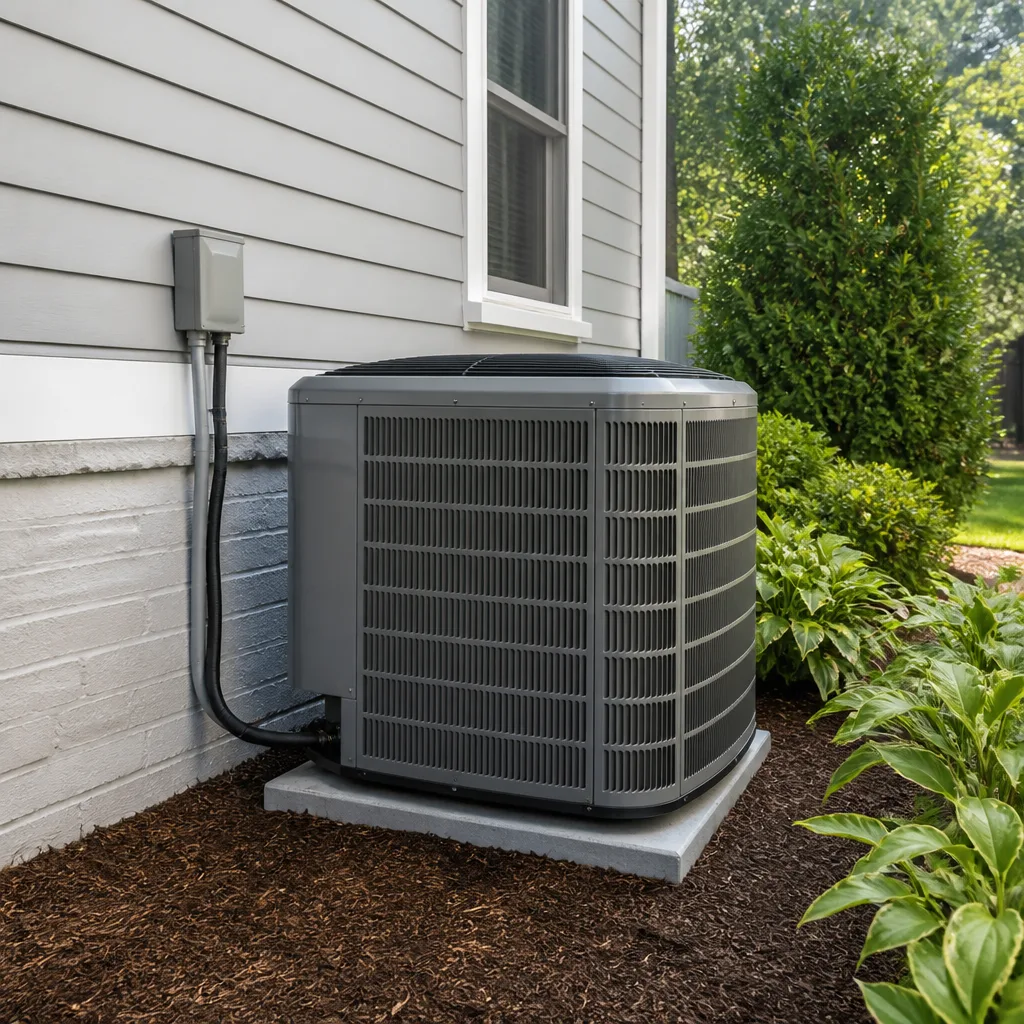 Carrier
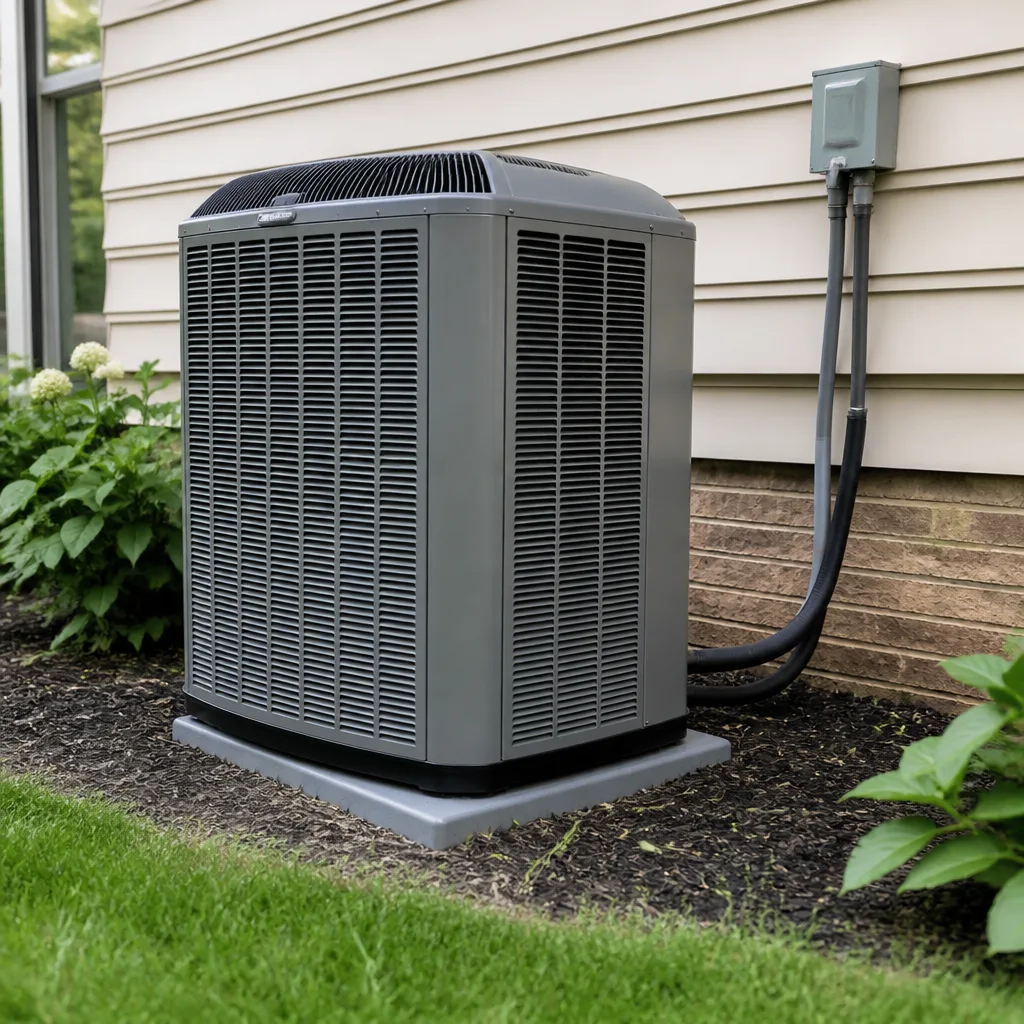 Trane
Trane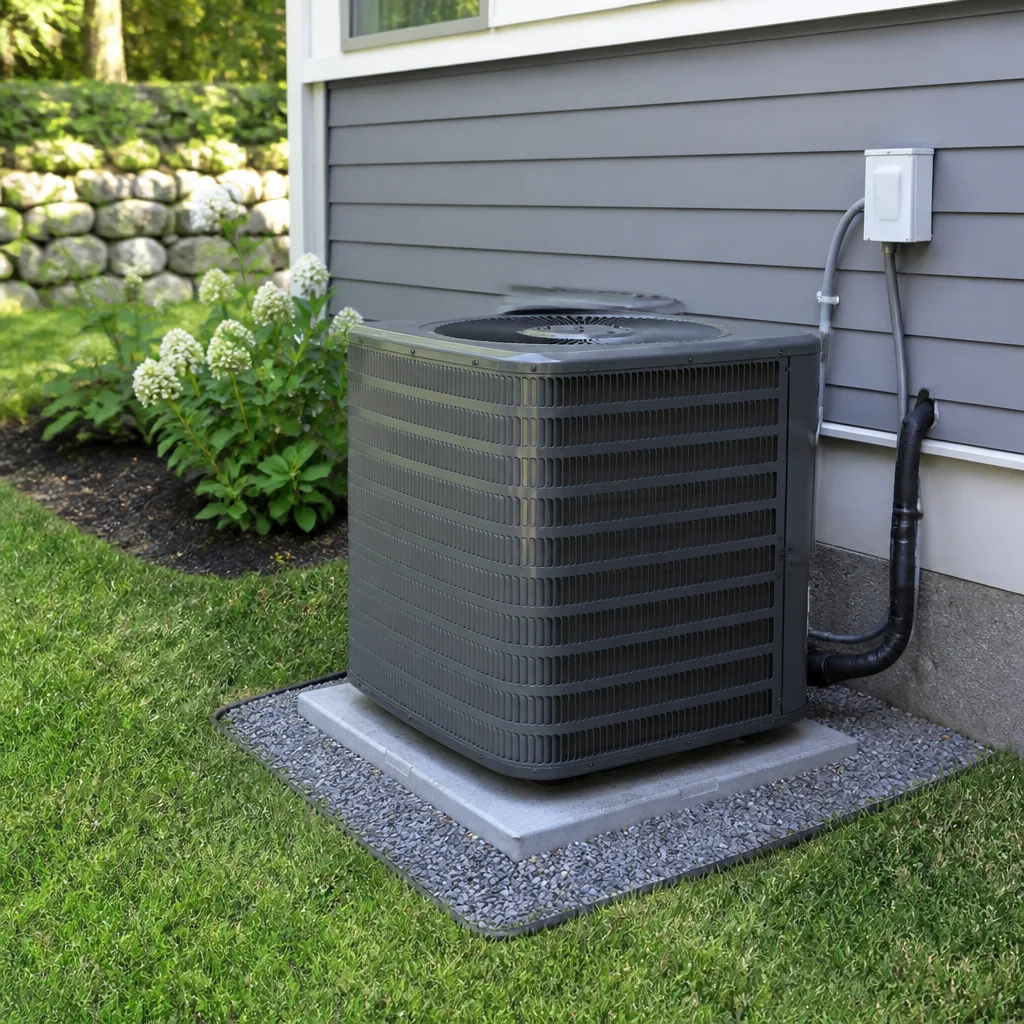 Goodman
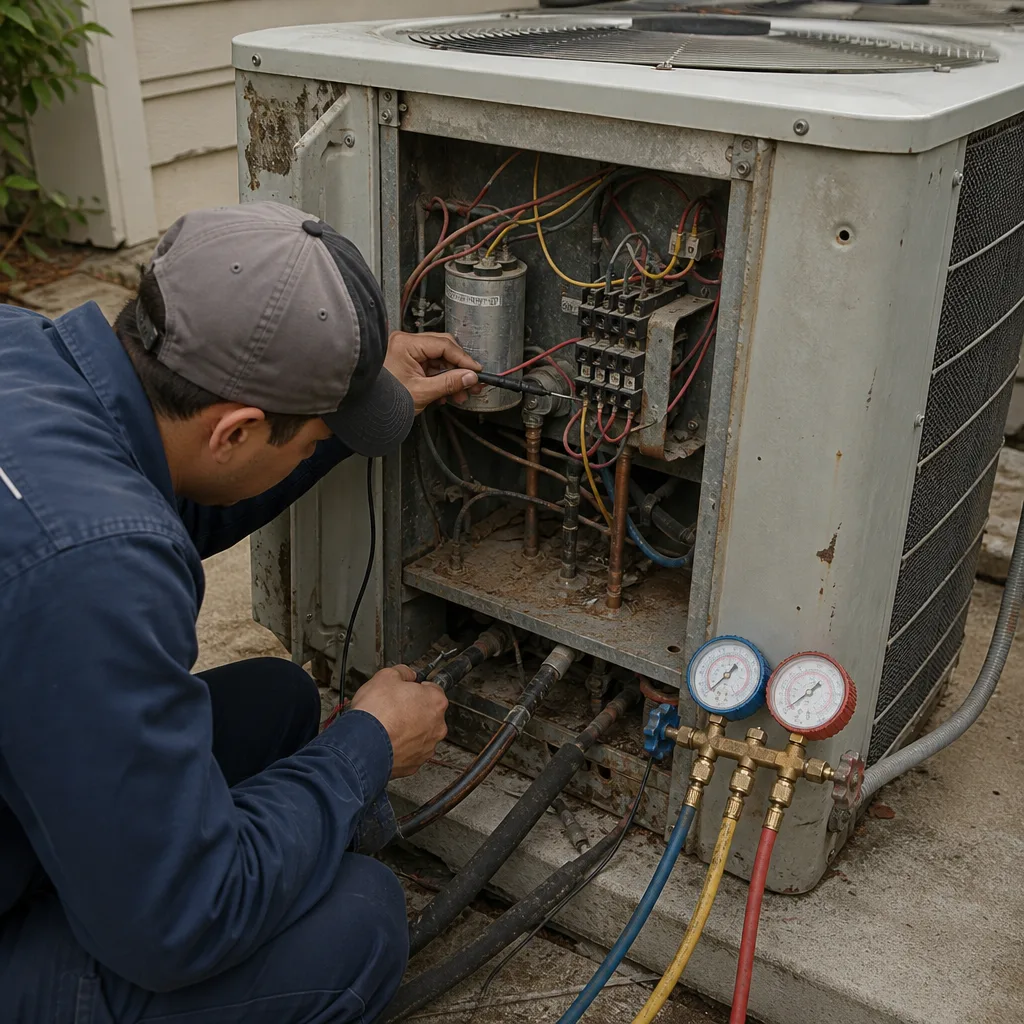
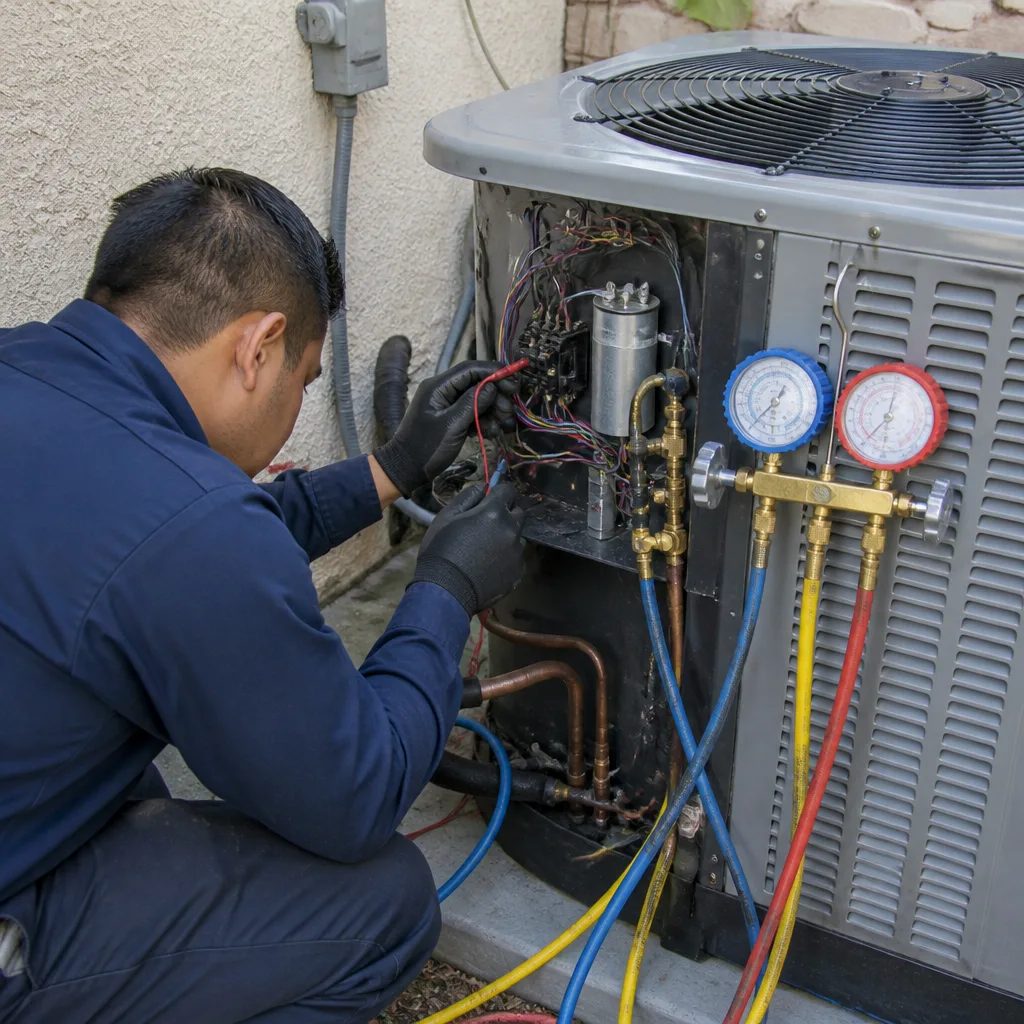
Seasonal tune-up and full diagnostic on your Carrier, Trane, or Goodman system - readings shown to you before any repair is proposed
Diagnosis first, numbers second - you approve the repair price before a single part goes in.
Get your free estimateThe Complete Guide to HVAC in Riverside
Riverside averages 17 more extreme-heat days per year than Los Angeles, yet most “California HVAC guides” are written for the coast. That mismatch is exactly why so many Riverside homeowners end up with undersized systems that fail before the 4th of July. This guide treats the Inland Empire as its own climate zone, with its own equipment rules, cost ranges, and maintenance calendar. You’ll learn what actually matters for a system that survives 105°F summers, Santa Ana dust storms, and winter nights in the 30s – without wasting money on features built for San Diego weather. We’re Meadowsweet Heating and Air Riverside, and this is what we’ve learned from nearly two decades of keeping Inland Empire homes comfortable.
Quick Answer
HVAC in Riverside means sizing equipment for sustained 100°F+ operation, not coastal afternoons. A properly installed system in Riverside typically costs between $8,500 and $14,000 for full replacement, with repairs ranging from $175 to $800 depending on the part-see our HVAC Cost Breakdown: The Riverside Homeowner’s Reference for 2026 for a detailed breakdown. New equipment installed after 2023 must meet CAISO climate zone 15 efficiency minimums, and Riverside’s Santa Ana season means you’ll change filters twice as often as a coastal homeowner would.
Styles & brands we work with
Table of Contents
- Why Riverside’s Inland Climate Changes Everything
- SEER2 Requirements: What Riverside’s CAISO Zone Actually Mandates
- The Santa Ana Wind Factor: Dust, Filters, and Your Return Ducts
- Repair vs. Replacement: Real Riverside Dollar Ranges
- Which Equipment Brands Hold Up Under Inland Empire Heat
- Riverside Permits: The One Inspection Item Most Homeowners Miss
- The Riverside Maintenance Calendar: What to Do Every Season
- Common Mistakes to Avoid
- When to Call a Professional
- Frequently Asked Questions
Why Riverside’s Inland Climate Changes Everything
Riverside sits in a thermal basin that traps heat differently than anywhere west of the 15 freeway. Summer daytime highs of 100°F or more are routine from June through September, but what’s less obvious is the overnight floor: temperatures often stay above 75°F between July and August, which means your HVAC runs nearly 20 hours a day for weeks at a time. That’s not an inconvenience. It’s a mechanical endurance test that few coastal systems are sized to pass.
Here’s the practical difference. A system engineered for Los Angeles weather might cycle on 15 to 20 times per day, with hours of rest in the evening. The same system in Riverside might run 18 to 22 hours daily without meaningful downtime. Compressors, capacitors, and contactors that would last a decade near the coast can burn out in 6 to 8 years here. When we size equipment for Riverside homes, we calculate for sustained operation, not peak-afternoon bursts. That means different tonnage decisions, different airflow configuration, and occasionally a two-stage compressor that would be overkill in Redondo Beach but is genuinely necessary in the Arlington Heights or Canyon Crest neighborhoods.
Winter adds a second layer. Riverside nights routinely dip into the 30s from December through February, and the temperature swing between a 75°F afternoon and a 35°F night is hard on heat pumps and furnace control boards alike. Your system isn’t just handling one extreme; it’s cycling through a 40-degree range every 24 hours for months. That thermal expansion and contraction is exactly what loosens electrical connections and cracks older heat exchangers.
For families in Wood Streets, Victoria, or Mission Grove, the takeaway is simple: when someone quotes a system based on “California averages,” walk away. Riverside is its own animal.
SEER2 Requirements: What Riverside’s CAISO Zone Actually Mandates
Since January 1, 2023, all newly installed residential air conditioners in California must meet new SEER2 efficiency standards, and Riverside’s placement in California’s climate zone structure means your minimums are higher than what a coastal installer might quote. Specifically, new split-system AC units in Riverside’s inland zone must be at least 15.2 SEER2, while heat pumps must meet 14.3 SEER2. Packaged units have slightly different thresholds. These aren’t suggestions; they’re enforced through the California Energy Commission’s Title 24 building standards, and Riverside city inspectors check compliance before signing off on any installation permit.
What does that mean in dollars? A 15.2 SEER2 unit in Riverside typically runs $4,200 to $6,800 for the equipment alone, compared to about $3,500 to $5,500 for a minimum-efficiency unit you might legally install in Arizona or Nevada. Add installation, ductwork modifications, and permit fees, and you’re looking at a full-system cost that starts around $8,500 and climbs toward $14,000 for higher-efficiency heat pumps. The trade-off is real: a properly sized 16 SEER2 system in Riverside will typically save $380 to $520 per year in electricity compared to a 14 SEER2 unit running the same Inland Empire summer schedule.
One point most guides miss: Riverside falls under CAISO (California Independent System Operator) grid zone rules that occasionally trigger demand-response events during extreme heat waves. If you’re installing a smart thermostat, a unit that can integrate with your utility’s load-shifting programs can earn bill credits and reduce strain during August peaks. We’ve seen Riverside Public Utilities customers cut their cooling costs 12% to 15% just by enabling these programs after installation.
The practical takeaway: don’t let a contractor quote you a 14 SEER unit for a Riverside home. It’s not legal for new installation, and any honest company knows it.
The Santa Ana Wind Factor: Dust, Filters, and Your Return Ducts
Every October through January, Santa Ana winds push dry, particulate-laden air across the Inland Empire. For Riverside homeowners, that means dust doesn’t just settle on shelves; it gets drawn directly into return ducts, blower motors, and evaporator coils. We’ve opened return plenums in La Sierra and Orangecrest homes during December that hold a half-inch of fine grit, even in houses that changed filters regularly all summer. The standard “change your filter every 90 days” advice fails in Riverside, because filter loading spikes dramatically during Santa Ana season.
Here’s the filter schedule we recommend for most Riverside homes:
- June through September: Change 1-inch filters every 30 days. Your system runs nearly continuously, and a clogged filter raises static pressure, which drives up electricity use and strains the blower. For families with pets in places like Alessandro Heights, consider every 3 weeks.
- October through January: Change 1-inch filters every 30 days, and check them weekly during active Santa Ana events. A single strong wind event can load a filter in 72 hours. If you can see visible dust on the filter surface, replace it, even if it’s early.
- February through May: You can extend to every 60 days here, but don’t push to 90. Riverside’s inland air carries more particulate year-round than coastal areas, and 90-day filters are a coastal guideline that doesn’t transfer well.
- Whole-home media filters (4 to 5 inch): Replace every 6 months minimum, but check monthly during Santa Ana season. These catch more, so they load faster.
A second point specific to the Inland Empire: Santa Ana wind carries fine dust that bypasses cheap fiberglass filters entirely. If you’re using $2 fiberglass filters, you’re protecting the blower from large debris but doing nothing for the evaporator coil. A MERV 8 pleated filter is the sweet spot for most Riverside homes – effective enough to capture dust, not so dense that it restricts airflow on an already-loaded system. Anything above MERV 11 usually needs a static pressure check, because high-efficiency filters can choke older duct systems that were never designed for that resistance.
Repair vs. Replacement: Real Riverside Dollar Ranges
National HVAC pricing guides are nearly useless for Inland Empire homeowners, because Riverside labor costs and demand patterns differ from the national average, and the choice between DIY vs Professional HVAC: The Riverside Homeowner’s Decision Guide can significantly impact your final cost. Here’s what we actually see on service calls across Riverside neighborhoods like Hawarden Hills, Magnolia Center, and Eastside:
- Capacitor replacement: $175 to $320. This is the most common AC failure in Riverside, because sustained heat degrades capacitors faster than anything else. It’s a 20-to-40-minute repair on most systems.
- Contactor replacement: $180 to $290. The second most common failure. We replace these in pairs on older systems when both are showing wear.
- Condenser fan motor: $380 to $650. Higher in summer when days are hottest and motors are running longest.
- Refrigerant leak repair (minor, accessible location): $450 to $850 including refrigerant. Major leaks or multiple leak sites push $1,000 to $1,800.
- Thermostat replacement (smart thermostat install): $280 to $520 including the unit. Higher end if we’re running a new common wire to an older system.
- Full AC replacement (3-ton, 15.2 SEER2 minimum): $8,500 to $11,800 depending on access, ductwork condition, and whether any modifications are needed. That’s the honest Riverside range for a quality installation that will pass inspection.
- Full heat pump replacement (3-ton, 14.3 SEER2 minimum): $9,200 to $14,000. Heat pumps cost more upfront but qualify for California rebates and typically offset Riverside’s heating and cooling loads well.
The repair-vs-replace math in Riverside skews differently than elsewhere. Because our systems run so many more hours per year, an AC that is 12 to 14 years old in Riverside has the wear-equivalent of an 18-year-old coastal unit. If you’re facing a compressor or coil failure on a system older than 12 years here, replacement usually makes more financial sense than repair. Most Riverside homeowners we talk to come out ahead replacing rather than repairing when the repair quote exceeds 40% of a new system’s cost. On a $9,500 replacement, that means any repair over about $3,800 tips the equation.
Meadowsweet Heating and Air Riverside provides a written price before any work starts, on every visit, every time. That means when our technician tells you a repair is $285, you see it in writing before the first tool comes off the truck. For AC repair in Riverside, that’s the standard we hold ourselves to, and it means no phone call with “it ended up being more than we thought.”
Which Equipment Brands Hold Up Under Inland Empire Heat
We service nine major equipment brands, and Riverside’s specific operating conditions reveal honest differences in how they perform over time. When you’re talking about sustained 100°F+ operation, what matters most is not the brand name on the cabinet but the specific model’s compressor design, coil construction, and airflow tolerance. Still, some patterns emerge after years of service calls across the Inland Empire.
Trane units are genuinely overbuilt for heat endurance. Their spine-fin coil design resists the dust and grit accumulation we see during Santa Ana season better than many plate-fin coils, and their scroll compressors tolerate the long runtimes Riverside summers demand. The trade-off is upfront cost, and some Trane parts have longer lead times if a replacement is needed during summer peak. For homeowners we serve near Riverside Plaza or the Mission Inn district who want a system that simply won’t quit in August, Trane is a strong choice.
Lennox equipment is efficient and quiet, which matters for families in Riverside’s denser neighborhoods where condenser placement near bedrooms is common. Their variable-speed blowers work well with Riverside’s daily temperature swings, ramping down at night rather than cycling hard. One thing to know: Lennox’s high-efficiency models need careful static pressure setup, and a lot of the problems we fix in existing Lennox systems trace back to installation shortcuts, not the equipment itself.
Goodman and Rheem represent the value tier done right for Inland Empire conditions. Goodman’s simplicity means fewer proprietary parts and lower repair costs, which is a real consideration when your system runs 2,000+ hours per year. Rheem has quietly improved its heat pump performance in recent years, and their coil protection holds up against Riverside’s dust loading. For budget-conscious families in Casa Blanca or Arlanza who need solid performance without the premium badge, both brands are legitimate choices that we service regularly.
The most important consideration isn’t which brand, but whether the installer knows Riverside. The finest equipment fails early when it’s undersized, poorly ducted, or installed without attention to the dust and heat realities of this specific climate. That’s part of why we carry a 365-Day Done Right Promise: every job is guaranteed, and if it’s not done right, Meadowsweet makes it right. No fine print, no runaround. You can read more about our approach on the Meadowsweet Heating and Air Riverside home page.
Riverside Permits: The One Inspection Item Most Homeowners Miss
Riverside requires a mechanical permit for any AC or furnace replacement, and city inspectors are thorough. The single most common flag we see on inspections is the condensate drain line: Riverside code requires the primary condensate line to drain to an approved location, and in many older homes the existing drain terminates somewhere that was acceptable 20 years ago but no longer passes. The fix is simple and inexpensive, but if it isn’t addressed before inspection, the inspector will not sign off, and you’ll pay for a second visit.
When you’re evaluating a contractor for AC installation in Riverside, ask three specific questions before signing:
- “Will you pull the mechanical permit in your name and list yourself as the responsible party?” A legitimate installer answers yes without hesitation. If they suggest skipping the permit or having you pull it yourself as the homeowner for a “discount,” that’s a red flag. Unpermitted work can complicate a future home sale and gives you no recourse if the installation fails later.
- “Will you verify the condensate drain terminates to current Riverside code before inspection?” This should be a yes, and it should be checked during the quote visit, not on installation day. The best installers spot the problem and include the fix in the written price.
- “Will you handle the inspection scheduling and be present for it?” At Meadowsweet, our lead installer stays on site for the inspection. If the inspector finds anything, we fix it immediately rather than leaving you to coordinate follow-ups.
Here’s what a Riverside inspection actually covers: equipment placement and clearances, electrical disconnect and wiring, condensate drainage, refrigerant line set installation, duct connections and sealing, and thermostat placement. Each of these is spelled out in Riverside’s mechanical code, and a careful installer treats the inspection as a formality because the work was done right the first time. We’ve completed installations in Riverside’s Mission Grove and Victoria neighborhoods where the inspector spent less than 15 minutes because every detail was already correct. If you’re vetting companies, our How to Hire a HVAC Contractor in Riverside: A Step-by-Step Guide covers what to ask before signing.
The Riverside Maintenance Calendar: What to Do Every Season
Riverside’s maintenance schedule doesn’t match a generic “twice a year” checklist. Because our cooling season runs February through Thanksgiving and our heating season, while shorter, hits cold snaps that stress furnaces hard, we recommend a four-season rhythm tailored to the Inland Empire.
February to March: Pre-Cooling Tune-Up
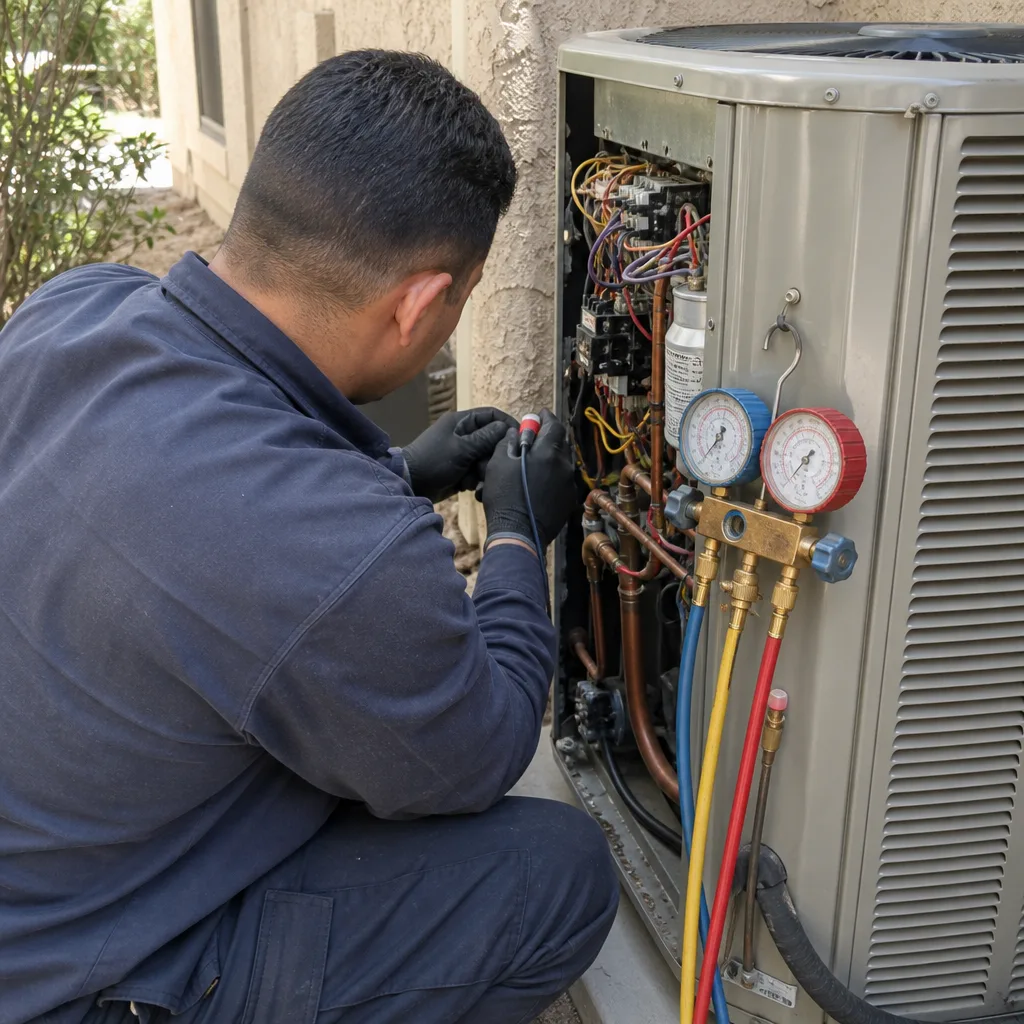
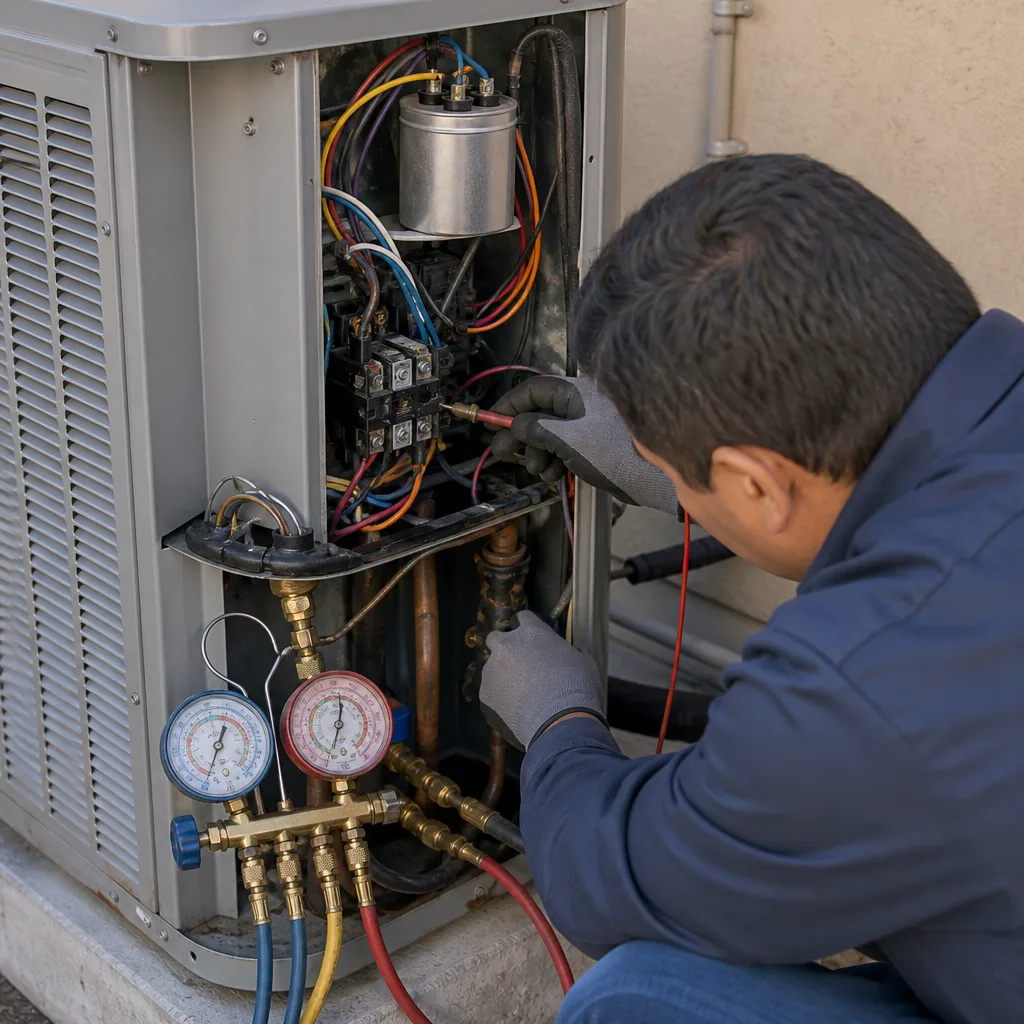
Book your AC service before the first heat wave, not during it. In Riverside, temperatures can hit the 90s by late March, and the companies that do good work book out 2 to 3 weeks once summer demand starts. During this visit, the technician should check refrigerant charge, clean the condenser coil (which accumulated winter dust), test the capacitor and contactor, and verify the condensate drain flows freely. This is also the right time to replace filters before heavy AC hours begin. For families in Riverside’s older housing stock, we also check for air leaks in the return ductwork, because duct leaks worsen cooling performance disproportionately when runtimes are long.
June: Filter Check and Airflow Test
By June, your system is entering peak operation. Change the filter if you didn’t in May, and run a quick airflow test: hold a tissue near a supply register with the system running. If it barely moves, you likely have a restriction somewhere, and catching it in June prevents an August failure. This is also when we recommend checking your thermostat schedule: Riverside families with kids home on summer break often need different settings than the school-year schedule.
October: Santa Ana Preparation
This is the Riverside-specific step most guides skip. Before Santa Ana wind season peaks, have your return plenum inspected and vacuumed if needed. Check that all return grilles are fitted with filters (homes with central returns especially), and stock up on replacement filters so you can swap them weekly during active wind events. For furnace repair in Riverside, October is also the month to test the furnace before temperatures drop into the 30s. Letting a furnace problem sit until December means cold nights with no heat.
December to January: Heating System Service
Furnaces in Riverside don’t run as many hours as in colder climates, but the thermal cycling between cold nights and warm afternoons creates condensation and corrosion. A heating service should check the heat exchanger for cracks, test the ignition system, verify carbon monoxide levels, and check that the flue is clear. If you have a heat pump, this visit focuses on the reversing valve and defrost cycle, which work harder during Riverside’s cold snaps than in coastal areas that rarely see freezing.
Common Mistakes to Avoid
- Following 90-day filter advice from coastal guides. Riverside’s dust load, especially during Santa Ana season, clogs filters in 30 days or less. A clogged filter is the number one cause of the compressor failures we see in August.
- Installing a minimum-efficiency unit that isn’t legal here. Any new AC in Riverside must meet 15.2 SEER2. If a quote seems suspiciously cheap, ask what SEER2 rating the unit carries. If they can’t tell you, keep looking.
- Skipping the permit. Unpermitted HVAC work in Riverside creates problems at resale and voids manufacturer warranties in many cases. It also means no third-party inspection, which is the only check against sloppy installation.
- Oversizing the unit “to be safe.” Riverside’s heat is sustained, not spike-driven, and an oversized unit short-cycles, which means it cools in bursts without removing humidity effectively. A right-sized system runs consistently, which is actually more comfortable during those 100°F stretches.
- Ignoring the Santa Ana filter burden on return ducts. We see homes every winter where the return ducting is filled with fine particulate that could have been caught with a proper filter. That dust then coats the evaporator coil and impairs cooling next summer.
- Choosing a contractor without asking who pulls the permit. The responsible party matters. If the contractor won’t be named on the permit, you lose leverage if the installation fails inspection.
- Waiting until a heat wave to schedule maintenance. By the time Riverside hits 105°F, every qualified company is booked for weeks. Spring maintenance is always cheaper and faster than emergency summer service.
When to Call a Professional
Some HVAC problems announce themselves: a system that won’t start, a furnace that blows cold air, a refrigerant leak hissing from the line set. Those are obvious call scenarios. But Riverside’s specific conditions create subtler signals worth acting on. If your AC runs constantly but your home doesn’t cool below 80°F on a 100°F afternoon, that is not normal even for Inland Empire heat. It likely means low refrigerant, restricted airflow, or an undersized system. If your energy bill jumps 30% or more compared to the same month last year with similar thermostat settings, something is wrong. If your furnace smells like burning lint on startup and that smell persists, schedule service before the next cold snap. If water appears around your indoor unit during cooling season, the condensate line is likely clogged, and that minor problem becomes a drywall repair if left alone. Electric panels, gas lines, and high-tension components are never DIY territory, and even experienced homeowners should leave refrigerant handling to licensed professionals. Meadowsweet Heating and Air Riverside offers free estimates in Riverside – call (707) 340-6380 and a live person answers, 24 hours a day, 7 days a week.
Frequently Asked Questions
A new AC system in Riverside typically costs $8,500 to $14,000 fully installed, depending on tonnage, efficiency rating, and whether ductwork modifications are needed. Heat pumps run toward the higher end, and higher SEER2 ratings add cost upfront but reduce Riverside electricity bills by $380 to $520 annually compared to minimum-efficiency units. Call (707) 340-6380 for an exact quote, and we’ll put the price in writing before any work starts.
New split-system air conditioners installed in Riverside after January 1, 2023 must be at least 15.2 SEER2, while heat pumps must meet 14.3 SEER2. These are California Energy Commission mandates tied to Riverside’s inland climate zone, and the city inspector verifies compliance during the permit inspection.
Every 30 days during summer (June through September) and Santa Ana season (October through January), and every 60 days during spring. Riverside’s dust load, especially during wind events, clogs filters faster than coastal California, and a dirty filter is the leading cause of compressor failures we see in the Inland Empire.
If your Riverside system is older than 12 years and the repair quote exceeds about 40% of replacement cost, replacement usually makes more financial sense. Riverside’s long summer runtimes mean a 12-year-old system here has the wear of an 18-year-old coastal unit, so the standard “wait until it dies” advice doesn’t transfer well.
Yes. Riverside requires a mechanical permit for AC and furnace replacement, and the contractor should pull the permit in their own name and be present for inspection. The most common inspection failure is an outdated condensate drain line, so confirm your installer checks this during the quote visit.
Brands with robust compressor designs and dust-tolerant coils perform best in Riverside. Trane’s spine-fin coils handle Santa Ana dust well, Lennox excels at efficiency for long runtimes, and Goodman and Rheem offer solid value for Inland Empire conditions. The installer matters more than the brand, and a poorly installed premium unit will underperform a correctly installed value brand every time. Call (707) 340-6380 to talk through the options for your specific home.
See the difference
 Before
 After
After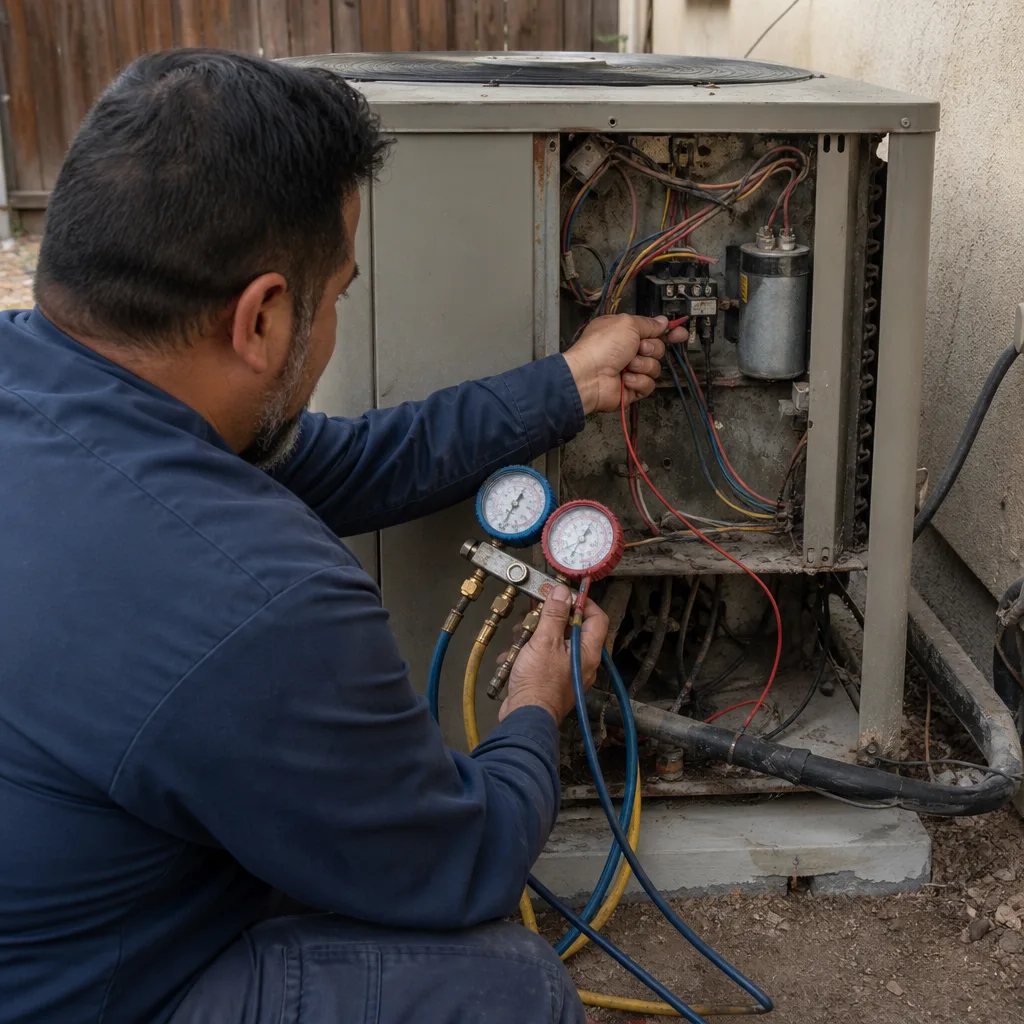 Before
 After
After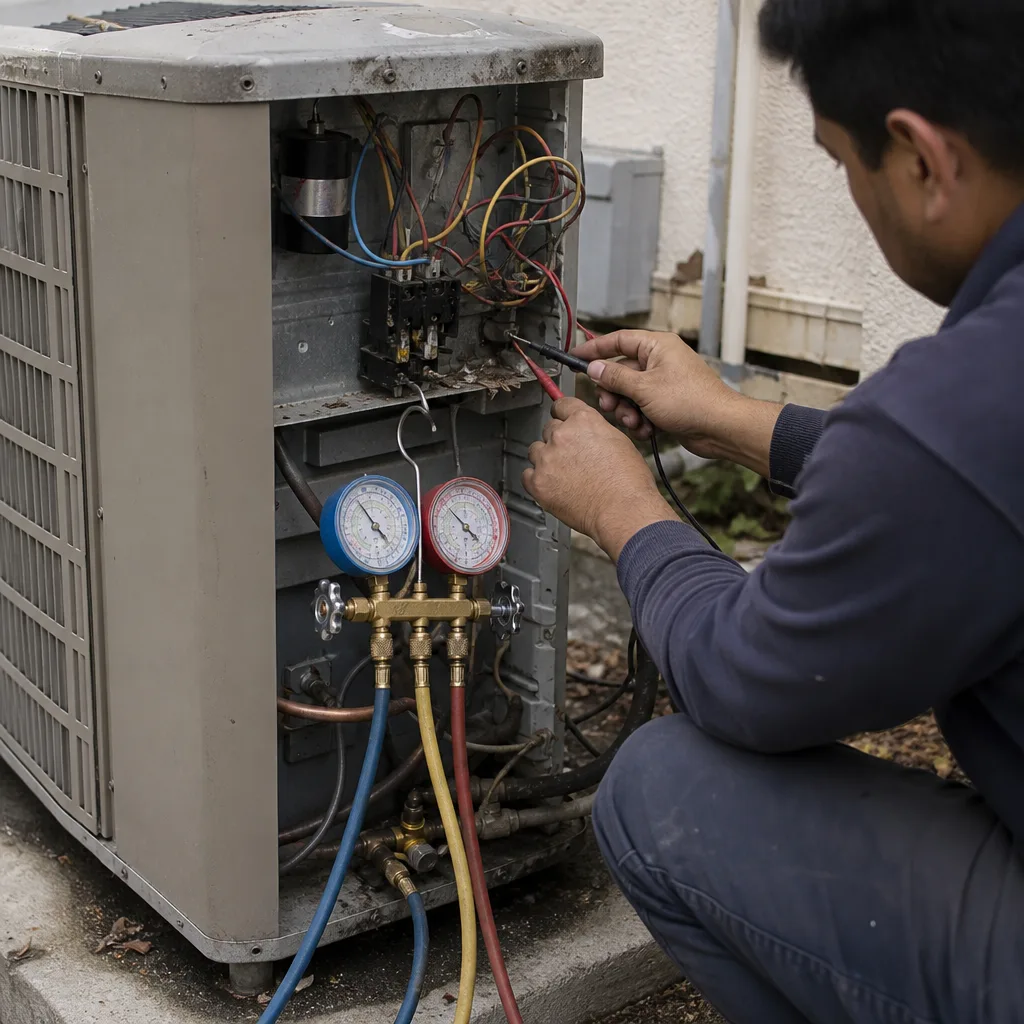 Before
 After
AfterThe Bottom Line
Riverside’s HVAC reality is shaped by three things most guides ignore: sustained triple-digit summer heat that demands equipment sized for endurance, Santa Ana wind season that loads dust into every return duct in the Inland Empire, and California’s post-2023 efficiency mandates that set a 15.2 SEER2 floor for new equipment. Get those three right and your system will run reliably for a decade or more. Your filters need changing twice as often as coastal advice suggests. Your installer needs to pull the Riverside permit in their own name. And the written price should be in your hands before the first tool comes off the truck. That’s how the best Riverside HVAC work is done, and it’s the standard Meadowsweet Heating and Air Riverside holds on every job, from a capacitor swap in Wood Streets to a full heat pump installation in Mission Grove. For more guides & resources on keeping your Inland Empire home comfortable, visit our blog.
Contact Meadowsweet Heating and Air Riverside
If you’re in Riverside and need AC repair, furnace service, or a full system replacement, call us at (707) 340-6380 for a free estimate. A live person answers around the clock, every day of the year. You’ll get a written price before any work starts, background-checked technicians in uniform, shoe covers and drop cloths inside your home, and a photo of the clean-up before our crew leaves. Every job is backed by the 365-Day Done Right Promise. That’s the Meadowsweet Heating and Air Riverside home standard.
Written by Luis Serrano, Owner at Meadowsweet Heating and Air Riverside, serving Riverside since 2004.